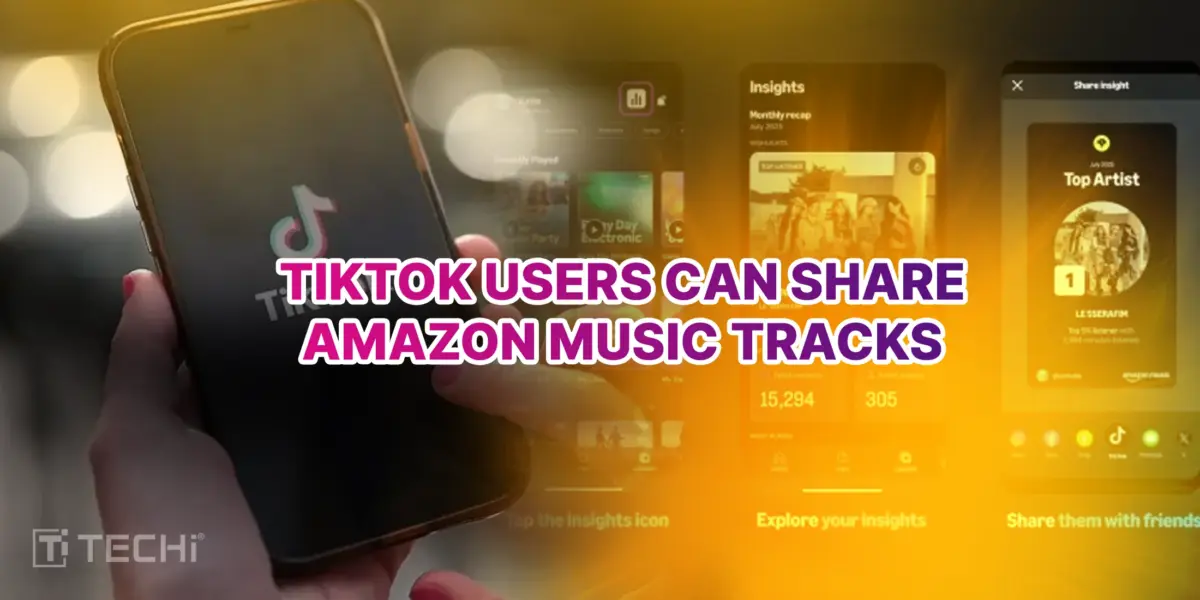

This update signals a deepening of the relationship between TikTok and music‑streaming platforms. By allowing Amazon Music users to share listening stats and full music content directly to TikTok, both platforms stand to gain in different ways.
TikTok strengthens its role as a discovery engine and cultural hub for music, reinforcing how viral moments on the app translate into broader streaming behavior. Meanwhile Amazon Music receives exposure through TikTok’s massive user base, which could help it close the gap with Spotify and Apple Music.
From a user‑perspective, the change is a convenience win. Music‑fans who use Amazon Music can now amplify their listening behaviours and playlists into social content without leaving TikTok. That social visibility may encourage more sharing, more discussion around music, and more traffic to Amazon’s service. For artists and rights‑holders, it offers yet another pathway for discovery and engagement, especially if a user’s “Monthly Recap” or insights become social content.
On the market side, Amazon gains an incremental channel that cuts via the content discovery loop of TikTok → streaming service → playlist follow‑through.
However there are caveats. While positive for Amazon Music and TikTok’s influence, it may intensify competitive pressures for streaming services that are less integrated into the social flow. Any platform not easily shareable into TikTok risks losing passive discovery momentum.
In addition, measurement of actual lifts in streams and subscriptions will matter: social sharing does not automatically equate to paid service conversions. There remain data‑privacy and user‑consent considerations around sharing listening stats and identity of listening behaviour.
Overall the news is positive for TikTok and Amazon Music, as it aligns with the broader trend of platform interoperability and social‑driven discovery. If the feature is adopted broadly and becomes habitual, it may change user expectations of what a streaming service should support in terms of social‑shareability. For the wider tech and music ecosystem, this move underscores a key shift: the war for users’ attention is not only about content catalogs and audio quality, but about effortless integration into the social fabric.