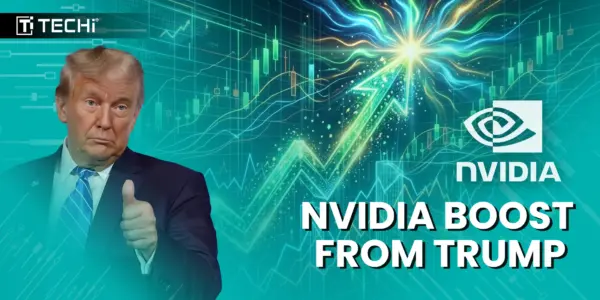
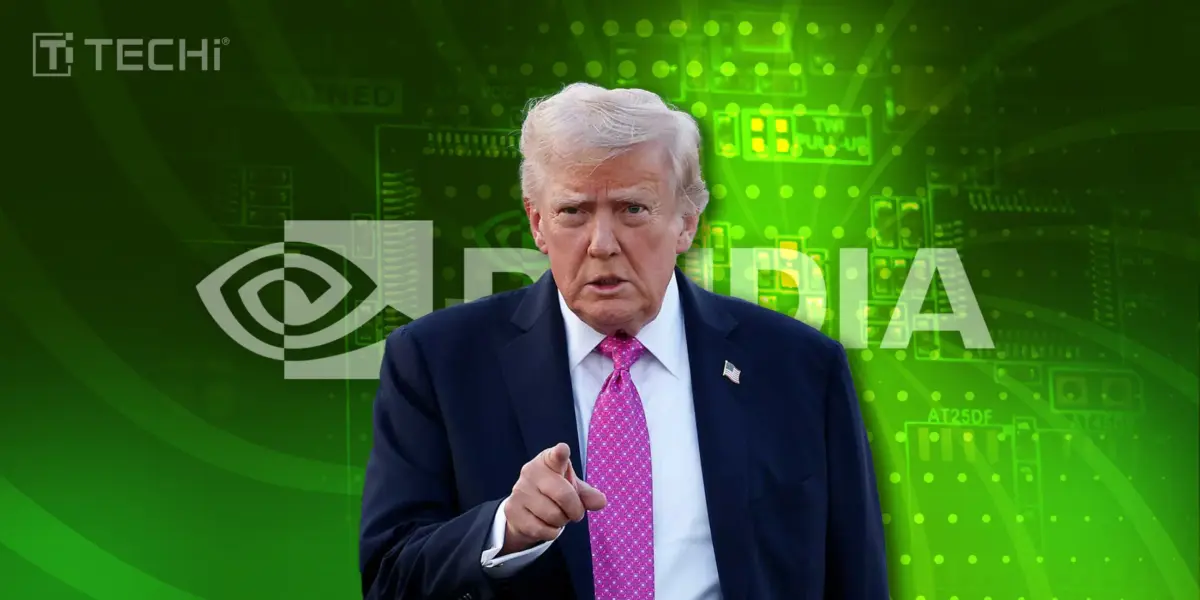
Nvidia has at last been given a partial win in its prolonged dispute over the access to the Chinese market. President Donald Trump after an extensive period of indecision, allowed Nvidia to sell its H200 AI processors to “approved customers” in China, which is a ruling he justified as balancing economic opportunity and national security.
The markets responded with the same enthusiasm, and Nvidia considered this move as being a first step towards supporting American jobs and manufacturing. At first glance, it seems like a breakthrough that investors were looking for, but with China rapidly getting ready for its own restrictions in the background, the truth may be much more complex than this triumphant news indicates.
The Grey Zone Between Access and Actual Sales 🔗
Nvidia has the permission but not necessarily a clear roadmap. Regulators in China are thinking about usage limits, approval requirements, and conditions that lead companies towards domestically produced chips.
Already, China has been urging the state-affiliated companies to use local semiconductors first, and this new policy only makes that demand stronger. Even the chip itself is more important, the H200 is powerful, but it is not the latest technology from Nvidia.
The deal does not cover the advanced Blackwell or the future Rubin processors, which are the main sources of Nvidia’s AI supremacy. That means Nvidia is allowed to sell an outdated product in a market that is making rapid advancements.
The company believes that the AI chip market in China alone could be worth $50 billion, but whether the H200 profoundly penetrates that demand pool depends completely on how China formulates these new policies. For now, the chance remains more of a potential than a sure thing.
What Investors Should Watch Next 🔗
Nvidia once estimated around $8 billion per quarter hit from the previous export bans, so even minimal access to China could result in a big financial change. However, it is important to be optimistic but also realistic, as the U.S and China are trying to sort out the situation with different priorities.
The U.S will get its share of 25% from every sale, and China might put some conditions on its side that would restrict the adoption in terms of scale and area.
Geopolitics are becoming more and more the main factor that defines the semiconductor supply chain, so Nvidia’s partially granted access is indeed a significant shift, but it is not complete. Investors might prefer to wait for China to declare its rules, as those specifics will be the ones that indicate if this approval turns out to be a major revenue driver or just a political compromise that is symbolic in nature.
Bottom Line 🔗
The approval from Trump is an important progress, yet it still doesn’t address the fundamental changes that the AI chip market is experiencing. Nvidia is still seen as a good investment at about 25 times next year’s forecasted sales, and the company is still at the forefront of the global AI infrastructure.
However, the real challenge will be the reaction from China, and whether Nvidia will be able to establish itself in a market that is already making its own alternatives. This endorsement is certainly better than a prohibition, but the investors would be wrong to presume that a cautious opening would result in a full market comeback.
Nvidia could still benefit significantly, specifically after the previous restrictions that the company estimated at $8 billion per quarter loss. But the Chinese government’s effort to become self-sufficient in semiconductor manufacturing will eventually define how big this opportunity is. Until the Chinese government unveils its regulations and companies start to place real and unrestricted orders, the forecast will be a combination of possibilities and doubts.