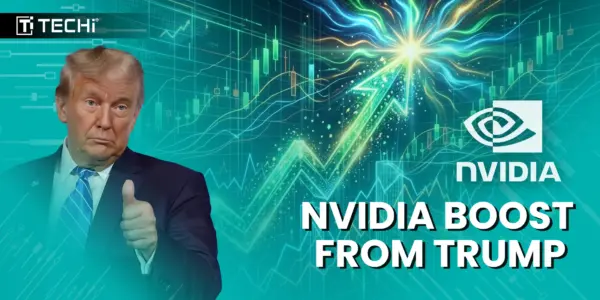
The administration of President Donald J. Trump has recently begun an extensive examination of the Nvidia Corporation H200 AI chip over the possibility of exporting the chip to China.
According to sources, the Department of Commerce has submitted licensing applications to the Departments of Defense, State and Energy where they will be analyzed within a 30-day period with final decision authority retained by the President.
The move gives him his word to permit a sale of this type, with a 25% fee on any imported goods to the U.S., in a bid to hold on to the competitive edge against other Chinese firms including Huawei.
From Biden Ban to Trump Bet 🔗
The last government led by President Joe Biden had placed regulations that blocked the sales of advanced AI chips to China out of national security reasons.
Although these restrictions were extended during the first term of President Trump, the current administration of his administration, led by the AI director David Sacks, expects authorizing the sales of the H200 to decrease the needs of the Chinese silicon produced in the country.
Based on the successor to the Nvidia Blackwell architecture, H2O0 integrates 141 GB of HBM3e memory, and can run state-of-the-art AI models. However, the chip is not shipped to China yet.
In the recent news, it is evidenced that China already received preliminary H200 orders, which makes Nvidia think that it should produce more as the demand rises.
Expert Warnings Mount 🔗
Certain objections have also been made to the effect that such chips are the main reason why China is not making much headway in AI development and that their export would amount to a strategic misjudgment.
Led by White House AI czar David Sacks, several members of the Trump administration now argue that shipping advanced AI chips to China discourages Chinese competitors like Huawei from redoubling efforts to catch up with Nvidia and AMD’s most-advanced chip designs.
Such concerns have been expressed by Chris McGuire, a former National Security Council official of the Biden administration and a fellow at Center state and International Studies.
The Chinese hawks are concerned about increased PLA prowess, particularly considering that Nvidia made as much revenue in China as $17 billion in the third quarter of 2025 despite having embedded embargoes.
What Lies Ahead? 🔗
Regulatory agencies have given assurance of a comprehensive scrutiny and not a fake approval. Analysts project that licensing potentially will allow China to import more units annually of the H200, which will benefit American companies in the short term but put long-term leadership in AI at risk.
Should the President accept the license, the Ascend chip line by Huawei might lag further; nevertheless, the national-security case of the decision is to be observed especially carefully. It is expected to be achieved by mid-January 2026.