
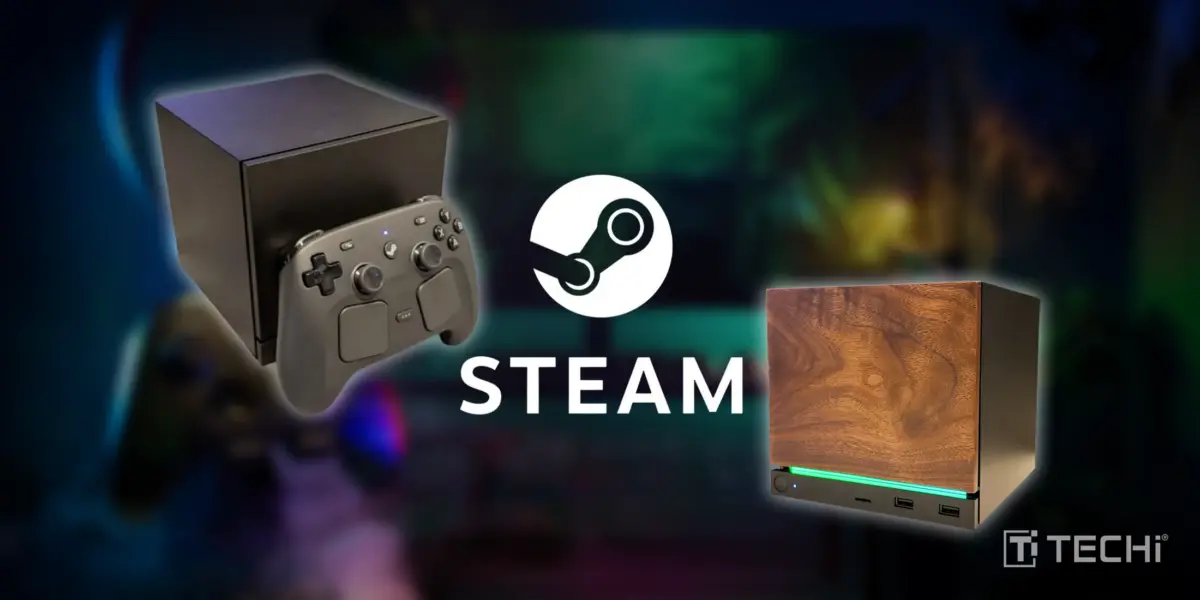
Valve has announced a new living room gaming device, which tends to combine the flexibility of PC gaming with the convenience of the console in a mini-sized machine. This represents a return to the living room gaming space, building on the success of the Steam Deck handheld device.
After the uneven performance of its early 2010s Steam Machine initiative, Valve taps into the success of the Steam Deck and the improvements in SteamOS to produce a console-style PC designed to play 4K sets of games intensively. This new device represents Valve’s evolution in the living room gaming space, learning from past experiences.
The new device uses a semi-custom AMD RDNA 3 graphics card that has 28 compute units with a speed of 2.45 GHz, and the 6-core and 12-thread Zen 4 CPU with a 30 W thermal design power (TDP).
Built for Seamless Gaming 🔗
The new Valve device will offer a pleasant gameplay experience, supported by ray tracing and with a maximum bandwidth of 60 FPS at 4K with FidelityFX Super Resolution (FSR).
It has 16GB DDR5 system memory and 8GB GDDR6 VRAM, with storage options of 512GB or 2TB NVMe SSDs all user-upgradeable-a compromise to practicality building that is roughly half the size of an Xbox SeriesX.
The SteamOS platform (with Proton), which enables most Windows Steam games to be played using Linux, has overcome compatibility problems of the past by allowing popular titles such as Cyberpunk 2077 to be executed smoothly and smoothly at high and slight settings, both.
Design and Connectivity 🔗
In addition to a potent core, the device has subtle styling, with customized magnetic coverage-shaped front panels and a friendly port-organization, that includes DisplayPort 1.4 (up to 4K, 240hz or 8K at 60hz), HDMI 2.0, several USB-A and USB-C ports, Ethernet, and Wi-Fi 6E.
A house power supply keeps the externally clean, and active cooling, including a large heatsink and fan, keeps the graphics card, with its 110W power consumption, thermally stable.
Positioning and Market Impact 🔗
According to Valve, the new device offers more than 6 times more performance than the Steam Deck and serves gamers who have outgrown consoles and want a more advanced living-room PC performance without the hassle of upgrading their machines themselves.
The current user base of the Steam Deck assumes the interest of this category, with users already going to connect handhelds with televisions.
Under the current market trends, Valve will make the device affordable in the midst of hardware inflation that has raised the costs of other competitors like Nvidia RTX 5080 and upcoming Xbox/PlayStation consoles.
Hardware engineer Yazan Aldehayyat was asked in an interview about what Valve’s position is, at a high level, regarding pricing, and Aldehayyat said the aim is to land at a “competitive price” that matches up with the value provided. This is what most companies say about their new products, and Valve is following suit. The aim, he said, is to make it “affordable.“
Future Prospects 🔗
The new device symbolizes an expanding Valve hardware ecosystem, supported by Steam Deck-Verified programs, which are also available to this product, and future VR Steam Frame hardware.
Automatic graphics optimization support in SteamOS by the developer will also play a very important role in uncovering the full potential of the machine in the long term.
Should Valve be successful, the new device will be able to revolutionize the living-room gaming experience by providing PC-level performance with console ease of use, it would fit in well against the Xbox Series S and Nintendo Switch 2 in an expanding market of affordable, small-desk gaming PCs.
This launch is the largest hardware project Valve has done since the 2022 Steam Deck and has the potential to usher in the additional adoption of SteamOS as a mainstream gaming platform.
The performance, portability, and value offerings of the new device will give the company a competitive edge in the face of console-PC convergence.
Correction: An earlier version of this article incorrectly referenced a “new Steam Machine.” Steam Machines were discontinued by Valve in 2015-2016. This article has been updated to refer to Valve’s new living room gaming device, which represents a new product category rather than a revival of the discontinued Steam Machine line. The article has been updated for accuracy.