
Vodafone has declared a strategic partnership with the Leo satellite constellation of Amazon Web Services, the aim of which is to supplement the coverage of mobile networks in sparse and remote places in Europe and sub-Saharan Africa.
The joint venture will be a conscious break as compared to traditional fibre-optic implementation, where download speeds are to reach 1 Gbps and a 400 Mbps upload, compared to current 4G and 5G base stations. The first will roll out in Germany in 2026, with a rollout across Africa through the Vodacom operations.

Deal Details
Making use of the Leo constellation, which currently has more than 200 operational satellites and forecasts the launching of more satellites tomorrow, the agreement was publicized on 2 March 2026. According to the GSMA benchmarks, as of 23 February 2026, the solution achieves a reduction of up to 76% in deployment costs of fibre cables compared to this orbital backhaul solution across rugged topographies and offering them over geographic constraints inherent to terrestrial cabling.
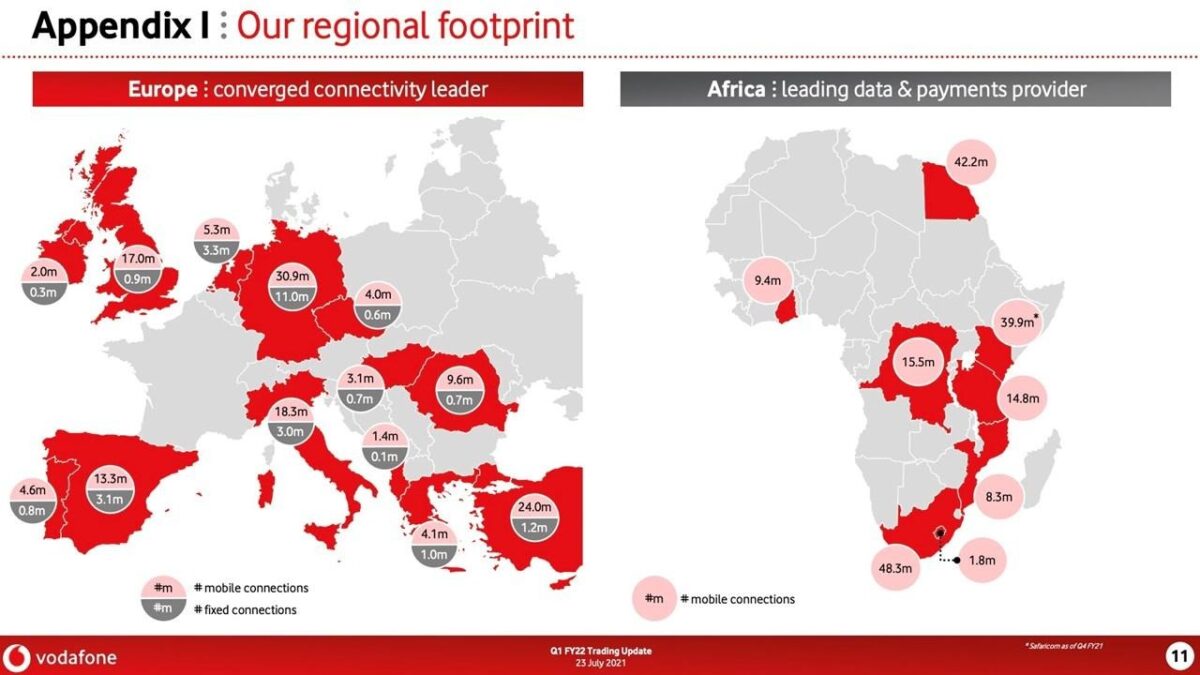
This project would be in line with the Vodafone plan of rolling out 5G to 99% of subscribers in Europe, and 80% of Vodacom customers in Africa, with its investment of 4 billion euros in its network and 200 million subscribers.
Strategic Edge
The telecommunications providers are faced with very high costs of backhaul, where globally, spending is being recorded at $150 billion US dollars in the year 2025, as per the Dell Oro Group figures obtained at the end of February 2026. The low-Earth-orbit architecture of Amazon Leo has latencies of less than 50, to the exclusion of geostationary competitors like the classic Starlink deployments.
Revolutionizing the telco economics, particularly in fibre failures, is achievable through satellite backhaul, asserts Jane Wright, the telecom analyst of Forrester. Vodafone also expects to gain a competitive edge, which could push EBITDA margins by 2-3% points in remote operations, note Barclays analysts.

Broader Play
The plan will widen the strategic horizon of Vodafone by developing a direct-to-phone satellite service via AST Space Mobile, to be deployed to consumers by the end of 2026. This dual setup places Vodafone at the heart of responding to the fast-growing data demand, which is expected to grow by 40d on an annual basis due to the Africa market with mobile traffic, according to the Ericsson Mobility Report (February 2026).
Outlook
It is expected that the initiative will have a ripple effect on the industry, and their rivals, like Orange and MTN, will be tempted to seek a similar satellite-backed agreement. According to Markets and Markets estimates, a $20billion satellite backhaul market is projected to exist in 2030. The share price of Vodafone (VOD.L) can also increase by 8-10% in case of successful implementation, even though the regulations and congestion of orbital space can be possible threats. The shift highlights a larger pattern of summit telecommunication companies using space-based infrastructure to maintain network effectiveness and popularity.