
If you thought the shatter-proof display on Motorola’s new Droid Turbo 2 was cool, wait until you hear what the Institute of Industrial Science at the University of Tokyo has developed. Using extremely durable aluminum oxide compounds, a group of researchers from the institute have developed a type of hybrid glass that’s as strong as steel, and is extremely resistant to both scratches and shattering. The researchers believe they can commercialize this breakthrough within the next five years, which means we won’t be seeing it on our smartphones anytime soon.
Two Takes
View TECHi Stance
Your smartphone’s display could be as strong as steel in the future
Bgr
View all Bgr Two Takes by TECHi
Read the original story
Published November 5, 2015
TECHi's Take

Recently we were really impressed with what Motorola was able to do with its shatterproof display for the Droid Turbo 2. However, IFLScience brings us word that some researchers at the University of Tokyo’s Institute of Industrial Science have come up with a breakthrough technology that could make the Droid Turbo 2’s display seem positively fragile by comparison. The secret behind this new type of hybrid glass is that it contains aluminum oxide compounds that are renowned for being extremely tough. The new glass is both shatterproof and highly resistant to scratching — in fact, it seems that only diamonds are harder than the specific kinds of compounds used. While this sounds simple, it turns out that making hybrid glass with these kinds of compounds has proven to be extremely difficult in the past. “Specific aluminum oxides are referred to as ‘alumina’ mixtures, and although their remarkable properties have been known for some time now, the chemistry required to add them to glass has always proved difficult to put into practice,” explains IFLScience. “Whenever material scientists have previously tried to mix alumina with glass, they’ve always used a container; unfortunately, the liquid mixture begins to crystallize out on the corners and edges of the container before it’s had a chance to mingle properly with the glass.”
NOTE: TECHi Two-Takes are the stories we have chosen from the web along with a little bit of our opinion in a paragraph. Please check the original story in the Source Button below.
Balanced Perspective
TECHi weighs both sides before reaching a conclusion.
TECHi’s editorial take above outlines the reasoning that supports this position.
More Two Takes from BGR
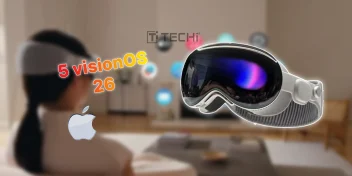

Envision that you are living in a digital world, playing games, collaborating with friends, setting future plans, and sharpening your…
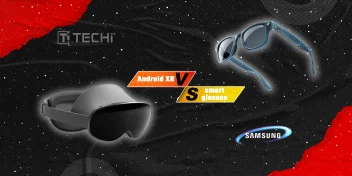
Samsung needs to take the XR market by storm. Apple caused a commotion with Vision Pro, but it was too…
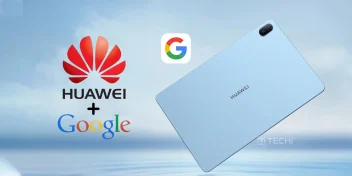

Google and Huawei might be joining forces once again. According to a tweet from Evan Blass, once of the most…


Smartwatches are neat, and that's about all that can be said about them. Even the Apple Watch is little more than…