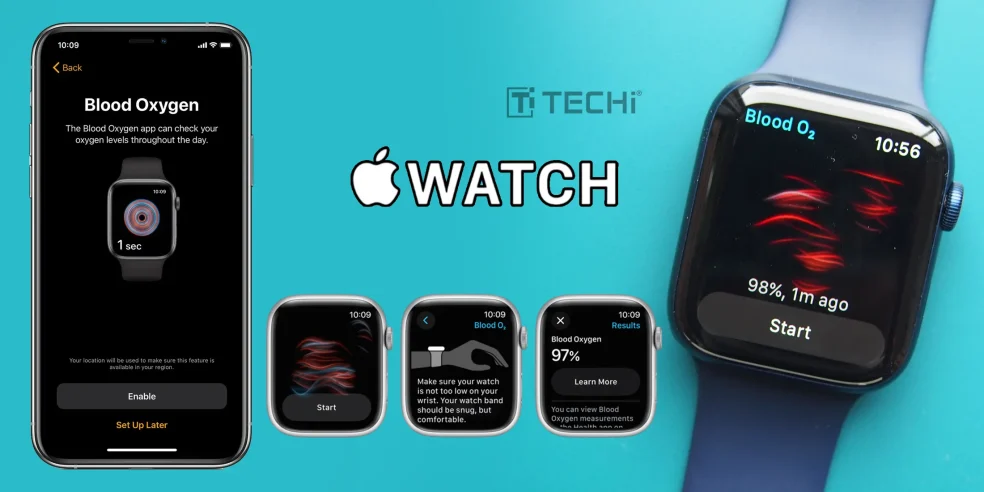
If innovation saves lives, should it really be banned? In 2020, Apple launched the Watch Series 6, in which they introduced a blood oxygen sensor in a watch. It aims to expand the role of watches in personal health monitoring. While it never aimed to be marketed solely as a replacement for medical-grade equipment, the sensor became part of Apple’s health tech. It provided users with insights about their respiratory health, fitness recovery, and sleep patterns. But Masimo, a medical tech company known for its pulse oximeters used in hospitals, targeted Apple’s innovation. They claimed Apple had copied their technology, and poached the company’s staff for the development of the watch. In June 2021, Masimo also filed a complaint with the U.S. International Trade Commission (ITC).
In late 2023, the ITC ruled in Masimo’s favour. They decided to impose a U.S. sales ban on Apple Watch models that included the blood oxygen feature. At that time, this feature was also present in the Series 9 and Ultra 2 models, so these were also banned.
Apple still firmly denied the allegations. According to their legal team, Masimo’s smartwatch was just a prototype when the dispute began, and they claimed that Masimo had copied their designs. But all struggles were useless, a U.S jury faced damage of $250 because they sided with Apple. Then, in order to keep things going, Apple announced the new versions of Series 9 and Ultra 2 without the sensor feature. However, Apple points out that the ruling has deprived users of a valuable health feature.

Now, in 2025, Apple is appealing the ruling again; they argue that just because Masimo was working on a competing smartwatch doesn’t mean that Apple had stolen anything. Meanwhile, Masimo still insists that its intellectual property was violated.
The Roots of the Conflict
The clash between Apple and Masimo didn’t begin in 2023 after the ITC ban. It’s actually been going on since 2013, when Apple hired Michael O’Reilly, Masimo’s Chief Medical Officer and Marcelo Lamego, Cercacor’s chief technology officer.
In a Court filing, Masimo says that they had a meeting, and Apple requested them to collaborate in order to understand Masimo’s technology deeply. But instead of a simple collaboration, the employees, who had confidential information, were hired to be a part of Apple’s team.
In 2014, when there were rumours about the iWatch, Masimo’s CEO, Joe Kiani, said that the employees Apple had poached, had access to deep wells of trade secrets, and they are offering sizable salaries to buy senior executives and researchers from other health tech companies.
In January 2020, Masimo took Apple to court, claiming that the company was stealing its pulse oximeter technology and filing patents based on that stolen work. This lawsuit became a basis for a ban on U.S. sales of Apple Watch models.
It’s More Than a Legal Battle
This wasn’t just about who had the idea first. It was a matter of how innovation is handled in industries where lives are more important than any flashy product. Apple’s blood oxygen sensor may not be perfectly accurate, but for millions of users, it has become part of a daily health routine. During the COVID-19 pandemic, many even used it to watch for drops in oxygen levels, giving them a precautionary edge along with some peace of mind.
Users feel safe because this watch can signal before any threat. Should a feature like that really be pulled off the shelves over a patent conflict? Apple wants to lead not only the tech platform but also the wellness platform. Masimo, on the other hand, wants to protect its medical legacy in this space because the tech giants have suddenly started to step into health.
Ultimately, both Apple and Masimo’s products have their own importance, which we can’t deny. Masimo’s roots are deep in clinical precision, and their devices are trusted in hospitals, built on years of medical research. Apple, on the other end, has made health tracking more accessible by introducing tools like heart-rate monitors, ECGs, and sleep tracking.
This isn’t just solely a legal battle to watch, it’s also about the direction we go from here. Instead of fighting over which one of them arrived there first, both companies should focus on what really matters: advancing health tech that improves lives. Because health concerns are rising rapidly so innovation should serve people, not get stuck in courtrooms.