
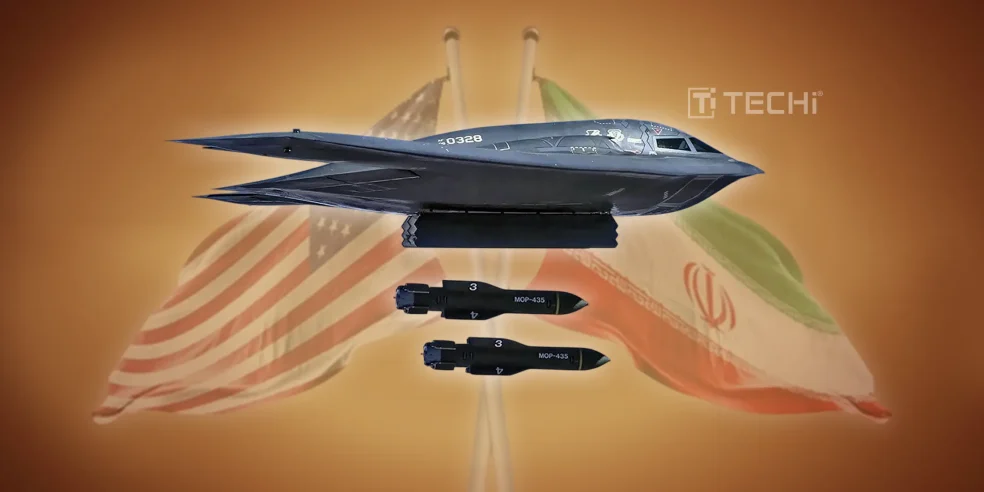
The B-2 Spirit is one of the most revolutionary aircraft ever built. For over 30 years, this unique ‘dorito shaped’ bomber has been the backbone of America’s long range strike capability, able to slip through the world’s most advanced air defenses undetected.
What Makes the B-2 Spirit Different 🔗
The B-2 Spirit looks nothing like a traditional airplane. Instead of having a body (fuselage) and tail, it’s built as one giant wing, which is what engineers call a “flying wing” design.
This unusual shape gives the B-2 some interesting dimensions:
- It’s only 69 feet long (about the same as a fighter jet)
- However, it has a massive 172-foot wingspan (almost as wide as a football field)
- This makes it nearly as wide as the giant B-52 bomber, but much shorter
Some Key Specifications
- Wingspan: 172 feet (52.12 meters)
- Length: 69 feet (20.9 meters)
- Height: 17 feet (5.1 meters)
- Empty Weight: 160,000 pounds (72,575 kg)
- Maximum Takeoff Weight: 336,500 pounds (152,634 kg)
- Fuel Capacity: 167,000 pounds (75,750 kg)
- Payload: 40,000 pounds (18,144 kg)
- Top Speed: High subsonic
- Range: 6,000 nautical miles (9,600 km) unrefueled; intercontinental with aerial refueling
- Service Ceiling: 50,000 feet (15,240 meters)
- Crew: 2 pilots (pilot and mission commander)
- Engines: Four General Electric F118-GE-100 turbofan engines
- Thrust: 17,300 pounds per engine
How Stealth Technology Works 🔗
What makes the B-2’s really special is their stealth technology. The aircraft uses several tricks to stay hidden from enemy radar and other detection systems.
Invisible to Radar 🔗
The B-2’s unusual shape deflects radar waves away from enemy receivers instead of bouncing them straight back. Its radar signature is about the same size as a small bird which makes it nearly impossible to spot on conventional radar screens.
Special Materials 🔗
The bomber is covered in special materials and coatings that absorb radar energy instead of reflecting it. These composite materials are carefully designed to ‘soak up’ enemy radar signals.
No Vertical Surfaces 🔗
Unlike regular planes, the B-2 has no tail fins or other vertical surfaces that would create strong radar returns. Instead, it uses computer-controlled flaps along the wing edges to steer and maintain stability.
Hidden Heat Signature 🔗
The four engines are designed to reduce heat emissions that enemy infrared sensors might detect. The engines don’t have afterburners, which keeps the heat signature low but limits the plane to high subsonic speeds. Basically, it’s not as fast as an F-16.
What Weapons Can the B-2 Carry? 🔗
The B-2 can carry a wide variety of weapons that are up to 40000 pounds. These are all stored inside the aircraft to maintain its stealth profile.
Massive Ordnance Penetrator (MOP)
The B-2’s most impressive weapon is the GBU-57 ‘bunker buster’ bomb:
- Weighs 30,000 pounds (15 tons)
- Stands 6 meters tall
- Can punch through 60 meters of concrete before exploding
- Each B-2 can carry two of these massive bombs
- It’s the only conventional weapon that can destroy deeply buried facilities like Iran’s Fordow nuclear site.
Other Weapons
- Nuclear warheads for strategic missions
- Smart bombs and precision-guided munitions
- Various conventional bombs and missiles
The internal weapons bay keeps everything hidden inside the aircraft, which helps maintain stealth and reduces air resistance during flight.
Also Read: Dassault Aviation Stocks Fluctuated After Pakistan Claimed to Shot Down Rafale Jets
B-2 Combat History 🔗
Since entering service in 1993, the B-2 has been used in several major military operations:
Serbia (1999) – First Combat Mission
The B-2 made its combat debut during Operation Allied Force, flying missions from Missouri all the way to Kosovo and back. Despite being new to combat, B-2s destroyed 33% of all Serbian targets in just the first eight weeks of fighting.
Afghanistan (2001)
After 9/11, B-2 bombers flew some of their longest missions ever from Whiteman Air Force Base in Missouri to Afghanistan and back to attack Taliban and Al-Qaeda targets.
Iraq (2003)
During Operation Iraqi Freedom, the B-2 really proved itself:
- Flew 49 total missions (22 from forward bases, 27 from Missouri)
- Dropped more than 1.5 million pounds of bombs
- Achieved full operational capability status
Iran (2025)
Most recently, B-2s struck three Iranian nuclear facilities (Fordo, Natanz, and Esfahan), showing their ability to attack heavily protected underground targets with bunker buster weapons.
The B-2’s ability to fly from Missouri to anywhere in the world and back (with aerial refueling) makes it a truly global weapon system.
The Most Expensive Plane Ever Built 🔗
The B-2 Spirit holds the record as the most expensive military aircraft in history. Each plane cost about $2.1 billion when you include all the development costs.
Why So Expensive?
Originally, the U.S. planned to build 132 B-2 bombers during the Cold War. However, when the Soviet Union collapsed, the program was cut to just 21 aircraft. Since all the development costs had to be split among fewer planes, the cost per aircraft skyrocketed.
Current Fleet
- 21 total aircraft built (20 for operations, 1 for testing)
- 20 currently active
- All based at Whiteman Air Force Base in Missouri
- One lost in 2008 in a crash at Guam
The small fleet size means these bombers are carefully managed and only used for the most critical missions.
Now, you might think that the B-2 program’s cost is excessive, and although it has gotten criticism over the years, it’s worth considering that this investment may have paid back much more in strategy and technological advancement. The program’s innovations have inspired countless other military and civilian aerospace projects. So technically, it made it less of an expense and more of a foundational investment in American technology.
How the B-2 Flies 🔗
Flying the B-2 is nothing like flying a regular airplane. The flying wing design creates unique challenges that require advanced computer systems to overcome.
Computer-Controlled Flight
Without a tail or vertical fins, the B-2 would be impossible to fly manually. Instead, computers constantly make tiny adjustments to flaps along the wing edges to keep the plane stable. The pilot tells the computer where to go and the computer figures out how to get there.
Small Crew, Big Missions
Each B-2 is flown by just two people:
- Pilot (left seat) – handles flying the aircraft
- Mission commander (right seat) – manages weapons and navigation
This is much smaller than other bombers (the B-52 needs five crew members) but the B-2’s advanced systems make it possible.
The fact that just two highly trained individuals can operate such a complex and powerful weapons system tells us a lot about both the incredible sophistication of modern aerospace engineering AND the exceptional skill level that B-2 crews have. These pilots represent the best of military aviation. Think about it this way. They operate what is essentially a flying computer that happens to be one of the most lethal aircraft ever created.
Building the B-2: From Dream to Reality 🔗
The B-2 program started in the 1980s when the U.S. needed a bomber that could sneak past Soviet air defenses during the Cold War.
Key Milestones
- 1988: First B-2 revealed to the public in California
- 1989: First test flight
- 1993: First B-2 delivered to the Air Force (“Spirit of Missouri”)
- 1997: B-2 declared ready for operations
- 2003: Achieved full combat capability after proving itself in Iraq
Who Built It
Northrop Grumman led the project but it took a team of major aerospace companies:
- Boeing (military aircraft expertise)
- General Electric (engines)
- Hughes (radar systems)
- Vought Aircraft (specialized components)
The entire program took over 15 years from start to finish.
Global Strategic Impact 🔗
The B-2 Spirit serves as a cornerstone of America’s nuclear triad and conventional deterrence strategy. Its unique combination of stealth, range, and payload capacity allows it to hold at risk virtually any target worldwide while remaining undetected by enemy air defenses.
Modernization and Future
Northrop Grumman continues to modernize the B-2 fleet through various upgrade programs that enhance:
- Lethality: Improved weapons systems and targeting capabilities
- Communications: Enhanced ability to receive updated target information during missions
- Survivability: Continued improvements to stealth and defensive systems
Technical Innovations
The development of the B-2 needed numerous technological advancements:
Materials Science
- Advanced composite materials for weight reduction and stealth
- Radar absorbent coatings and structures
- Heat-resistant materials for engine integration
Aerodynamics
- Computer-aided design for optimized stealth shaping
- Advanced flight control algorithms for unstable flying wing configuration
- Sophisticated air data systems for navigation and control
Manufacturing
- Precision manufacturing techniques for maintaining stealth tolerances
- Advanced quality control systems
- Specialized tooling and assembly processes
Also Read: Rafale vs JF17 Thunder and Su30 vs F-16: A Tech Review
Challenges of Operating the B-2 🔗
Although the B-2 is incredibly capable, it’s also incredibly demanding to maintain and operate.
Maintenance Challenges 🔗
- Weather sensitive: The stealth coating can be damaged by rain or extreme temperatures
- Special hangars required: B-2s need climate controlled hangars to protect their coatings
- Highly trained crews: Only specially trained mechanics can work on the complex systems
- Expensive upkeep: Every flight hour needs several hours of maintenance
Strategic Limitations 🔗
- Small fleet: With only 20 aircraft, the U.S. can’t use B-2s everywhere at once
- High value targets: Each plane is so expensive and rare that losing one is a major loss
- Subsonic speed: Although it’s stealthy, the B-2 can’t outrun modern fighter jets
The B-2’s Lasting Impact 🔗
The B-2 Spirit has proven itself as both a technological wonder and a powerful symbol of American aerospace engineering. Even after more than 30 years, it remains one of the most advanced aircraft ever built.
What Makes It Special 🔗
The B-2’s combination of stealth, range and firepower gives the United States a unique capability that no other country has been able to match. Its ability to strike anywhere in the world while remaining undetected gives the U.S. a major strategic advantage.
The B-2’s does however have operational limitations. Its vulnerability to weather and deep maintenance requirements tell you about an interesting puzzle in modern military technology. The most advanced systems often come with the greatest operational constraints. This produces questions about whether such ‘exquisite’ capabilities are worth the trade-offs in availability and operational flexibility.
Influence on Future Aircraft 🔗
Many of the innovations developed for the B-2 program have found their way into other military and civilian aircraft. The lessons learned are now being applied to the next generation B-21 Raider bomber, which will eventually replace the B-2.
Continued Relevance 🔗
Despite being designed during the Cold War, the B-2 remains highly relevant in today’s world. Recent strikes on Iranian nuclear facilities show that the bomber’s unique capabilities are still needed for the most challenging missions.
With ongoing upgrades and improvements, the B-2 Spirit will continue to serve as America’s premier stealth bomber for years to come. Guess what? Sometimes, the most advanced technology is also the most enduring, and sometimes, old is gold.
Looking at the future, the B-2 program is both a museum piece that represents American engineering excellence and a reminder of the cost that comes with technological dominance. Even if rival nations develop their own stealth capabilities and advanced air defenses, I’d still say that the B-2’s three decade reign as the world’s premier stealth bomber will likely be remembered more deeply. It will remind people of a unique moment in aviation history when one nation possessed such an overwhelming technological advantage. Another thing that astonishes me is how something over 20 years old is still relevant and competitive to this day.