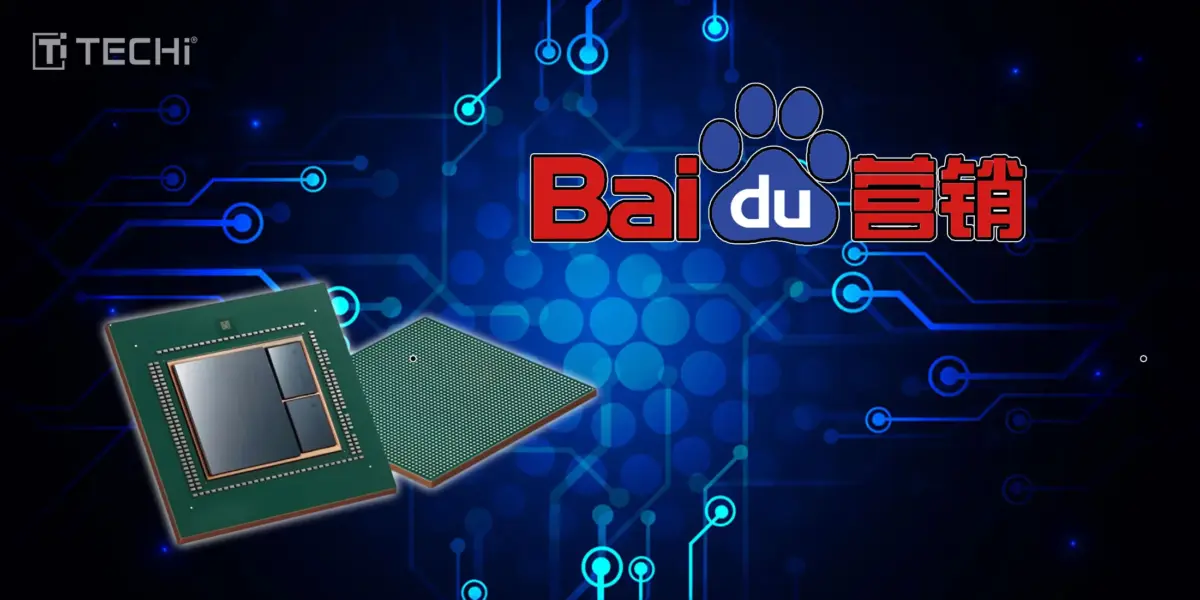
The high-profile artificial-intelligence chip department of Baidu, Kunlunxin, has filed a significant Hong Kong initial public offering prospectus, which indicates the underscoring impact of the United States of America over Chinese technological restrictions.
Kunlunxin submitted its listing application to the Hong Kong Stock Exchange at 1 January 2026, which was announced by Baidu on Friday.
Recently having gone through a round of funding, which customer-values the unit at 21 billion yuan, ($3 billion) the organization initially set up in 2012, having been one of the inner divisions of Baidu, is currently being established as a separate company
Though Baidu maintains its dominance after the spin-off. Certain business information about the size of the enterprise is dynamic, and it will depend on the regulatory approvals.
Hot IPO Wave 🔗
The large upsurge in the Hong Kong market raised 119 listings raising HK $274 billion in 2025, representing a 63% increase compared to 2024.
The competitors encompassing GigaDevice Semiconductor, OmniVision and MiniMax, all seek to get between HK$600 million and $617 million, respectively.
Chinese AI startup MiniMax said:
It expects to raise up to HK$4.19 billion ($538 million) in its Hong Kong offering, and semiconductor designer Shanghai Biren Technology (6082.HK), opens new tab raised HK$5.58 billion in its public offering, according to an exchange filing.
Chip Race Heats Up 🔗
One of the triggers of this heightened activity is U.S. export restrictions as China is building its home AI silicon in a market, which is estimated to hit $122 billion across the world in 2026.
The P800 processor originally manufactured by Kunlunxin is sold to state data centres; its revenue in this year was 3.5 billion yuan ($500 million), which is close to the break-even level when compared to the 2 billion yuan baseline of 2024.
Expert Take 🔗
“In the market, Kunlunxin is seen as one of the most practical and widely used AI chips in China,”
Brady Wang, associate director at Counterpoint Research, told CNBC. He added that one of the chipmaker’s main strengths is in software.
“Instead of forcing users to adopt a closed system, Kunlunxin works well with common AI frameworks and makes it easier to move workloads from [Nvidia].”
Bold Horizon 🔗
By 2027, Kunlunxin will enjoy the advantage of projected growth in AI chips in a market that already is projected to expand by a compound annual growth rate of $31.6 billion in the current year to an impressive $846.8 billion by 2035.
In alignment with emerging markets, this will ensure that China has become self-reliant in technological aspects. The success of the business, however, will be determined by technological development and enthusiasm by the investors.