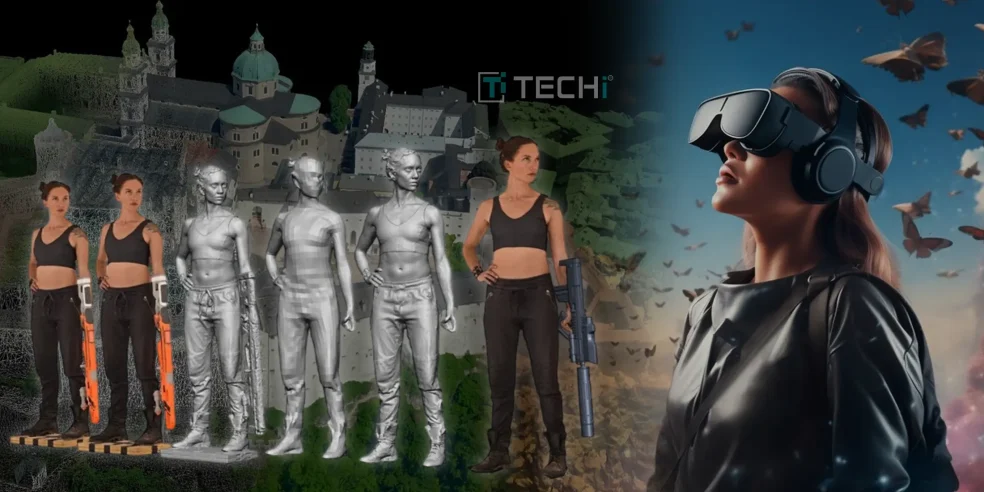
Do you remember when we thought virtual reality (VR) was just a concept from science fiction films? Large headsets, thick graphics, and little actual interaction. It was exciting but somewhat embarrassing. Today, VR has evolved considerably. It is currently applicable in every industry, whether it is the case of gaming or real estate, architecture, or training. It is no longer a buzzword but is something that is transforming how we experience and interact with the digital world.
That brings us to an important question: Is photogrammetry the key to making the VR feel truly real? Photogrammetry is a method that converts real-life photographs to hyper-detailed 3D images. In today’s world, it’s getting attention due to its realistic appearance. It is already being used in industries such as gaming, architecture, cultural preservation, and training to build realistic virtual environments. So, is this the VR game-changer we’ve been patiently waiting for? Let’s find out.
What Is Hyper-Realism in VR?
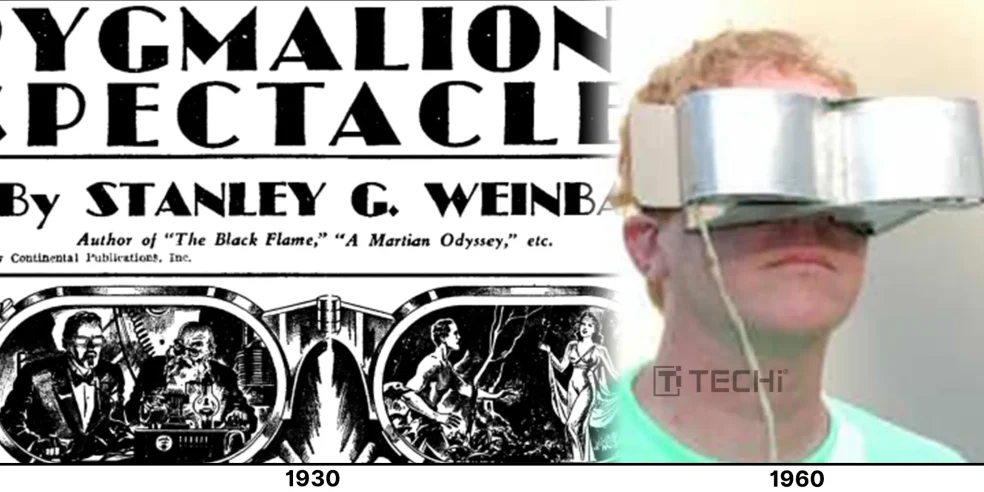
Hyper-realism in VR means creating a digital world that looks like the real world to the point of near perfection in terms of appearance and physical interaction. In 1930, a story by a science fiction writer contained the idea of two glasses by which the wearer experiences an imaginary world. In 1960, the first head-mounted VR was introduced, providing stereoscopy, wide, and 3D vision.
This digital world is designed to resemble the real world, featuring textures on surfaces, slight light reflections, dynamic shadows that change unexpectedly, and even physical responses that would behave the same in the real world. Even the cracks in walls and light breaking through glass will appear as realistic as possible.
The Rise of Hyper-Realistic VR
Virtual Reality started as a source of fun and entertainment. But with time, it became a powerful tool that merges reality with the digital world. The graphics, feelings and presence are becoming identical to our world day by day.
Along with graphics and sharp images, it blends audio, haptic feedback, and olfactory system stimulation. People can now feel the touch and even smell through a scent-based system. The transformation of images into these realistic features is fascinating. The development of VR is not only limited to gaming, but it also benefits healthcare, training, and education. It is changing the way we work, learn, and adapt virtual spaces with the advancing tech. Hyper-realism is no longer a visual delight; it is turning into a requirement of high-impact VR.
What is Photogrammetry and How Does It Work?
Photogrammetry is the method of creating realistic 3D models using photographs. In simple terms, it converts real-life scenes or objects to digital models in 3D by taking a lot of overlapping pictures of an object at different angles.
The application of this technique spans several areas, including architecture, archaeology, games, virtual reality (VR), and so on. Examples include architects using it to scan buildings, archaeologists using it to preserve artifacts for archaeologists, or game and VR designers simply developing a lifelike environment over a shorter time. Here are a few steps of its workflow.
- Capture: Take a series of overlapping high-resolution photos of your subject from multiple angles (ideally a full 360° coverage).
- Process: Load the images into photogrammetry software (e.g., Agisoft Metashape, RealityCapture). The program aligns the photos and detects matching points across them.
- Create the 3D sphere: The software builds a sparse cloud from the matched points and then refines it into a dense point cloud. This is converted into a 3D mesh that represents the object’s shape.
- Texture & Optimize: High‑resolution textures from the original photos are projected onto the mesh to add color and detail. Finally, the model is cleaned up and optimized (removing noise and reducing polygons) for use in games, VR, CAD, etc.
Here is a helpful video on photogrammetry for you to understand how it works.
Video: Create INCREDIBLE 3D models from any photo or video
Photogrammetry vs. Traditional 3D Modeling
Traditional 3D refers to the process where digital artists use software like Blender and Maya to draw the texture and colour of images. At the same time, Photogrammetry automates colour and texture from real objects. It provides more realistic and detailed results on scanned subjects.
Even though photogrammetry is pretty advanced, hand-modelled assets demand a skilled artist, UV mapping, and modelling software to draw textures. The trade-off here is that photogrammetry can only convert captured photographs into realistic ones; anything imaginative or designed from scratch still relies on the traditional way.


Why Photogrammetry Could Be the Next Leap in VR Realism
There are a few reasons that tell us how and why Photogrammetry can be a game-changer in VR realism.
Where traditional models rely on artists for texture and details, Photogrammetry syncs the real texture and color of photographs. It turns the pictures into more realistic 3D models that people can’t even pinpoint the difference.
Photogrammetry creates hyper-realistic 3D models in hours, making it a best fit for large projects. On the other hand, artists have to work way harder and they can take hundreds of days to complete their models. Additionally, they have to draw textures and colours manually.
Photogrammetry is cost-effective as well. If you invest in a high-quality camera and software to develop 3D videos, models etc, there will be no need to hire a team of artists on a long-term basis, adding to the final cost of a project. It’s a compelling solution for startups and organizations on a tight budget.
Photogrammetry is comparatively easy to integrate into VR workflows. Models can be exported directly into some games for training without any changes. Some photogrammetry tools like Reality Capture and Meshroom make it easy to integrate the designs into a VR workflow with an export option.
Also Read: Predictive Maintenance in Milliseconds using Edge AI and 5G
Uses of Photogrammetry.
Here are some ways to use photogrammetry in real life:
Gaming & Entertainment
Photogrammetry is the backbone of the gaming and entertainment industry. In 2014, photogrammetry was first used in a video game with the release of “The Vanishing of Ethan Carter“. After that, Star Wars Battlefront was also released in 2015, utilizing photogrammetry techniques.
Visuals like trees, roads, buildings, and cars are just a click away. Capture photographs and let the software handle the rest. The more the graphics resemble reality, the more our brain fantasizes about playing, thus maximizing the enthusiasm. With Photogrammetry, developing new games and upgrades has become far easier. A historical view of the use of photogrammetry in games is given below.

Architecture & Real Estate
How will my home look after remodeling? That’s a question people think about day and night when they’re renovating their place. Many of us often struggle to choose a certain floor design and layout. Photogrammetry has made it easy to test and check various wall designs and layouts virtually. Real estate agents can now share home tours in VR, and the clients can walk through the property virtually to experience a space fully before purchasing. A 2021 survey through NAR shows that 54% of the people feel more comfortable visiting a property that offers a 3D tour. Photogrammetry also helps us create completely detailed digital copies of 3D models that can be used to market and renovate homes.
Cultural Heritage & Museums
Photogrammetry serves as a digital shield for our most precious historical treasures, protecting them from theft and environmental damage while making them accessible to the world. This technology captures every detail to create stunning 3D replicas that allow you to experience artifacts and landmarks without risking harm to the originals.
Museums have now started to display photogrammetric models of fragile diamonds and priceless artifacts, keeping the real items secure while still giving visitors an authentic viewing experience. Similarly, historic sites can be explored virtually without ever stepping foot outside of your house or spending your savings on expensive trips. The Factum Foundation’s recreation of Pharaoh Seti I’s tomb in Egypt exemplifies this perfectly. Visitors can now walk through the ancient burial chamber’s intricate hieroglyphs and vibrant paintings while the original remains safely preserved beneath the desert sands.
This technology transforms preservation from a choice between protection and access into a solution that delivers both.
Training Simulations
Soldiers and doctors use VR headsets for defending and performing operations virtually. Multiple photographs of the battlefield and the operation theater are captured to create realistic 3D videos. Soldiers wear these VR headsets to learn to fight and locate the loopholes. One example is when the Cavalry Division tested the Reconfigurable Virtual Collective Trainer, part of the STE, at Fort Cavazos, Texas. Doctors practice everything from routine stitches to invasive surgical procedures virtually without harming any lives. Photogrammetry helps to tackle emergencies with quick decision-making and readiness. An example is how the company Medical Realities in the UK offers VR-based surgical training.
Challenges & Limitations of Photogrammetry
Although there are many benefits of photogrammetry, it comes with quite some challenges as well. Photogrammetry adds texture and colour to original photographs, but in the case of large files, we are faced with the obstacle of slow processing. It may take hours to download one large project with minor details, and in return, hardware costs also add up.
Photogrammetry works under two conditions: better light and high-quality images. Uploading photographs captured in dark places or in highly reflective light leads to incomplete 3D models. If you don’t have the perfect light setting or a high quality camera, this tech isn’t as useful.
Although Photogrammetry provides ready-to-use 3D models, it requires some cleanup after processing for even more realistic details. Fixing mesh errors and simplifying polygons takes hours. Additionally, you have to cross-check every minute detail to verify it resembles the original photograph, making it a hectic and time-consuming task. Not everyone has hours and hours to spend on a screen but even if they do, to monitor every minute detail can be a mind numbingly difficult task.
Photogrammetry works well for most objects but it cannot be used for animated elements. The reason is its reliance on photographs to create 3D Models, and images have to be perfect without blurry patches. So, when an animated element is uploaded, the software can’t decode it and gets highly confused. Despite all of these challenges, Photogrammetry still proves useful in creating models of cars, buildings, and landscapes.
What’s next?
Here’s what to expect in the coming years with Photogrammetry. The integration of AI in Photogrammetry is expected due to AI automation trends making headlines every other day. Automatic tools will improve the blurry textures and fill in the gaps, reducing post-processing and manual efforts. Gaussian splatting replaces the traditional polygons with splats to create 3D models. They are lightweight and easy to load, resulting in less computational load on hardware. 5G internet will help you to play live VR streams without downloading them anywhere.
Photogrammetry will be revolutionary in creating a realistic VR of tourist sites in collaboration with AI automation. The places people wish to travel to will be in VR headsets instead. They will experience the ups and downs of mountains, dangerous rides, and the beauty of nature without actually being there.
The next-gen platforms are incorporating AI into a photogrammetry practice to simplify scanning from mobile with live preview and the cloud processing option available. These custom AI models as diffusion transformers have been created to integrate pose estimation, depth mapping, and view synthesis in a single shot.
As we are moving into an advanced digital era, these innovations are expected. It might be some time before we can reach top-notch results but it seems like we are on the right track. Mankind will be touching new heights of development with these emerging technologies revolutionizing all kinds of fields across the map.
Also Read: VR Training Goes Mainstream