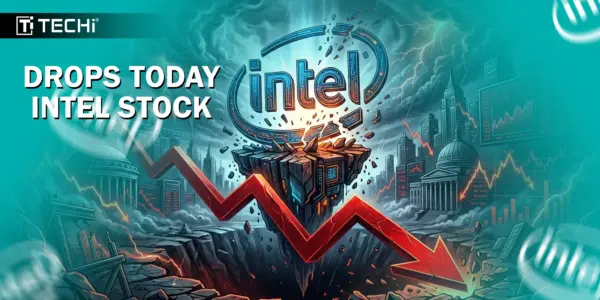
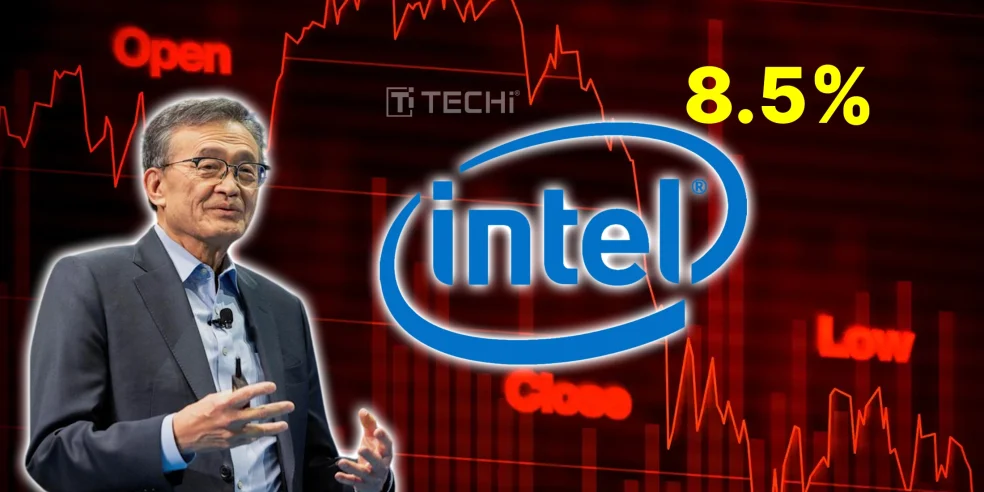
July 26, 2025 – Shares of Intel Corporation (NASDAQ: INTC) tumbled 8.5% on Friday, closing at $20.70, after the chipmaker reported disappointing second-quarter earnings and announced major cost-cutting measures, including plans to lay off 15% of its global workforce.
The sell off came amid growing investor skepticism about the company’s long-term strategy and profitability. The latest results reveal Intel’s ongoing struggle to rebound in a competitive and capital intensive semiconductor landscape.
$2.1 Billion Loss Raises Alarms 🔗
Intel reported a net loss of $2.1 billion, an 81% increase from the $1.16 billion loss reported in the same quarter last year. While total revenue remained flat at $12.9 billion, the company’s operating margin declined sharply.
According to Techi.com, the revenue figure slightly beat Wall Street expectations, but that wasn’t enough to offset concerns about Intel’s deteriorating margins and lack of profitability. The company also posted a loss of $0.67 per share, worse than many analysts had anticipated.
15% Workforce Reduction Underway 🔗
One of the most significant announcements in Intel’s Q2 report was its plan to cut 15% of its workforce, a move that will affect approximately 20,000 to 25,000 employees worldwide. The layoffs are part of a broader restructuring effort aimed at restoring profitability by reducing costs and focusing on high-margin projects.
Intel confirmed the job cuts during its earnings call, citing the need to “right-size operations” and “allocate resources efficiently”. The reduction follows multiple rounds of previous cuts, and insiders suggest that more may be on the way if performance does not improve by Q4.
Foundry Strategy Faces Headwinds 🔗
The layoffs are also tied to Intel’s evolving foundry business strategy, which has seen major pullbacks in recent months. Intel has scrapped plans to build new fabrication plants in Germany and Poland, and is now delaying expansion efforts at its Ohio site.
As reported by Techi.com, Intel’s shift away from aggressive foundry investments marks a significant change in leadership direction. CEO Lip-Bu Tan, who took the reins earlier this year, is scaling back projects that don’t meet strict return on investment thresholds. Under his leadership, Intel will only pursue ventures expected to generate a gross margin above 50%.
In the same report, analysts noted that Intel’s foundry ambitions may be at risk entirely if it fails to secure long-term customers beyond internal demand. A retreat from the contract foundry space would mark a major strategic reversal from its 2021-2023 roadmap under former CEO Pat Gelsinger.
Europe Plans Terminated 🔗
Intel also confirmed that it has formally canceled its multi-billion dollar chip facility plans in Europe. The company had previously received verbal commitments from several EU governments for subsidies and tax incentives, but delays in final agreements and cost overruns led executives to withdraw.
According to internal sources cited by Techi, the company will redirect those funds toward in-house optimization, AI accelerators, and U.S.-based packaging technologies.
Leadership Focuses on ‘No More Blank Checks’ 🔗
In a stark statement during Intel’s earnings call, CEO Lip-Bu Tan emphasized the company’s shift toward financial discipline.
“The era of blank checks is over. We are not going to fund projects that cannot deliver tangible, measurable economic returns,” he said.
This comment echoed earlier remarks in Q1, where Tan first signaled his intent to prioritize core performance and profitability over expansion.
Investors React to Grim Outlook 🔗
Wall Street responded swiftly to the Q2 update. Several analysts downgraded Intel’s outlook for the next two quarters, citing “uncertainty surrounding strategic direction” and the “diminishing role of Intel in global foundry competitiveness.”
Despite recent AI-related optimism in the broader tech sector, Intel appears to be missing out on the upside. Unlike peers such as Nvidia and AMD, Intel has yet to capture meaningful AI workloads at scale.
While restructuring may improve long term margins, short term pain seems unavoidable.
Long Road Ahead for Intel 🔗
With layoffs, canceled facilities, and a shrinking market share, Intel faces a challenging road to recovery. While the company remains one of the most recognized names in the chip industry, its competitiveness, investor trust, and product roadmap all face growing scrutiny.
As noted in both earnings analysis and strategy updates, Intel’s pivot may stabilize finances, but it may also weaken its long-term presence in a sector driven by aggressive innovation.
Stabilization or Continued Slide? 🔗
Looking ahead, Intel’s next earnings report and progress in AI chip development will likely determine whether this is a temporary dip or the continuation of a downward trend.
For now, shareholders appear cautious. The 8.5% stock drop on Friday reflects growing concern that restructuring alone may not be enough to compete in a market dominated by leaner, faster-growing rivals.
Intel’s ability to cut costs while regaining strategic clarity will be critical to its survival in the post silicon era.