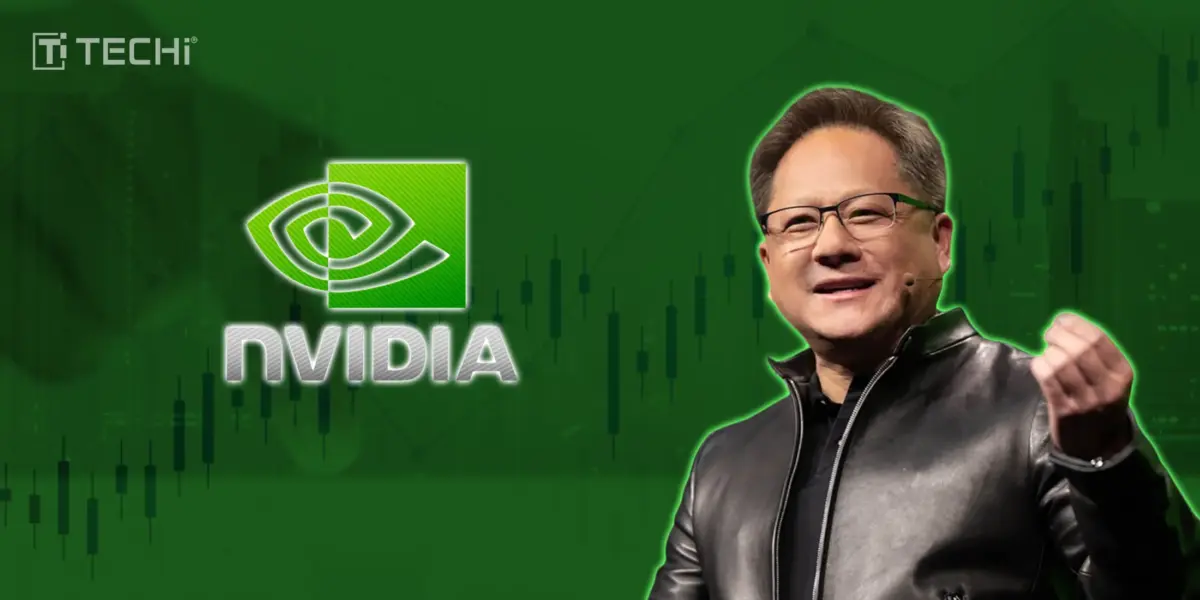
Nvidia stock surged to $179.45 on Tuesday, March 25, 2026 — up 2.43% (+$4.25) as a broad risk-on rally lifted tech stocks. NVDA remains 15% below its 52-week high of $212.19 but commands a $4.34 trillion market cap that makes it the world’s most valuable company. The stock has been range-bound between $170-$198 for six weeks as investors digest the implications of Jensen Huang’s $1 trillion Blackwell-Rubin revenue forecast against the reality of $100+ oil prices and a tech sector in correction mode.
NVDA Stock Price Snapshot — March 25, 2026
Price: $179.45 | Previous close: $175.20 | Day range: $176.85–$179.84 | 52-week range: $86.62–$212.19 | Market cap: $4.34 trillion | P/E (TTM): 36.63 | Avg volume: 186.83M | Revenue (TTM): $215.94 billion | Next earnings: May 20, 2026
Why Nvidia Is Rallying Today
Nvidia is rallying alongside the broader market as geopolitical tensions show signs of easing. The bullish case — that AI infrastructure spending will reach $3-4 trillion annually by 2030 and Nvidia will capture the lion’s share — hasn’t changed. But the bearish overlay of geopolitical risk (Iran conflict, oil above $99), Fed rate uncertainty (3.5%-3.75%, no cuts expected), and the DeepSeek shock from January (proving competitive AI models can be built with far fewer GPUs) has compressed the multiple from 45x to 36x forward earnings.
The Nasdaq has fallen 15% from its February peak. Nvidia has held up better than most Magnificent Seven names — Tesla is down 25%, Microsoft 31%, Meta 20% — but the $212-to-$179 pullback (15%) still represents $800 billion in evaporated market cap.
The GTC Roadmap: $1 Trillion Revenue by 2027
Jensen Huang’s annual GTC keynote in March laid out Nvidia’s most ambitious roadmap yet. The headline: cumulative revenue of $1 trillion from Blackwell and Vera Rubin AI products between 2025-2027. The Blackwell GPU platform is already in mass production, generating over $11 billion in Q4 FY2026 revenue alone. The next-generation Vera Rubin architecture — announced at CES 2026 — targets a 4x performance improvement over Blackwell for AI training workloads, with production slated for H2 2027.
The numbers behind the ambition are staggering. Nvidia’s data center revenue hit $35.6 billion in Q4 FY2026, up 93% year-over-year. Full-year FY2026 revenue reached $130.5 billion — a 114% increase from $61 billion in FY2025. The company has a $1 trillion order backlog as hyperscalers (Microsoft, Google, Meta, Amazon) race to build AI infrastructure.
What Analysts Are Saying
Wall Street consensus remains firmly bullish despite the pullback. According to NASDAQ analyst data, 45 analysts cover NVDA — 42 rate it Buy/Strong Buy, 3 Hold, zero Sell. The average 12-month price target is $234, implying 34% upside from today’s $175. The high target is $320 (from Rosenblatt Securities), the low is $150.
Key recent calls: Bank of America reiterated Buy with a $250 target citing “insatiable” AI demand. Morgan Stanley maintained Overweight at $240, calling Nvidia’s competitive moat “wider than ever.” Citi cut its target from $200 to $185 but kept Buy, noting near-term China export headwinds. Wedbush’s Dan Ives holds a $275 target, calling NVDA his “#1 AI play for the next decade.”
The China Export Question
US export restrictions on AI chips to China remain the stock’s biggest overhang. The H20 chip — Nvidia’s compliance-grade product for the Chinese market — faces ongoing regulatory uncertainty. In January, reports that China received conditional approval for H200 chip purchases sent NVDA up 3% in a single session. But the broader restriction framework means Nvidia is locked out of what could be a $15-20 billion annual market.
Nvidia has responded by accelerating its domestic US manufacturing plans, with CEO Huang announcing Arizona-based production capacity. The strategic pivot reduces geopolitical supply chain risk but adds short-term capex pressure.
Nvidia vs. the Competition
Nvidia controls roughly 80% of the AI GPU market, but competitors are closing in. AMD’s MI300X and MI450 chips are gaining traction — Meta’s $60 billion deal with AMD proved the market is diversifying. Google’s TPU v6, Amazon’s Trainium2, and Microsoft’s Maia 200 custom chips all aim to reduce Nvidia dependency. But none match Nvidia’s CUDA software ecosystem, which creates a switching-cost moat that hardware specs alone can’t overcome.
Key Levels and What to Watch
Support: $175 (previous close and psychological level). Resistance: $185 (200-day MA), then $198 (recent bounce high), then $212 (52-week high). RSI has improved to 52 on today’s rally, suggesting room in either direction.
Catalysts ahead: Q4 FY2026 earnings on May 20 — consensus expects revenue of $43.5 billion (+65% YoY). Any update on Vera Rubin production timelines or China export policy shifts could move the stock 5-10% in either direction. This week, watch PCE inflation data (Friday) and any Iran ceasefire developments.
Should You Buy Nvidia Stock Today?
At $179.45 and 36.6x trailing earnings, Nvidia is cheaper than it’s been since the AI rally began in early 2023. The company generated $215.94 billion in TTM revenue growing triple digits, holds a $1 trillion backlog, and faces no credible competitor to its data center GPU dominance. Every major hyperscaler is increasing — not decreasing — AI capex.
The risk is real: China restrictions, potential AI spending fatigue, DeepSeek-style efficiency breakthroughs, and macro headwinds from $100 oil. But at 34% below the average analyst target and 17% below the 52-week high, the risk-reward tilts toward accumulation for investors with a 12-month horizon.
This article is updated regularly with the latest NVDA price data, analyst targets, and market catalysts. Last update: March 25, 2026, 10:15 AM EDT.