In a remarkable show of market optimism, Oracle jumped over 14% on Thursday, crossing the $200 per-share mark for the first time ever. The surge followed a new fiscal 2026 revenue guidance, now projected to surpass $67 billion, driven heavily by explosive demand for its cloud infrastructure emphasizing artificial intelligence (AI).
While overall market sentiment has been cautiously positive in the face of geopolitical jitters, Oracle has stood out as one of the only old-style tech giants fully riding the wave of the AI revolution. What was once considered a relic of the legacy software era stands at the forefront of the next great wave of enterprise computing.
Strategic Partnership Drives Optimism 🔗
The latest rally is being driven by hard data as well as good stories. During its most recent earnings call, Oracle posted $15.90 billion in quarterly revenues, topping Wall Street estimates of $15.59 billion. Revenue from cloud services, now a top metric to use when measuring tech stocks, increased 14% year over year to $11.70 billion.
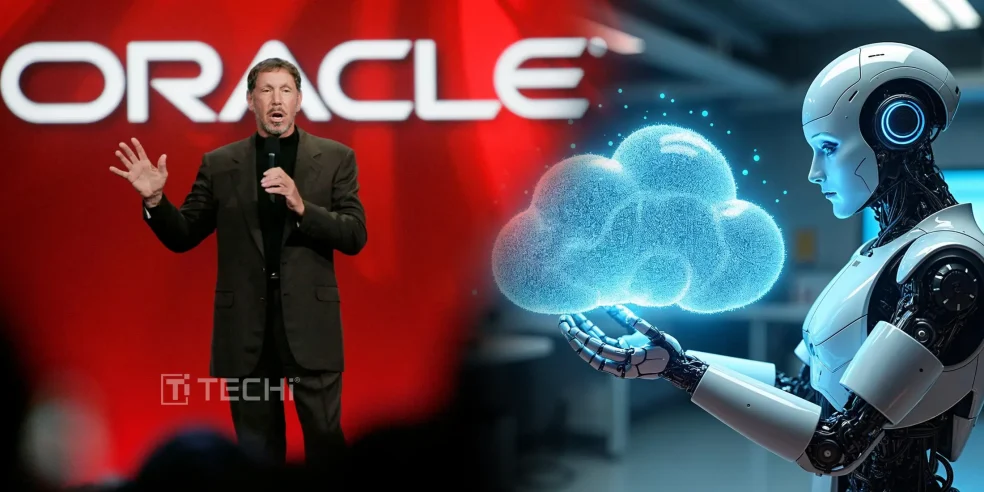
A lot of this energy stems from Oracle’s strategic shift into AI. In the first half of this year, the company revealed a blockbuster partnership called Stargate, developed in collaboration with OpenAI. The project is focused on developing large-scale AI compute capacity to aid generative AI use cases, and it puts Oracle directly at odds with hyperscalers such as Microsoft Azure, AWS, and Google Cloud.
Michael Ashley Schulman, partner at Running Point Capital Advisors said,
“Oracle’s once-stodgy image levels up to ‘cloud-native mage,’ and the competitive map now looks less like a classic three-player real time strategy and more like a battle-royale with everyone dropping in, looking for compute loot”.
Wall Street Notices 🔗
At least nine top brokerages, including Piper Sandler, have increased their price targets for Oracle since the earnings release. Analysts at Piper Sandler added,
“ORCL has entered an entirely new wave of enterprise popularity that it has not seen since the Internet era in the late 90s.”
Oracle currently has a forward price-to-earnings (P/E) ratio of 25.86, which places it fairly in the undervalued territory relative to rivals such as Microsoft (31.34 P/E) and Amazon (31.80), based on LSEG data. Microsoft’s shares have risen 12.16% year-to-date, whereas Amazon has declined by 2.8%. The difference in the path of the markets is adding to Oracle’s attractiveness to investors seeking solid fundamentals, coupled with new upside in the AI infrastructure space.
Regulatory Tensions 🔗
While the hype is on, some analysts are sounding warning bells about threats from the outside. U.S President Donald Trump’s tariffs. If they materialize, it may have broader implications on the tech ecosystem, particularly on those firms with international cloud infrastructure and hardware supply chains. But Oracle’s comparatively constrained exposure to hardware production might provide it with a strategic buffer. Nonetheless, market observers will be monitoring closely how geopolitical tensions play out side by side with the AI gold rush.
Moving Towards Leadership 🔗
Oracle’s revolution has been a while in the making, but 2025 could be the year it finally broke free of its legacy chains. With explosive cloud revenue growth, a high-profile deal with OpenAI, and investors’ renewed interest, Oracle is no longer playing catch-up, it’s leading the pack. In a time when AI is transforming the digital economy, Oracle is demonstrating that reinvention is not just achievable but profitable. Its record stock price isn’t merely a financial achievement, it’s an indicator of what emerges when hassled strategy converges with right timing in the tech industry’s most revolutionary time.
In an era where tech fixates on what’s new and shiny, Oracle is demonstrating that maturity, scale, and a timely AI ace can be much potent. As others are still discovering how to plug into the AI economy, Oracle is on the move.