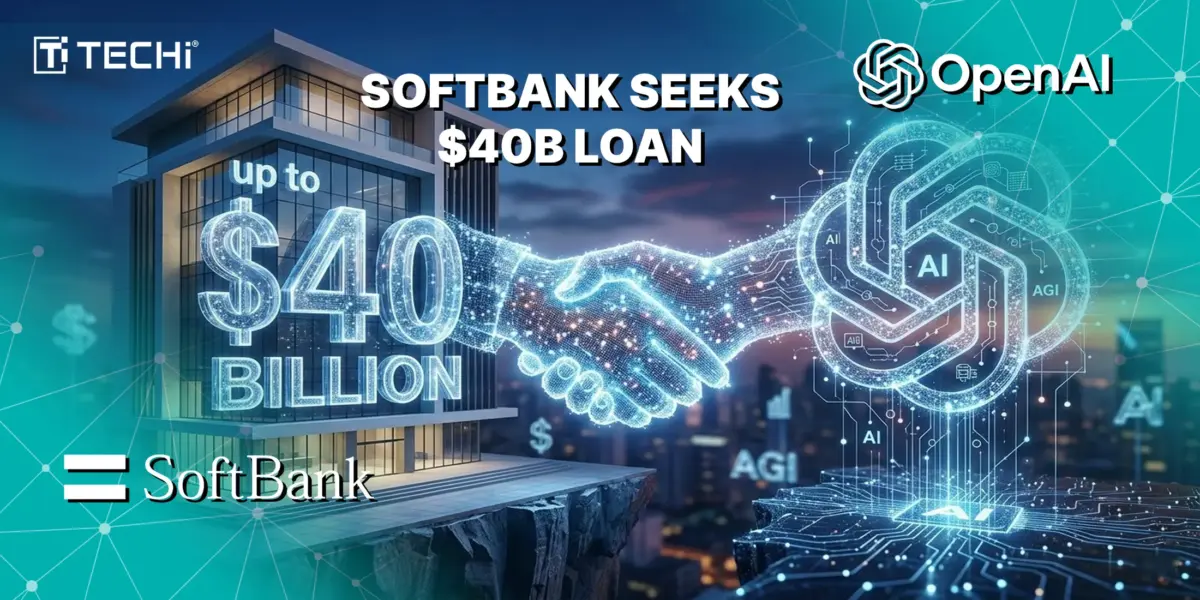
SoftBank is seeking a record-breaking loan of $40 billion to enable the company to invest more funds into OpenAI, the company that sells ChatGPT. The project under discussion, spearheaded by the CEOs Masayoshi Son, is an indication of long-term belief in the fast growth of artificial intelligence, despite market conversation about multi-trillion-dollar valuations.
Loan Details Emerge
As Bloomberg reported, Softbank is negotiating a twelve-month bridge loan, with a group of three, led by JPMorgan, as lead arrangers. The funds are to augment the share of SoftBank in OpenAI to $110 by the year 2025, following a series of capital infuses of about $41 billion dollars, and a final 22.5 tranche in December.
The talks are still continuing, and the conditions can be adjusted; however, the deal would mark the biggest borrowing in U.S. dollars that SoftBank had so far. The details cannot be independently verified by Reuters and none of the sides provided a timely response to the general public.
Son’s AI Obsession Builds
This position – the all-in strategy taken by Son – is based on the recent 110 billion round of funding of OpenAI that put the company at a valuation of 840 billion. That round included $30 billion shares made by SoftBank and Nvidia in addition to $50 billion made by Amazon, making it exceed the traditional technology venture financing.
OpenAI is considering a 1 trillion IPO supported by an infrastructure funding pledge of 1.4 trillion over the span of several years, and partnerships with Nvidia, AMD, and Broadcom to supply the compute capability of models that are challenging to execute. An additional deal, where SoftBank earlier this month bought Digital Bridge at a price of $4 billion, boosts its artificial-intelligence data-center business, partially offsetting the sale of a $5.8billion position in Nvidia.
Market Implications
The suggested loan depicts the enhanced capitalization in the artificial-intelligence industry under pressure of increased demand. It is true that OpenAI is expanding according to the industry dynamics, as seen in the recent Broadcom announcement of a forecast of a $100 billion of AI-chip revenues in 2027.
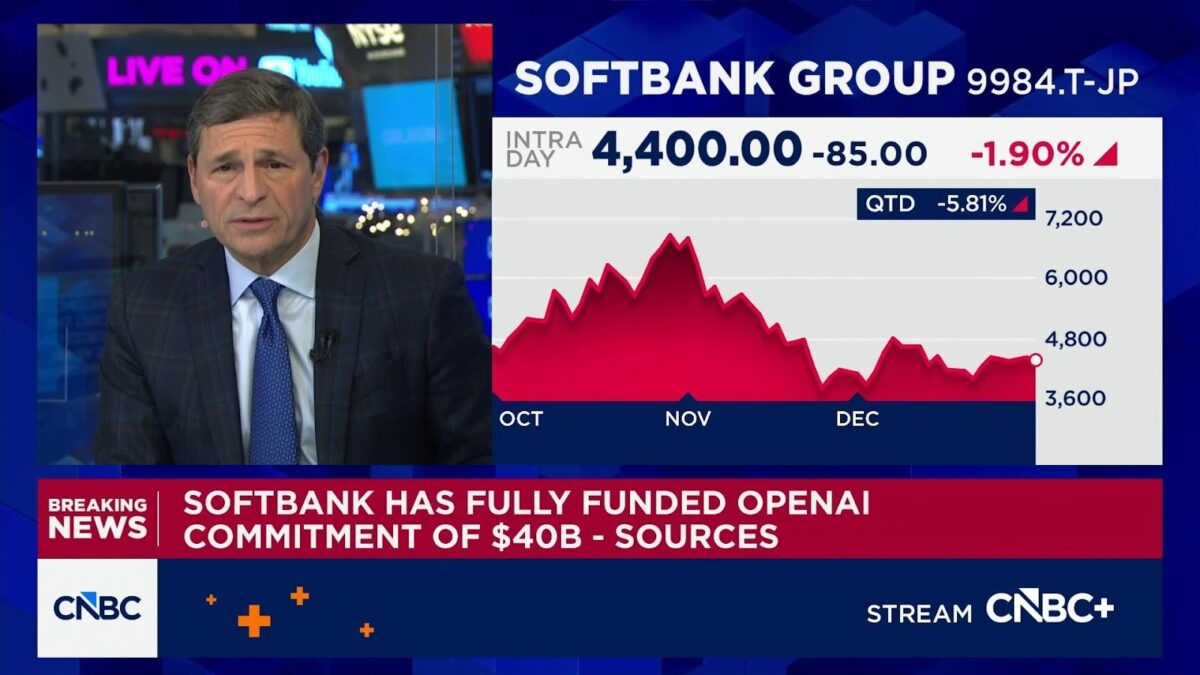
Wedbush analyst Dan Ives termed the deal as a turning point, since the financial leverage enabled to face the infrastructure leadership of OpenAI could be fast-tracked by SoftBank, although he also expressed that there is a possible risk of debt writing down in case the artificial-intelligence hype dies. The fact that the share of SoftBank ticker: 9984.T is often performed in the way it suggests the market to react on the bold orders issued by Son prompting comparisons with the struggles of WeWork.
Future Outlook
It is estimated that there will be an OpenAI data-center in Japan, which will be operational in the second half of 2026, and this will increase the geographic reach of the company. Provided that the loan comes to fruition, SoftBank would find itself in the lead in the field of artificial-intelligence development, though the rising interest rates and the restrictions of the U.S government regarding the export of chips can present serious challenges.
Critically speaking, the strategic vision of Son will only work provided that OpenAI achieves the mark of one trillion scale, and excessive leverage may create further pressure on the balance sheet considering that the rate of unemployment in the United States is projected at 4.3% currently and tariff talks are still ongoing. The current computational race in the artificial-intelligence field seems to work to the benefit of the organization with considerable financial resources, underlining the ambitious activity of SoftBank.