

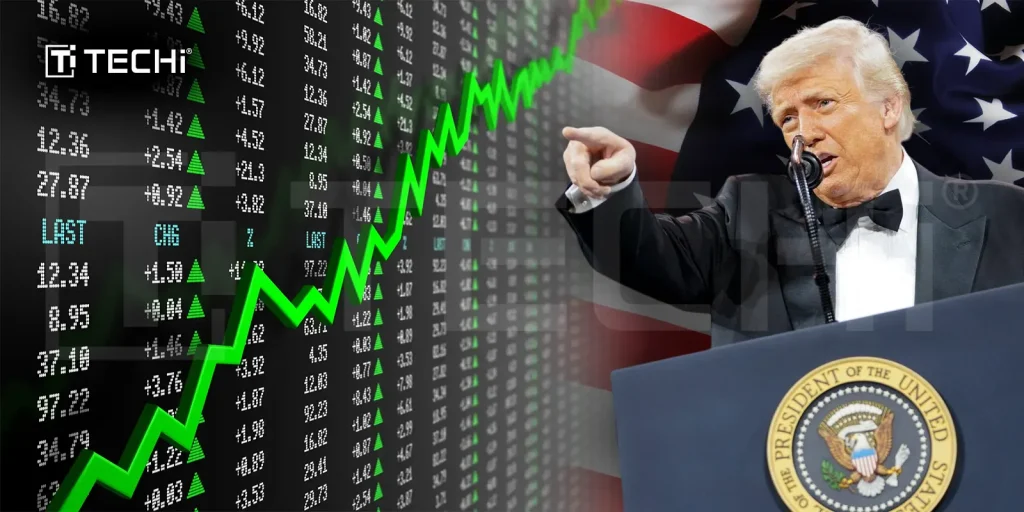
U.S. stock futures rose modestly overnight after President Donald Trump extended his deadline for strikes on Iranian energy infrastructure by ten days to April 6, granting what he described as an Iranian request for more time. S&P 500 futures gained 0.5%, Nasdaq 100 futures added 0.4%, and Dow futures climbed 0.6% in after-hours trading. The immediate instinct on trading desks was relief — the same reflexive optimism that briefly added 900 points to the Dow on March 23 when Trump first announced a five-day pause in military action.
But this may be a false signal. The pattern has played out twice now in a single week: Trump announces a pause, markets surge, Iran denies any talks, and the rally evaporates within 48 hours. The March 23 relief rally of +1.38% on the Dow was completely erased by March 26, when the S&P 500 fell 1.74% in its worst single session since the war began. By Friday March 27, the Dow had dropped another 610 points, entering correction territory — down 10.2% from its recent high. Markets are pricing hope, not risk. And the bond market knows it.
What Happened — The Two Postponements
The timeline matters because it reveals a pattern that investors are failing to recognize.
On March 22, Trump issued a 48-hour ultimatum on Truth Social: Iran must reopen the Strait of Hormuz or the United States would destroy Iranian power plants and energy infrastructure. Less than 24 hours later, on March 23, he reversed course — postponing all military strikes for a five-day period, citing “very good and productive conversations” facilitated by Jared Kushner and special envoy Steve Witkoff. The Dow surged 631 points.
Iran immediately denied any talks had taken place. Foreign Minister Abbas Araghchi told Al Jazeera: “No negotiations have happened with the enemy until now, and we do not plan on any negotiations.” The rally unwound.
Then on March 26, ten minutes after the closing bell — a timing detail worth noting — Trump posted a second extension, pushing the deadline to April 6 at 8 PM Eastern. He claimed it was “as per Iranian Government request.” Iran denied this too. Overnight futures popped modestly. The cycle begins again.
Why Markets Keep Reacting to Headlines Instead of Fundamentals
The relief rallies following Trump’s postponements reflect three dynamics that have little to do with genuine de-escalation.
First, algorithmic trading systems are programmed to respond to keyword sentiment in real-time social media posts. When Trump writes “talks are going very well” on Truth Social, natural language processing models register a positive geopolitical signal and trigger buy orders within milliseconds — before any human analyst can assess whether the statement has substance. UBS Chief Economist Paul Donovan put it bluntly in a Fortune interview on March 24: “Markets are not reacting to information, they are generally reacting to social media posts.” He warned that Wall Street has become “bewitched” by positive headlines, with investors wanting to believe the war is ending “without verifiable evidence.”
Second, institutional positioning creates mechanical bounce dynamics. JPMorgan’s Dubravko Lakos-Bujas flagged that gross leverage remains near the 95th percentile — meaning hedge funds are heavily exposed and any positive headline triggers short-covering cascades that amplify moves far beyond what fundamentals justify. The $1.7 trillion in equity market value gained within minutes of Trump’s first postponement tweet was promptly unwound when Iran denied the talks. But the mechanical dynamics guarantee these whiplash moves will keep repeating.
Third, there is a deep human desire among market participants to see a resolution. As the European markets demonstrated when they entered a holding pattern ahead of earlier U.S.-Iran diplomatic signals — trading with “a certain sense of uncertainty about the direction of intraday events” rather than making aggressive moves — investors would rather wait for clear signals than position for deterioration. Hope is easier to trade than fear. But hope is not a strategy.
The Reality — Risk Has Not Decreased
A delay is not a de-escalation. The underlying conditions that drove Brent crude above $111 per barrel have not changed since Trump’s second extension. Consider what has actually happened since the “pause” narrative began:
The Strait of Hormuz remains effectively closed. Commercial transits have collapsed by 94.2% — from approximately 120 vessels per day to just 6.9. All major shipping carriers have suspended transits. On March 27, two Chinese ships were turned away despite Iran’s announcement that “non-hostile” vessels could pass, demonstrating that even selective access is unreliable. Iran’s IRGC has threatened to lay sea mines if struck, which would sever Gulf shipping entirely for months.
Iran’s negotiating position is a non-starter. Tehran’s five-point counter-proposal demands permanent sovereignty over the Strait of Hormuz, war reparations, the closure of U.S. military bases in the Persian Gulf, and an end to all military operations. A U.S. official described these demands as “ridiculous and unrealistic.” Araghchi acknowledged message exchanges through Pakistani intermediaries but explicitly said the communications do not constitute negotiations.
Iraq’s Basra production has been cut 70% — from 3.3 million barrels per day to 900,000 — because the Hormuz closure blocks its primary export route. Saudi Arabia shut the Ras Tanura refinery. Israeli forces killed Iranian navy commander Alireza Tangsiri, accused of orchestrating the Strait closure. The IEA has called this “the largest supply disruption in the history of the global oil market,” with Rystad Energy estimating 500 million barrels lost so far.
This is not stability. This is a pause in uncertainty.
Oil Is the Real Signal — And It Is Screaming
Equity traders celebrate delays. Oil traders price reality. The divergence between stocks and crude since March 23 tells the entire story.
When Trump announced the first postponement, oil dropped 11% in a single session — Brent fell to $99.94 and WTI sank to $88.13. Equity traders cheered. But within 72 hours, Brent had clawed back to $108, and by March 27 it topped $111.06 — higher than before the “peace” announcement. WTI surged to $97.01. Oil did not buy the narrative.
Goldman Sachs Head of Oil Research Daan Struyven estimates an $18 per barrel geopolitical risk premium embedded in current prices and has raised the firm’s Q2 Brent average forecast to $110. In an extreme scenario where disruption persists six months, Goldman projects Brent could reach $160 per barrel — surpassing the 2008 all-time high of $147.
The Strait of Hormuz handles roughly 18% of global oil consumption. When that choke point closed, the early-conflict scramble that sent Bitcoin to $63,038 and Ethereum to $1,836 — as traders flocked to crypto markets for 24/7 hedging because traditional exchanges were closed over the weekend — was just the opening act. The real economic damage is only beginning to compound through supply chains, shipping costs, and refinery margins. Jake Ostrovskis of Wintermute described Bitcoin as “the most liquid asset in macro views when other markets are dead.” That observation carries more weight now than when he made it on March 1, because the underlying crisis has only deepened.
The Bond Market Is Not Buying the Relief Story
Here is the signal that should concern every equity investor celebrating the strike delay: the 10-year Treasury yield sits at approximately 4.45% — its highest level since July 2025. That represents roughly a 50-basis-point increase since before the war started, when the 10-year was near 3.96%.
This is the opposite of what should happen during a geopolitical crisis. Normally, investors flee to Treasury bonds when wars escalate, pushing yields down. Instead, yields are rising because the bond market is pricing something equity traders are ignoring: oil-driven inflation that will prevent the Federal Reserve from cutting rates, and potentially force hikes. Three Treasury auctions this week — 2-year, 5-year, and 7-year notes — all showed weak demand at higher yields than anticipated. Bond investors are demanding more compensation for holding government debt, not less.
The VIX remains elevated at 25.33 — nearly 60% above its pre-war level in the mid-teens. The VIX futures curve is in backwardation, meaning near-term fear exceeds long-term expectations, a rare stress signal. The S&P 500 has moved more than 1% intraday on 14 of 18 trading days in March — a pace not seen since the 2022 Fed rate shock. Stocks are rallying on headlines while every other risk indicator flashes warning.
The Trump Pattern — Markets Have Seen This Movie Before
This is not the first time markets have rallied on a Trump policy reversal only to discover the underlying trajectory remained unchanged.
In April 2025, Trump temporarily lifted tariffs on smartphones, laptops, and chips imported from China. The exemption, which lasted 90 days, was seen as a major relief for tech companies like Apple and Nvidia, whose shares surged on the announcement. About 80% of smartphones sold in the U.S. are imported, many from China where a 145% tariff had been applied. Markets rallied as if the trade war was over.
It was not. Commerce Secretary Howard Lutnick confirmed the relief was temporary, and the administration soon imposed targeted tariffs to force manufacturing back to the U.S. Trump himself wrote on Truth Social: “NOBODY is getting ‘off the hook’ for the unfair Trade Balances. Especially not China which, by far, treats us the worst!” The brief euphoria had already wiped $2.1 trillion — around 14% — from the combined value of the Magnificent Seven tech firms before the tariff pause was even announced. The relief rally recovered a fraction of those losses before reality reasserted itself.
The Iran dynamic follows the same script. Trump announces a pause, markets celebrate, the underlying conflict intensifies, and investors who bought the rally find themselves underwater within days. The difference this time is that the stakes are exponentially higher — this is not a trade dispute over smartphone tariffs but a military conflict disrupting 18% of global oil supply.
Historical Precedents — Why This Time May Be Different
Wall Street’s optimists are pointing to the 1991 Gulf War playbook. Iraq’s invasion of Kuwait triggered a 135% oil surge and a roughly 16% S&P 500 decline, but after Operation Desert Storm resolved in a 100-hour ground war, the S&P gained 26% that year. The template says: buy the fear, sell the resolution.
The analogy is dangerously flawed. The 1991 conflict resolved fast, supply came back quickly, and oil collapsed. Iran has mined the Strait of Hormuz, deployed drone warfare against shipping, and the U.S. has no 100-hour ground war option against a mountainous country of 88 million people with sea-mining capabilities that can keep the strait closed for months. Shipping analysts assess that routine Hormuz transit is unlikely to resume in 2026.
The more apt parallel is Russia-Ukraine in 2022. Markets gained 3.27% in the first week after Russia’s invasion — a classic relief rally when the initial shock passed. But one year later, the S&P 500 was down 6.05%. The war’s real damage came through energy channels: oil-driven inflation triggered the Fed’s most aggressive rate-hiking cycle in 40 years, which crushed equities for the next 18 months. The 2026 analog is strikingly similar — oil above $111 is already forcing the Fed to delay rate cuts, Goldman Sachs has pushed its first expected cut to September, and Treasury yields are climbing even as equities rally on ceasefire hopes.
LPL Research data shows the S&P 500 declines an average of roughly 5% after geopolitical shocks, bottoms in three weeks, and recovers within one to two months in 70% of cases. Bulls cite this statistic religiously. Bears note it covers conflicts that did not sever 18% of global oil supply indefinitely.
What Smart Money Is Actually Watching
Lloyd Blankfein, Goldman Sachs Senior Chairman, told CNBC on March 25: “The fallout is going to last” even if “there’s a resolution tomorrow.” He explicitly warned that parts of the market are “too complacent” and urged investors to be “very fleet of foot and very protective” of their positions. His most pointed observation: “You could put on hedges, and those hedges could be worthless tomorrow, if things go another way. I think people should be good contingency planners at this time.”
JPMorgan’s research team is watching four variables that matter far more than Trump’s Truth Social posts:
Oil persistence. JPMorgan co-head of economic research Joseph Lupton warned that “this event generates greater macroeconomic risk than recent military conflicts” because of its potential to disrupt global energy supply chains with “material, lasting political and economic consequences.” If Brent remains elevated through mid-year, global GDP growth could be depressed by 0.6% with global CPI rising more than 1%.
Recession probability. Goldman has raised its U.S. recession odds to 30%, up from 25%, and lowered its 2026 GDP forecast to 2.1%. Four out of five oil shocks since the 1970s have led to recession — a fact that JPMorgan’s Lakos-Bujas team emphasized when cutting the S&P 500 year-end target from 7,500 to 7,200. Their downside scenario is 6,000–6,200. Goldman’s severe-case target is 5,400.
Supply chain fractures. The Hormuz closure is not just an oil story. It affects LNG flows, petrochemical feedstocks, and container shipping routes. European TTF natural gas futures are up 34% since March 1. The broader shift toward supply chain fragmentation — a theme that first emerged during the COVID-19 pandemic and intensified with Trump’s tariff regime — is now accelerating under the pressure of actual military conflict.
Dollar and reserve diversification. The de-dollarization trend is accelerating precisely because the Iran conflict demonstrates the vulnerability of the dollar-denominated global energy system. Central banks purchased 863 tonnes of gold in 2025 and are continuing to diversify away from dollar reserves. This structural shift has implications for Treasury demand and U.S. borrowing costs that extend well beyond the immediate conflict.
The Bigger Risk Is Not the Strike — It Is Prolonged Instability
Markets are debating whether Trump will strike Iranian energy infrastructure after April 6. That is the wrong question. The right question is what happens to the global economy if the Strait of Hormuz remains contested for three months, six months, or longer — regardless of whether a single additional bomb is dropped.
An energy shock of this magnitude has three compounding effects. First, inflation resurgence: oil above $100 feeds directly into transportation costs, heating bills, food production, and manufacturing. The Fed held rates at 3.5%–3.75% at its March meeting and the dot plot still projects one cut in 2026, but the market is now pricing roughly a 50% chance of a rate hike by December if energy costs persist. Second, corporate margin compression: every major S&P 500 sector outside energy faces higher input costs that cannot be fully passed through to consumers in a slowing economy. Third, a global growth slowdown concentrated in oil-importing nations — Europe, Japan, India, and emerging markets — that reduces demand for American exports and technology.
JPMorgan’s Natasha Kaneva, Head of Global Commodities Strategy, captured the shift precisely: “The market is shifting from pricing pure geopolitical risk to grappling with tangible operational disruption.” That distinction matters. Geopolitical risk can dissipate overnight on a tweet. Operational disruption — mined shipping lanes, cancelled insurance policies, rerouted tanker traffic, shut refineries — takes months to unwind even after a ceasefire.
What Happens Next — Two Scenarios
Scenario 1: Genuine de-escalation. Iran agrees to reopen the Strait, a verifiable ceasefire takes hold, and oil drops $15–20 per barrel within days. Equities rally 5–8% as the risk premium unwinds. This is the outcome markets are trying to price in. The problem: every verifiable signal — Iran’s negotiating demands, the IRGC’s sea-mining threats, the killing of the Iranian naval commander — points in the opposite direction.
Scenario 2: Prolonged stalemate or escalation. The April 6 deadline passes without a deal. Trump either strikes energy infrastructure (triggering an immediate oil spike toward $130–$160) or extends the deadline again (maintaining the current state of limbo). In either case, the economic damage from Hormuz disruption continues to accumulate. Recession probability rises. Corporate earnings estimates for Q2 and Q3 are revised downward. The S&P 500 eventually reprices to the 6,000–6,200 range that JPMorgan’s bear case implies.
The asymmetry is what matters. If you are long equities betting on Scenario 1, you gain 5–8% on a resolution that has no verifiable momentum behind it. If Scenario 2 materializes, you face a 15–25% drawdown from current levels. Smart positioning in this environment is not about predicting the outcome — it is about recognizing that the market is offering poor odds to bulls and favorable odds to those hedging downside.
Frequently Asked Questions
Why did stock futures rise after Trump delayed Iran strikes?
Stock futures gained 0.5% to 0.6% after Trump extended his deadline for striking Iranian energy infrastructure to April 6. Algorithmic trading systems responded to positive sentiment in Trump’s Truth Social post about talks going well. However, the pattern has repeated twice in one week — each time, the initial relief rally was erased within 48 hours as Iran denied any negotiations were taking place. UBS Chief Economist Paul Donovan warned markets are reacting to social media posts, not information.
Is the Strait of Hormuz still closed?
Yes. As of March 27, 2026, commercial transits through the Strait of Hormuz have fallen 94.2% from pre-war levels. All major shipping carriers — Maersk, CMA CGM, MSC, Hapag-Lloyd — have suspended transits. Iran’s IRGC controls passage and has threatened to lay sea mines if Iranian territory is struck. Shipping analysts assess routine transit is unlikely to resume in 2026.
Will oil prices go down if there is a ceasefire with Iran?
Goldman Sachs estimates an $18 per barrel geopolitical risk premium is currently embedded in oil prices. A genuine ceasefire and Hormuz reopening would likely trigger a $15-20 drop in Brent crude. However, Goldman’s Daan Struyven warns that if disruption persists, Brent could reach $160 per barrel — exceeding the 2008 all-time high. JPMorgan has modeled global GDP contraction of 0.6% and CPI increases above 1% if elevated oil prices persist through mid-year.
What should investors do during the Iran conflict?
Goldman Sachs Senior Chairman Lloyd Blankfein advised investors to be very fleet of foot and very protective of positions, warning that the fallout will last even if there is a resolution tomorrow. JPMorgan flagged that gross leverage remains near the 95th percentile, making markets vulnerable to cascading forced unwinds. Rather than betting on a specific outcome, analysts suggest hedging downside risk through options, maintaining elevated cash positions, and monitoring oil prices and Treasury yields as leading indicators rather than equity headlines.
If the Strait of Hormuz remains under threat, the real story is not whether strikes are delayed — it is whether global energy markets can stay stable long enough for the damage to remain contained. Markets celebrate delays, but ignore direction. And the direction, by every measurable indicator beyond equity futures, is toward escalation.
This remains a developing situation with significant implications for global markets. TECHi will continue to update this analysis as conditions change.