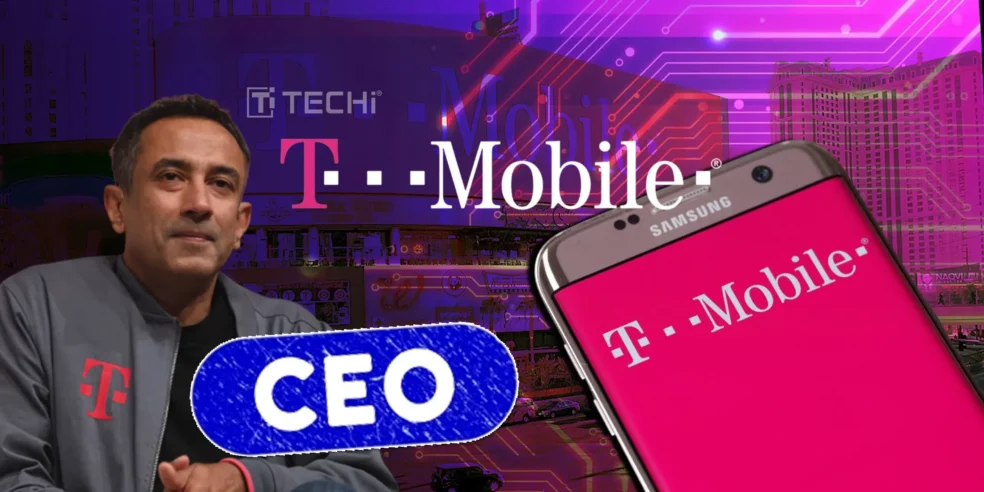
T-Mobile is shifting gears with its leadership transition on November 1st, 2025. The transition from predecessor Mike Sievert to the successor Srini Gopalan is an evolution from infrastructure deployment to AI-driven digital transformation, given the profiles of both leaders.
The outgoing CEO would stay on as Vice Chairman, but Gopalan’s work is cut out to facilitate the company’s transition into this AI-centric landscape.
From Acquisition Master To Innovation Architect 🔗
Mike Sievert’s five-year tenure will be remembered as T-Mobile’s empire-building era, characterised by aggressive growth through strategic acquisition and network expansion. Sievert transformed the company from a struggling Sprint merger survivor into a real competitor to giants like Verizon and AT&T.
Most recently, it was credited to Sievert’s strategic acumen that T-mobile acquired UScellular, under a deal that was financially and strategically nothing but class. Sievert stuck to basics and played by the classic playbook: expand the network, win new customers, and keep the prices competitive.
Gopalan, on the other hand, represents a pivot towards a more sophisticated value proposition. His experience of doubling growth and market share at Deutsche Telekom Germany establishes his expertise in the markets where pure network competition has given way to digital service innovation.
Similarly, at Bharti Airtel and Capital One, he implemented digital initiatives that streamlined customer interaction and internal processes. Gopalan’s pattern is evident; he identifies opportunities to use technology to optimise existing operations into a more agile, scalable, customer-focused system.
This background defends the choice of Sirina Gopalan as T-Mobile, like many other companies, faces challenges in monetising its 5G infrastructure investment through applications that extend far beyond traditional voice and data service.
Gopalan’s AI-Driven Playbook for T-Mobile 🔗
The leadership switch at T-Mobile has come at a time when AI is becoming a game-changer in Telecom. Instead of faster, under Gopalan’s leadership, T-moile aims at turning its 5G network into a platform that powers intelligent and context-aware services.
Winning in telecom is not about raw speed anymore; it’s about using AI to create smarter, more valuable services that customers actually notice and benefit from.
Gopalan’s approach mirrors the trend in other industries as well, where AI is moving from customer support to core innovation. This could be T-Mobile’s moment to become a tech innovation leader from just being another network provider.
The Succession Plan 🔗
T-Mobile’s recent transition reflects a strategic approach to succession planning. The move to make vertical promotions ensures preservation of knowledge while introducing fresh redirection.
For instance, when Apple appointed Tim Cook as CEO, it was a clear succession plan to ensure continuity and stability within Apple. In a likewise fashion, Microsoft’s transition from Steve Ballmer to Satya Nadella involved a well-planned succession with Nadella’s deep-rooted understanding of the company’s culture.
These examples underscore the value of well-planned succession where the company pulls up their dependable resource instead of going for someone from the outside.
T-Mobile’s leadership transition is more than just a change of face. Keeping Sievert on board the company preserves hard-won institutional knowledge and gives Sirina Gopalan a free hand to drive AI-centric strategy.
This blend of continuity and innovation positions T-Mobile to fight this battle of AI in the telecom industry with sufficient ammunition and artillery.