

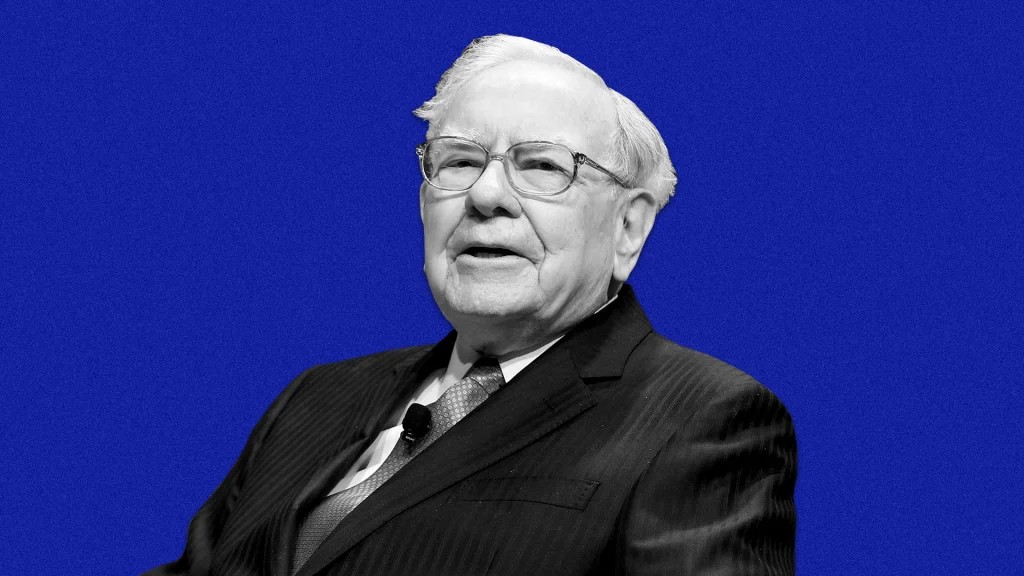
For three years, Wall Street had a favourite punching bag: Warren Buffett. While tech stocks soared and the S&P 500 climbed to record highs on the back of an AI frenzy, the Oracle of Omaha sat on a mountain of cash and did almost nothing. Critics called it timidity. Some called it senility. A few called it irrelevance.
Now the market has answered back. With the S&P 500 down roughly 11% year-to-date in 2026 and Berkshire Hathaway stock up approximately 12% over the same stretch, Buffett’s so-called mistake looks a lot like a masterclass. The $373 billion in cash and short-term Treasuries that made headlines for all the wrong reasons is now the envy of every institutional investor trying to explain their drawdown to clients.
This is the story of how patience, discipline, and an old-fashioned refusal to chase momentum built one of the greatest defensive positions in investment history — and what every investor can learn from it before the next leg down.
The $373 Billion Fortress: What the Numbers Actually Show
Berkshire Hathaway ended 2025 holding $373.3 billion in cash and cash equivalents, according to the company’s Q4 2025 10-K filing. The figure had peaked at $381.7 billion in Q3 2025 before modest deployment trimmed it slightly. To put that number in context: it exceeds the GDP of most countries and represents more liquid firepower than the market capitalisation of all but a handful of corporations on earth.
The accumulation was deliberate and methodical. According to Yahoo Finance, Buffett had been defending his cash position publicly as recently as February, arguing that the right opportunity simply had not appeared at the right price. He did not have to defend it much longer.
Between 2022 and 2024, Berkshire sold a net $172.93 billion in equities. In 2024 alone, the company sold a net $134.1 billion in stocks — a pace of liquidation that few investors grasped in real time. The most high-profile move was the steady reduction of Apple holdings, cutting Berkshire’s position by more than half over roughly 18 months. Data from CompaniesMarketCap tracks the steady build in Berkshire’s cash balance across that entire window.
While the cash sat idle in absolute terms, it was not idle in practice. Parked almost entirely in short-term U.S. Treasuries, the pile was earning approximately 3.6% annually — generating somewhere north of $13 billion per year in risk-free interest income while Buffett waited for the right pitch. That is not dead money. That is a paid waiting room with a very large chair.
If you’re building a long-term portfolio, understanding where tech stocks fit in a diversified strategy is just as important as understanding when to hold cash.
Why Wall Street Got It Wrong: The Criticism Timeline
The criticism of Buffett’s cash hoard was not subtle. Financial media spent most of 2023 and 2024 asking whether the man who had beaten the market for six decades had finally lost his edge. The narrative was seductive: AI was reshaping every industry, the S&P 500 was compounding at double-digit rates, and Berkshire was sitting on the sidelines earning Treasury yields.
Fortune asked in late 2024 whether Buffett was being fearful or simply patient — framing it as a genuine strategic question rather than an obvious answer. The financial community was split. Many concluded the answer was fear, or at least an outdated framework ill-suited to a technology-driven market.
Morningstar noted that Buffett consistently dismissed the concerns at shareholder meetings, framing the cash not as a failure to act but as a reflection of the price of available assets. In his words, he would rather hold cash than buy something mediocre at an elevated price. That position drew eye-rolls from commentators watching Nvidia and other AI darlings post 200% gains.
At Berkshire’s annual meeting in May 2024, Buffett offered a hint that has since aged remarkably well: he noted that higher corporate tax rates were likely coming, making it advantageous to realise gains now rather than later. It was a quiet signal about fiscal expectations embedded in a broader answer about cash allocation. Very few observers connected the dots at the time.
Nasdaq’s analysis later described how Buffett’s warning to Wall Street reached what it called “deafening proportions” through 2024 — visible in hindsight, but dismissed at the time because the market kept going up. That is the nature of late-cycle warnings: they are correct but inconvenient, and so they get ignored until they cannot be.
The Market Shift: How 2025 and 2026 Vindicated the Strategy
The vindication did not arrive with a single crash. It came in layers. Valuations that had been stretched by years of low rates and AI enthusiasm began to compress as the macro environment shifted. By the time the S&P 500 had shed roughly 11% year-to-date in 2026, the story had changed completely.
Fortune reported in March 2025 that Buffett appeared to have seen the selloff coming — not through any mystical foresight, but through the straightforward application of a valuation framework he had used for decades. When prices get too high relative to underlying earnings power, you sell. When they get low enough, you buy. The problem for most investors is that the gap between those two moments can last years, which is precisely when discipline breaks down.
Berkshire’s 12% gain in 2026, set against the S&P 500’s 11% loss, represents a spread of roughly 23 percentage points. For a company with Berkshire’s market capitalisation, that is an extraordinary outcome. It also reflects the structural advantage that cash provides in a down market: not only does it preserve capital, it appreciates in relative terms as everything else falls.
The Motley Fool observed in March 2026 that Buffett’s warning to Wall Street was “echoing” through market commentary — investors who had dismissed the cash pile were now citing it as the template they wished they had followed. The irony is that the strategy was never secret. It was published in annual letters, stated plainly at shareholder meetings, and demonstrated in real time through 12 consecutive quarters of net stock selling.
The Power of Dry Powder: A Historical Pattern of Crisis Buying
The cash pile is only half the story. The other half is what Buffett does with it when the moment arrives. His track record in deploying capital during market dislocations is among the most consistent in investment history.
During the 2008 financial crisis, Berkshire deployed capital into Goldman Sachs, General Electric, and other distressed names at terms unavailable to ordinary investors. During the COVID crash of March 2020, Berkshire was slower to deploy — a decision Buffett later acknowledged as a missed opportunity — but the principle remained intact: cash is ammunition, and you need it loaded before the shooting starts.
The $373 billion sitting in Treasuries today is not a statement of pessimism. It is a statement of readiness. When high-quality businesses become available at prices that reflect genuine value rather than market enthusiasm, Berkshire will be in a position that almost no other institution can match: the ability to write a large cheque immediately, without selling other assets at depressed prices to fund the purchase.
That asymmetry — being a buyer when others are forced to be sellers — is the structural edge that patient capital creates. It cannot be replicated by funds with redemption windows or portfolios fully invested in equities at the peak.
Buffett vs. the AI Rally: Why He Sat It Out
The most pointed criticism of Buffett’s cash position centred on the AI investment cycle. While Nvidia, Microsoft, and a handful of other companies generated extraordinary returns for investors who bought and held through the hype, Berkshire stood largely apart. The question was obvious: why didn’t one of the world’s greatest investors participate in what many called a generational technology shift?
The answer, consistent with everything Buffett has said publicly for decades, is valuation. He does not buy what he cannot value with confidence, and he does not pay prices that assume a perfect future. Semiconductor manufacturers trading at 30 to 40 times earnings on the assumption that AI infrastructure spending would compound indefinitely did not fit that framework — not because AI is unimportant, but because the prices reflected an optimism that left no margin for error.
For investors exploring the AI sector today, understanding the best AI stocks at current valuations requires the same kind of discipline Buffett applied: price matters, always.
The one major technology position Berkshire held through this period was Apple, and even there, the significant reduction of that stake — from a position worth over $150 billion to a much smaller holding — signalled that even Buffett’s highest-conviction technology bet had become too expensive relative to his view of intrinsic value.
What Comes Next: Greg Abel’s Inheritance
The transition of power at Berkshire Hathaway at the end of 2025 marked the end of one of the longest CEO tenures in corporate history. Greg Abel, who took over from Buffett as chief executive, inherits a balance sheet unlike anything in the corporate world: a company with $373 billion in liquid assets, a collection of world-class operating businesses, and a reputation that still opens doors unavailable to competitors.
The question every Berkshire observer is now asking is straightforward: what does Abel do with the cash? The market downturn of 2026 has almost certainly created opportunities that meet Berkshire’s standards for price and quality. Abel, who spent years working alongside Buffett and absorbed the capital allocation philosophy directly, is not expected to abandon the framework that produced it.
What is less certain is whether he will deploy capital at the same deliberate pace, or whether the scale of the cash position — and the expectations that now surround it — creates pressure to act. Large acquisitions in insurance, energy, utilities, or consumer staples are all plausible. A significant re-entry into equities is equally possible if prices fall further.
For context on how individual technology companies in Berkshire’s orbit are performing, the trajectory of Apple stock remains one of the more closely watched data points for understanding where Berkshire’s equity portfolio stands.
Lessons for Every Investor
The Buffett cash story contains several lessons that apply well beyond Berkshire’s specific situation.
The first is that holding cash is a position, not an absence of one. Most retail investors treat cash as something to be deployed as quickly as possible, viewing it as a drag on returns. Buffett treats it as an asset class with its own set of risk and return characteristics — one that becomes significantly more attractive when everything else is priced for perfection.
The second is that the market’s opinion of your strategy is irrelevant if your analytical framework is sound. For three years, Buffett absorbed criticism from commentators who were correct in the short term — markets did go up while he sat on cash — but wrong about the long-term logic of the position. The willingness to be wrong for a long time before being right is a prerequisite for contrarian investing.
The third is that liquidity is a strategic asset. The ability to act when others cannot is only available to investors who have preserved it. That means not being fully invested at market peaks, not using leverage that could force selling at lows, and accepting lower short-term returns in exchange for the option value of capital when it matters most.
The fourth, and perhaps the most underappreciated, is the compounding effect of avoiding large losses. A 20% drawdown requires a 25% gain to break even. A 40% drawdown requires a 67% gain. By holding cash through a declining market, Buffett has not just preserved capital — he has avoided the mathematical penalty that comes with large losses, leaving Berkshire in a position to compound from a higher base than almost any peer.
Frequently Asked Questions
About the Author: Warisha Rashid covers personal finance and investing for TECHi. Her analysis draws on primary filings, earnings reports, and institutional research to provide context for individual investors navigating complex markets.
Photo credit: Creative Commons Attribution-NoDerivs 4.0
This is a developing story. TECHi will update this article as Berkshire Hathaway makes capital allocation moves in the current market environment.