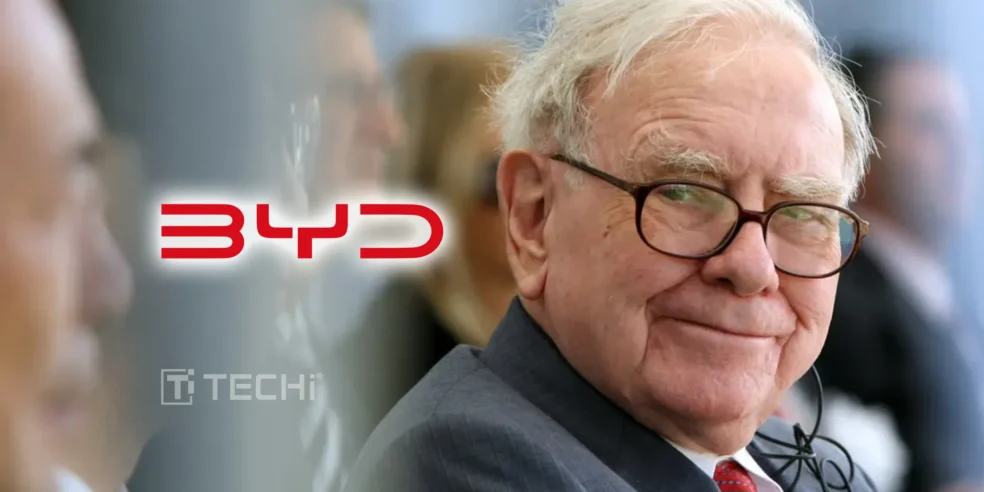

Berkshire Hathaway has ended its 16-year investment with BYD. Following the purchase of the shares towards the end of 2008, the company retained the shares until its recent sale, thus ending its investment in the Chinese electric-vehicle manufacturer.
The first shares of BYD were acquired by Buffett at the end of 2008 when the company was valued at less than $3 bn. Berkshire expressed an investment of over $232 million in its energy division to buy $225 million shares at a price over US dollar per share at the request of co-founder Charlie.
As of mid-2022 (it peaked in its valuation in July 2021), the investment was valued at approximately US $9 bn. Although it has dropped down the ranking in the previous three years, Berkshire allegedly reaped the benefits of one-handed investment of nearly $7 billion, or about 30 times the total amount that it had spent.
The transmission effect of the announcement on BYD share price was quick. On Monday, Hong Kong listing went down by approximately 3% as it was confirmed that Berkshire was completely out of the listing.
The development marked a turning point to investors. Buffett has a long-standing investment strategy and is known to be very patient and only hastens to divest the position when he thinks he can get better opportunities elsewhere or when the valuation no longer turns out to be appealing to him.
In 2023 he indicated that the rising price of BYD had led to the redirection of capital into other opportunities as a result of that increase in price.
It leaves BYD at a difficult time. No longer the uncontested leader in the fast-growing electric-vehicle market in China, the firm now shows indications of slowed growth.
The firm has weakened its explosive growth between 2022 and 2024. Commercial figures shown in July and August were stagnant compared with the previous year, and latest financial statements show diminished profitability can be accounted for by excessive discounting in the Chinese competitive market.
Furthermore, government investigation into such discount policies is further straining margins. Analysts estimate that BYD will not scoop its 5.5 millennium annual sales forecast until 2025.
There is also a shift in terms of the competitive environment. The competitors Geely and Leapmotor yield new models at low prices, and it can be complicated to make BYD maintain its traditional dominance. A
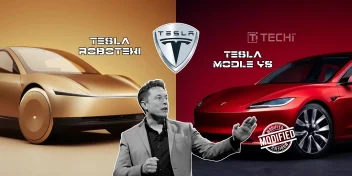
At the same time, Tesla is a stiff competitor within the electric-vehicle initiative in the world even after BYD had led compared to China.
The main problem faced by the firm currently is that it must protect its ground, keep on innovating in one battery technology, and move in international expansion whilst facing a test track of profitability.
Hence, in the future, it should not be assumed that the fate of BYD ends with the divestiture of Buffett. The firm has expanded to become a multinational battery/components manufacturer worth $130 billion, and prominent in the electric-vehicle industry. Founder Wang Chuanyu stood the test of time and was also an inventive person.
However, it seems that the period of explosive growth is coming to an end, and the market is monitoring the Beijing adjustment to BYD. The subsequent evaluation will require not only downsizing operations but maintaining growth without worsening of margins in an ever more cutthroat market.