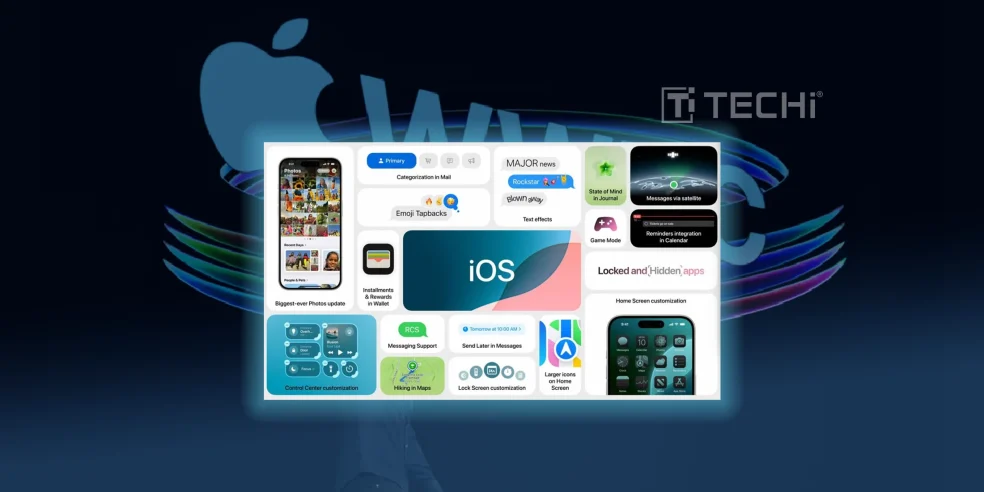
Apple’s WWDC25 wasn’t exactly a surprising announcement or a flashy product. Rather they focused on simplified and refined user interfaces (UI). Inspired by the visionOS, its dimensions and depth, the new design advances in silicon, hardware, and graphic technologies. The new product, Liquid Glass, is Apple’s major UI design. This design makes using iPhone, Mac, iPad, Apple TV, and Apple Watch even more satisfying.
Liquid Glass builds a 3-D, glass appearance on icons as well as buttons, which seems delightful. The launch of this design has paved the way for AR integration in the future. In addition to this feature, iPadOS 26 has several more essential advancements attached to it, provided by the company. Multitasking is facilitated by additions such as a resizable window, a Mac-type menu bar, and a preview application. With new developments in iPads, Apple is diminishing the boundaries between laptops and iPads.
Apple is not running in the AI war, but it is moving slowly by keeping security in mind. At WWDC25, they have expanded their intelligence features. This update includes:
1. Live Translate works in FaceTime, Phone, and Messages.
2. Visual intelligence is used to find objects, text, and image details.
3. The feature of Spotlight Search gives contextual results.
4. On-device AI models from Apple are now free for developers.
Techi’s Take 🔗
Apple is not trying to win any races and that is by design. They are developing slowly and safely in the field of tech. For those who want privacy and safety all in one place, it’s an ideal choice. But with every new advancement, the features of the iPad Pro and MacBook have started to overlap. People are choosing one over the other. The real test will be how Apple differentiates these flagship devices in future.
Will the iPad become a full laptop replacement, or will the Mac evolve to take on more tablet-like features? Either way, Apple has some crucial decisions ahead if it wants to avoid cannibalizing its own lineup while staying ahead in the innovation curve.