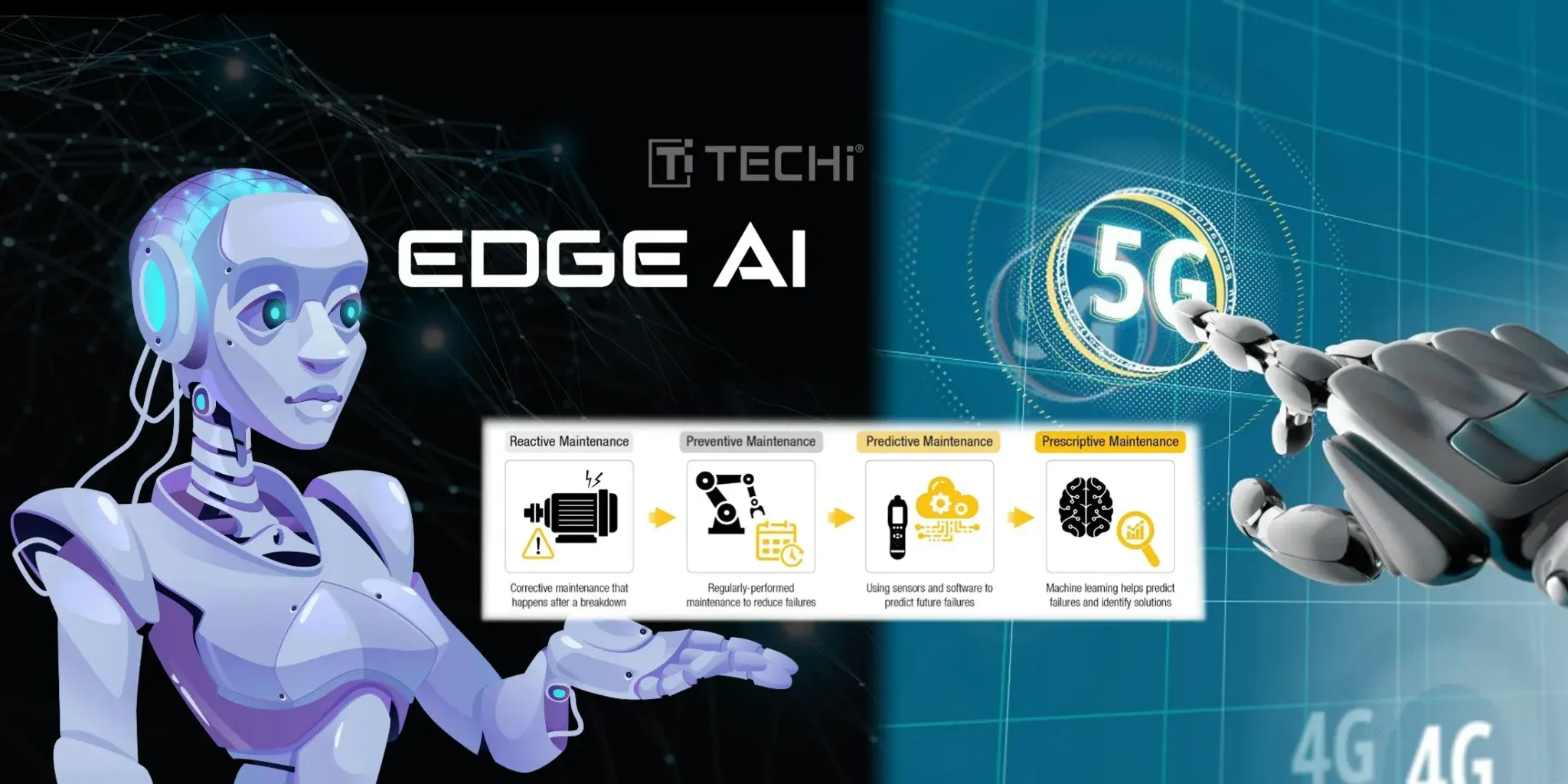


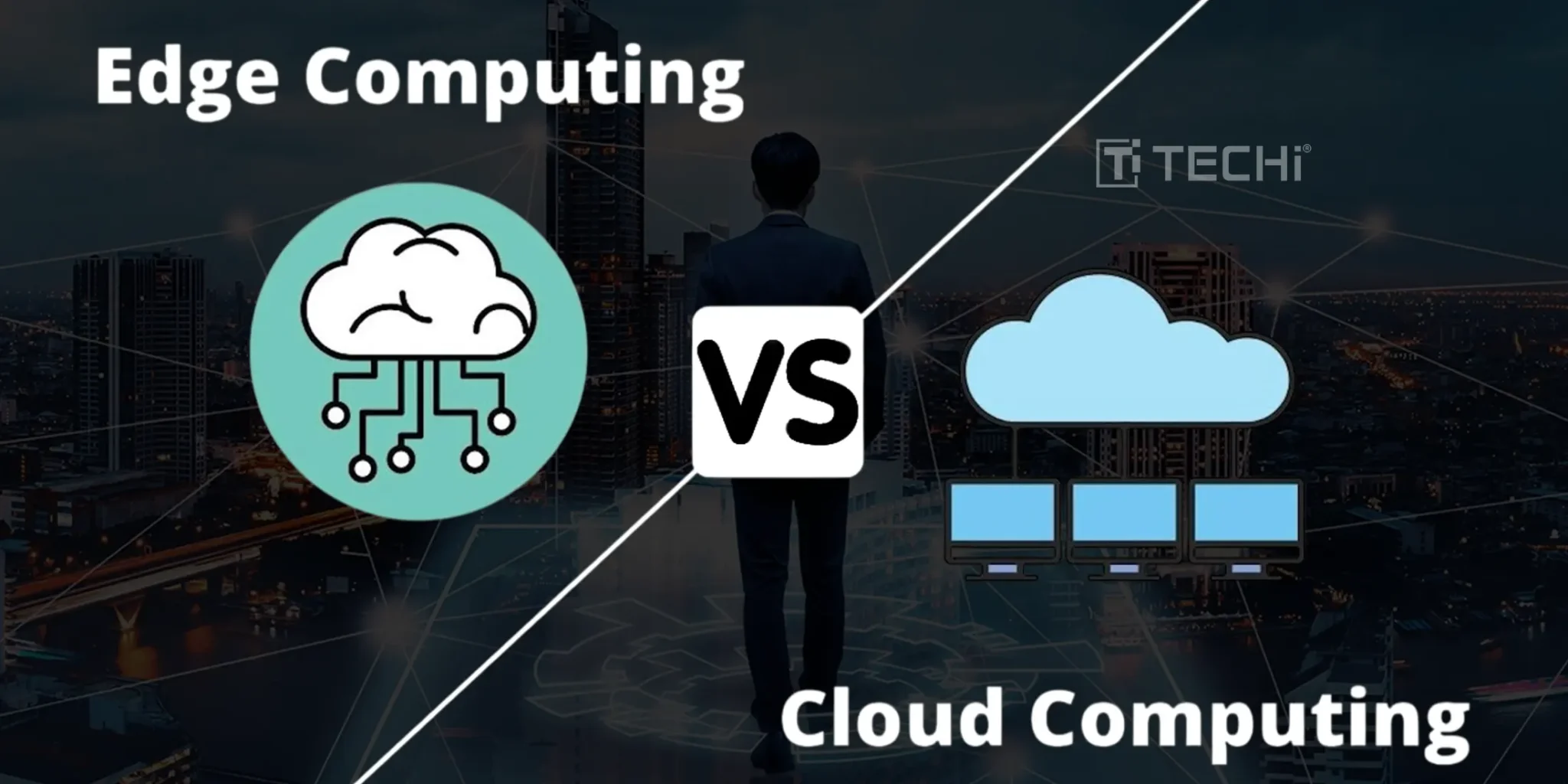
AI is hitting a major milestone in 2025. The cloud is still the brains behind big data and powerful training, but now the edge is stepping up, bringing AI closer to where things actually happen. From smart cars to real-time health monitors, edge AI is making things faster, smarter, and more private. It’s not cloud versus edge, it’s cloud and edge. Together, they’re creating a smarter, more connected world.
So, what does this shift mean for the future of AI-powered experiences? Let’s take a dive deep into this to find some answers for you.
How did we get here?
To understand why the edge is suddenly in the spotlight, we need to look back at the cloud revolution. Over the past decade, cloud computing has transformed the way we think about technology. Companies like Amazon AWS, Microsoft Azure, and Google Cloud built vast data centers that became the backbone of digital transformation. Suddenly, businesses could access virtually unlimited storage and compute power without buying a single server.
The cloud made it possible to train massive AI models, analyze oceans of data, and scale apps to millions of users overnight. It’s no exaggeration to say that cloud computing is the reason AI went mainstream.
But as AI moved from research labs into the real world, cracks began to show. What happens when you need a decision in milliseconds, not seconds? What if your data is too sensitive to send halfway across the world? What if your device loses its connection? These questions set the stage for the next big leap.
The Emergence of Edge
Imagine a self-driving car moving around a busy street. Every second, it’s bombarded with data from cameras, radar, and sensors. If it sent all this information to the cloud for processing, the round-trip delay could be fatal. The car needs to “think” right where it is. This is the promise of edge computing.
Edge computing flips the script by bringing computation as close as possible to where data is created i.e., whether it’s on the factory floor, in a hospital room, at a traffic light, or inside your smartphone. Instead of sending every bit of data to a distant server, edge devices process information locally or in nearby micro data centers. The result? Lightning-fast response times, lower bandwidth costs, and a new level of privacy and security.
In 2025, this isn't science fiction, it’s happening everywhere. According to Gartner, a staggering 75% of enterprise-generated data is now processed outside traditional cloud data centers, with the majority handled at the edge. That’s up from just 10% a few years ago, a seismic shift that’s rewriting the rules of digital business.
Why Is the Cloud Alone Isn’t Enough?
You might be wondering, “If the cloud is so powerful, why can’t it handle everything?” The answer comes down to three big challenges that the cloud faces i.e., latency, bandwidth, and privacy.
Latency
Latency is a silent killer for many AI applications. Imagine an autonomous vehicle navigating a busy city street or an industrial robot performing precision tasks on a factory floor. In these scenarios, even a delay of a few milliseconds can mean the difference between smooth operation and catastrophic failure. The cloud, by design, requires data to travel from the device to a centralized data center and back, a journey that introduces unavoidable delays. Edge computing slashes this latency by processing data right where it’s generated, keeping compute and data close together. This proximity enables near-instantaneous responses, which are crucial for real-time AI decision-making.
Bandwidth
Bandwidth is another giant of a challenge. Billions of connected devices continue to transmit their streams of data every second, so transferring all this crude data to the cloud would not only be costly, but in many cases, infeasible. Networks may experience overloads and they are expensive and enterprises are paid to transfer movements of huge data. The edge computing relieves this burden by processing and filtering data locally and sending to the cloud only the most critical understanding or aggregated results. This selective transmission of data saves a lot of bandwidth usage so these systems are more efficient and economical.
Privacy
A third level of complexity is brought in by privacy and security issues. Legislation on the protection of sensitive data, like the GDPR in the EU and the HIPAA in the US, creates a set of clear restrictions to the manner in which such data should be conveyed and archived. Transmission of such information over the long distance to cloud servers increases the possibility of interception or breach. Edge computing reduces risk of exposure and compliance by making it easier because data resides locally, where organizations have greater control of sensitive data.
The combination of these problems is why the cloud by itself cannot support the requirements of contemporary AI applications. As Dr. Andreas Hellander, Associate Professor in Scientific Computing Uppsala University observes:
A combination of federated learning, specialized edge hardware is establishing a bridge to a new era of distributed AI. And in the following 3-5 years, we are bound to witness the change, where edge devices will not only consume AI models but proactively assist in their advancement by employing privacy-preserving and secure learning methods. This will especially work with automotive, industrial AI and automation where data privacy and real time processing becomes critical.
This strategic balance is reflected in industry trends as Gartner reports that 75% of enterprise-generated data will be processed outside traditional cloud data centers, predominantly at the edge. IDC forecasts global edge computing spending to reach $261 billion this year, growing to $378 billion by 2028, driven by sectors like energy, manufacturing, and transportation. These numbers underscore a fundamental shift and illustrate that edge computing is no longer an optional add-on but a necessity for AI’s future.
Real-World Stories
The smartest organizations are adopting a hybrid approach, flawlessly combining the cloud's immense power and scalability with the edge's speed and immediacy. This strategic necessity is unlocking new possibilities across various industries:
Sector | Edge AI Applications | Key Benefits & Examples |
Manufacturing | – Real-time machine failure detection and predictive maintenance | – Procter & Gamble uses Edge AI for inspection cameras ensuring product quality |
|---|---|---|
Healthcare | – Real-time patient monitoring via wearables | – Niramai uses Edge AI with thermal imaging to detect breast cancer locally, enhancing data privacy and timely diagnosis |
Autonomous Vehicles | – Real-time processing of sensor data (cameras, radar, LiDAR) | – Tesla Autopilot and NVIDIA Drive use Edge AI for object detection and emergency responses– BMW monitors battery health locally to predict failures |
Also Read: ChatGPT Pricing: Plans, Features, and Integration Costs Explained
The Hybrid Model
Is the cloud obsolete in 2025?
The real thing is that the most intelligent companies are adopting a hybrid model which blends the biggest potential of the cloud, i.e., power and scalability, with the amazing immediacy and closeness of the edge. This blending model is not merely a compromise; it is a strategic requirement that opens new opportunities in all industries.
An example of tasks that have corners at the edge would be anything which needs real-time responses such as identification of a machine failure in a factory or a payment at a busy retail checkout. Local processing of the data ensures that these latency-sensitive processes are not involved with delays that are synonymous with moving information to and fro between cloud data centres. In the meantime, the cloud performs the heavy processing and storage of huge amounts of data, elaborate AI model training, and long-term analytics that can be hindered by the limited amount of available computation resources.
This has been made possible by the convenience of platforms such as AWS Greengrass and Microsoft Azure IoT Edge. They enable companies to run AI models on edge devices, those enhanced and upgraded in remote settings, and find new insights extracted back to the cloud, allowing scope and creation of the entirety of understanding. The results of this collaboration are facilitating the creation of everything, including smart cities with dynamic management of the traffic flow to predictive maintenance systems that forecast equipment breakdowns before they occur.
The statistics in the marketplace point to the exponential growth and significance of this blended model. As stated in a recent report by ResearchAndMarkets, the hybrid cloud market in 2024 is estimated to be around $130.87 billion and will skyrocket to $329.72 billion in the period of 2030, increasing at a steady compound annual growth rate (CAGR) of roughly 16.65%.
Why are businesses assembling a hybrid model?
Cost optimization is a major driver. For the sixth year in a row, 87% of respondents said cost efficiency/savings is the most important metric for assessing progress toward cloud goals, up 22 points from 2024. This reinforces the narrative that more workloads are moving to or being developed in the cloud, arguing for increased cost optimization tools. By intelligently distributing workloads processing time-critical tasks at the edge while offloading bulk data and complex computations to the cloud, companies can achieve significant savings and quick operational speed.
Security and compliance also play a crucial role. Hybrid cloud environments allow sensitive data to remain on-premises or at the edge, helping organizations comply with regulations like GDPR and HIPAA while still benefiting from cloud scalability. This balance between control and flexibility is essential in today’s complex regulatory landscape.
Nathan A. Ulery, Managing Director Performance Services at IT consulting firm West Monroe Partners., sums it up:
"I believe hybrid cloud technologies are a requirement for organizations going through digital transformations. In many ways, IT leaders are seeing hybrid cloud technologies as a way of allowing them to transform from being the 'department of no' to the 'department of yes' which is a critical component for digital efforts."
Why Is Edge Now Essential?
The world is moving towards a data-driven future, and it's clear the traditional cloud, while powerful, isn't the sole answer. Instead, the real revolution is happening at the edge, where intelligence and processing power are moving closer to the source of data generation. The numbers tell an undeniable story of this transformative shift:
- According to IDC, global spending on edge computing solutions is expected to reach $380 billion by 2028, up from nearly $261 billion in 2025.
- The sheer volume of data being generated at the edge is mind-boggling. By 2025, IoT devices alone will churn out over 90 zettabytes of data, with the critical caveat that most of this data demands real-time analysis.
As highlighted at prestigious events like EDGE AI Milan 2025, groundbreaking advancements have taken place:
- tinyML (Machine Learning on Tiny Devices): This revolutionary field enables complex AI models to run on resource-constrained devices, bringing sophisticated intelligence to everything from wearables to industrial sensors. The global TinyML market is projected to reach $10.80 billion by 2030, growing at an impressive CAGR of 24.8% from 2024
- Neuromorphic Chips: Mimicking the human brain's structure, these chips offer unparalleled efficiency and speed for AI computations at the edge. The neuromorphic computing market has expanded rapidly in recent years. It has increased from $1.44 billion in 2024 to $1.81 billion in 2025, representing a compound annual growth rate (CAGR) of 25.7%.
The neuromorphic computing market size is expected to see exponential growth in the next few years. It will grow to $4.12 billion in 2029 at a compound annual growth rate (CAGR) of 22.8%. This hyper-growth signals a profound shift in hardware capabilities for edge AI.
- Generative AI at the Edge: While large generative AI models often reside in the cloud, smaller, optimized versions are increasingly being deployed at the edge. This enables real-time, personalized experiences and proactive decision-making directly on devices. The global edge AI market is expected to be worth around USD 21.19 billion in 2024 and USD 143.06 billion by 2034, with a solid CAGR of 21.04% from 2024 to 2034.
The result of these innovations? Smarter, faster, and infinitely more adaptive systems everywhere. The expected failures in factories before they occur, to intelligent traffic management systems that dynamically optimize flow, the hybrid model with its powerful edge component is not just an option, it's the future of intelligent operations.
The Challenges and advantages
Edge computing comes with its own set of challenges such as Edge devices face significant resource constraints, as they typically have less power and storage capacity compared to cloud data centres, which limits the complexity of AI models they can effectively run. Additionally, dealing with such high quantities of distributed edge nodes presents a significant level of complexity, and for that reason, companies need sophisticated tools to monitor, update, and protect this universal infrastructure simply and efficiently. Although new features such as 5G enhance network speed, connection disparities exist in some regions without access to the internet. Therefore, the design of edge systems should always be in the light of seamless operation whether without connection or one has an intermittent connection to the network.
Moreover, as a result of the sensational news about data breaches and cyberattacks, security is on the top of the agenda of every business. The one significant benefit of edge computing is that local processing of data can be done, and the data is stored locally with the minimum chances of interception or exposure in the course of transmission. The same applies in an industry such as the healthcare and the finance world, where this is a game changer. Hospitals can analyze their patient data in the hospital and banks can process transactions without transmission of sensitive data to the cloud. It not only increases compliance with rules and regulations but also fosters trust in the customer.
Despite the hurdles, the momentum is unstoppable. As technology improves and costs drop, edge computing will become even more accessible.
What’s Next for Edge and AI?
In the future, edge and cloud will continue to integrate even more. Smaller, faster, more energy-efficient AI chips of the next generation will enable the use of more sophisticated models on everything, including drones or medical devices. Merged learning improvements will enable AI systems to train over the data of numerous edge devices without having to physically ship the data anywhere, even further improving privacy and efficiency.
A survey by IDC, conducted in 2025, revealed that 81% of enterprises intend to invest a lot more in edge AI in a period of 3 years, and their reasons are good agility, economical expenses, and good customer interactions.
The Future Outlook
One thing remains apparent in 2025 the future of AI is not a remote data centre anymore, but it is in the palm of your hands. The edge will be the intelligence of tomorrow, whether you find it embedded in a bridge or camera in a store or the device in your hand. Businesses that embrace this shift will unlock new levels of performance, agility, and trust. They will deliver smarter products, safer cities, and more personalized experiences, as AI continues to evolve, the edge will only become more vital.
The story of AI is still being written. But one thing is for sure: the next chapter belongs to those who bring the power home.
Also Read: Hyper‑Realism in VR: Is Photogrammetry the Next Leap Forward?
FAQ
Frequently asked questions
1. What is the difference between cloud and edge?
Edge computing is a subsection of cloud computing. While cloud computing is about hosting applications in a core data center, edge computing is about hosting applications closer to end users, either in smaller edge data centers or on the customer premises instead.
2. Why can’t all AI computing be done in the cloud?
Cloud computing is powerful but introduces latency and privacy risks when data must travel long distances. For real-time AI applications, delays can be unacceptable, making edge computing essential.
3. What industries benefit most from edge computing?
Manufacturing, healthcare, retail, autonomous vehicles, smart cities, and telecommunications are leading the way, where low latency, privacy, and offline resilience are critical.
4. How does 5G impact edge computing?
5G networks provide high-speed, low-latency connectivity that enables efficient data transfer between edge devices and cloud servers, making edge computing more viable and widespread.
5. Is edge computing replacing cloud computing?
No. Edge and cloud computing complement each other. Edge handles immediate, local processing, while the cloud supports heavy computation and centralized data management. Hybrid models are the future.
About the Author

Warisha Rashid writes about the intersection of corporate strategy, venture capital, and macro for TECHi — why certain acquisitions close when the Fed pivots, why a Series C prices at a markdown, and how capital rotation reshapes competitive positioning. She reads PitchBook, CB Insights, and S&P Capital IQ filings alongside the earnings commentary most coverage ignores. Her work focuses on M&A rationale, startup unit economics, and the policy signals that move private markets before they show up in public ones.