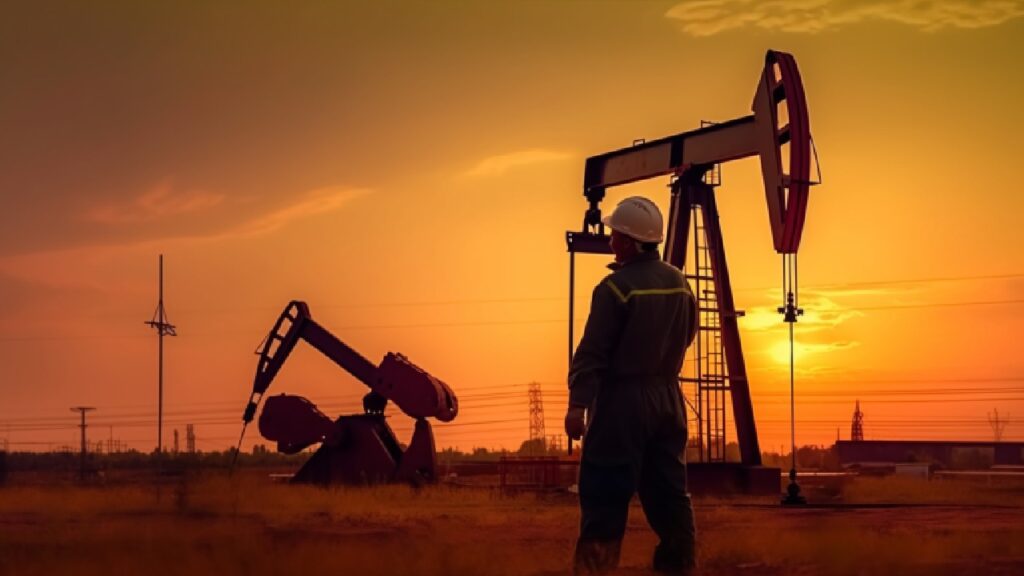
The average American is now paying $3.98 per gallon of regular gasoline — up 33% in a single month. In California, it’s $5.84. Diesel just crossed $5 for the first time since 2022. And with Trump’s April 6 Iran deadline just eight days away, prices could either crash back toward $3.50 or surge past $5 nationally. Here’s what’s driving the spike, where prices are headed, and what it means for your wallet and your portfolio.
Key Takeaways
- National Average Regular gasoline hit $3.98/gallon as of March 27 — up 33% from $3.00 just one month ago. Diesel crossed $5 for the first time since 2022.
- Iran War Impact The Strait of Hormuz closure has disrupted 17.8M barrels/day of oil flow, pushing Brent crude to $112.57/bbl (+50% since March 2). Pump prices lag crude by 2-4 weeks.
- Household Cost The average household will spend an extra $740/year on gas at current prices. Lower-income families are hardest hit, spending 8-10% of income on fuel.
- Three Scenarios If ceasefire by April 6: gas drops to $3.50-3.75. Status quo: gas hits $4.25-4.50 by summer. Military escalation: gas surges to $5-7 nationally.
- Investment Angle Energy stocks (XLE) are up 41% YTD while the S&P 500 is down 5%. Oil majors, refiners, and pipeline companies are generating record cash flows at $100+ crude.
In This Article
Gas Prices Right Now — State-by-State Breakdown
Source: AAA Gas Prices. National average for regular unleaded. Diesel from EIA.
The following section discusses sector performance and is for informational purposes only. It does not constitute a recommendation to buy, sell, or hold any security. Consult a licensed financial advisor before making investment decisions.
Gas prices vary dramatically depending on where you live. If you’re in the Gulf Coast states, you’re paying around $3.20–$3.35. If you’re on the West Coast, you might already be past $5.00. That’s not just the war — it’s refinery capacity, state taxes, and how far fuel has to travel to reach your station.
If you’re in California paying $5.84, you’re already in crisis territory. That’s higher than the 2022 peak for most of the country — and it’s only March.
Top 10 Most Expensive States for Gas (Regular Unleaded)
| Rank | State | Price/Gallon |
|---|---|---|
| 1 | California | $5.84 |
| 2 | Hawaii | $5.33 |
| 3 | Washington | $5.30 |
| 4 | Nevada | $4.86 |
| 5 | Oregon | $4.82 |
| 6 | Alaska | $4.57 |
| 7 | Illinois | $4.23 |
| 8 | Pennsylvania | $4.49 |
| 9 | Connecticut | $4.43 |
| 10 | New York | $4.39 |
Top 10 Cheapest States for Gas (Regular Unleaded)
| Rank | State | Price/Gallon |
|---|---|---|
| 1 | Oklahoma | $3.25 |
| 2 | Mississippi | $3.28 |
| 3 | Texas | $3.30 |
| 4 | Louisiana | $3.31 |
| 5 | Arkansas | $3.33 |
| 6 | Iowa | $3.36 |
| 7 | Nebraska | $3.38 |
| 8 | South Dakota | $3.40 |
| 9 | Minnesota | $3.42 |
| 10 | North Dakota | $3.44 |
Why such a wide gap? Three main factors: state gas taxes (California charges $0.68/gallon vs. Mississippi’s $0.18), proximity to Gulf Coast refineries (which process most U.S. crude), and summer blend requirements that hit California and the Northeast hardest. The West Coast also has limited pipeline capacity from the Gulf, making it more dependent on imports that have been disrupted by the Strait of Hormuz closure.
For the most accurate price near you, check AAA’s gas price tracker or download the GasBuddy app, which crowdsources real-time station-level pricing.
Why Gas Prices Are Surging — The Iran War Connection
One month ago, regular gasoline averaged about $3.00 per gallon (AAA reported $2.98 on February 26). Today it’s $3.98. That’s a 33% surge in 30 days — and the single biggest factor is the Iran conflict that began on March 2, 2026.
Here’s the chain reaction, step by step:
Step 1: The Strait of Hormuz closes. Iran effectively shut down the Strait of Hormuz — the narrow waterway between Iran and Oman through which 17.8 million barrels of oil per day normally flows. That’s roughly 21% of the world’s entire oil supply. Iran has since implemented a yuan-based “toll booth” system, selectively allowing Chinese and Russian-allied vessels through while blocking Western commercial traffic.
Step 2: Oil prices spike. Before the war, Brent crude traded around $70–76 per barrel. As of Friday, March 27, Brent (ICE front-month settlement) closed at $112.57 — a roughly 50% surge. WTI crude hit $99.64, briefly touching $100 intraday. The EIA and the International Energy Agency have both called this the largest supply disruption in the history of the global oil market. For a detailed breakdown of where oil prices stand right now, see our live oil tracker.
Step 3: Crude-to-pump transmission (2-4 week lag). Here’s the part most people don’t realize: the pain you’re feeling now at the pump reflects $100 oil. If crude stays at $112, pump prices haven’t fully caught up yet. It typically takes 2 to 4 weeks for changes in crude oil prices to fully transmit to retail gasoline prices. That means the $3.98 you’re paying today is based on oil prices from mid-March — when crude was around $95–100. If Brent stays above $110, expect gas prices to climb another $0.20–0.40 in the next two weeks.
Step 4: Refiners can’t keep up. U.S. refineries are already running at 90%+ capacity. With seasonal maintenance shutdowns happening right now (March and April are peak turnaround season), there’s limited ability to ramp up production even as crude costs surge. The result: wider “crack spreads” (the profit margin refiners earn), which get passed directly to consumers.
According to NPR, gas prices have risen every single day since the conflict began. And PBS reports that the consumer impact is already broader than just fuel — airlines, shipping companies, and manufacturers are all raising prices to offset higher energy costs.
The Summer Blend Problem — Why Prices Rise Every Spring
Even without a war, gas prices rise every spring. Here’s why — and why 2026 is so much worse.
EPA summer gasoline mandates. Every year between June 1 and September 15, the EPA requires gas stations to sell “summer-blend” gasoline with lower Reid Vapor Pressure (RVP). This means the fuel evaporates less in hot weather, reducing smog. The catch: summer blend is more expensive to produce, adding roughly $0.15–0.30 per gallon at the pump. Refineries begin the switchover in March and April, temporarily reducing output while they reconfigure equipment.
Refinery maintenance shutdowns. March and April are the industry’s traditional “turnaround season,” when refineries take units offline for annual maintenance. This temporarily reduces gasoline supply at exactly the moment demand starts climbing.
Spring and summer driving season. American gasoline demand increases significantly from April through September as families take road trips, vacations, and spend more time on the road. The EIA typically sees demand rise from about 8.5 million barrels per day in winter to 9.5+ million bpd in summer — a roughly 12% seasonal increase.
In a normal year, this combination pushes prices up about $0.25–0.50 from March to June. But 2026 is far from normal.
This is why energy analysts are so concerned about the next three months. The seasonal pattern alone would push the national average toward $4.25 by June. Layer on the Iran war premium, and you’re looking at $4.50–5.00+ unless something changes on the geopolitical front. For context on how this fits into the broader energy picture, gold prices have also surged as investors flee to safe havens.
How High Can Gas Prices Go? — Three Scenarios
Everything comes down to April 6. That’s the date President Trump has set as his deadline for Iran to reopen the Strait of Hormuz. The outcome creates a binary event for gas prices — one of three scenarios will play out.
Scenario 1 — Ceasefire by April 6 (Probability: 15–20%)
If Iran and the U.S. reach a deal before the April 6 deadline — or if Iran signals willingness to negotiate — oil prices could drop rapidly to $80–90 per barrel. The war premium of $14–18/bbl (per Goldman Sachs estimates) would evaporate almost overnight. Gas prices would follow crude lower within 2–3 weeks, settling around $3.50–3.75 by May. Still above the pre-war $3.00, because seasonal factors would prevent a full retreat. Iranian Foreign Minister Araghchi’s March 25 rejection of negotiations makes this scenario unlikely — but not impossible. Trump is unpredictable, and backchannel communication could emerge.
Scenario 2 — Status Quo / Extended Deadline (Probability: 50–55%)
This is the most likely outcome. Trump extends or delays the April 6 deadline while maintaining economic pressure on Iran. Oil stays in the $100–115 per barrel range. Gas prices continue their upward march, hitting $4.25–4.50 by late May as the summer blend transition and driving season amplify the war premium. Goldman Sachs projects oil could stay above $100 through at least Q2. This means sustained elevated gas prices through the summer — painful, but manageable for most households.
Scenario 3 — Military Escalation (Probability: 25–30%)
If the April 6 deadline passes and the U.S. takes military action — or if Iran retaliates by attacking Saudi or UAE oil infrastructure — oil could spike to $150–200 per barrel. At those levels, gas prices nationwide would surge to $5–7 per gallon. California would likely hit $8+. Macquarie Bank’s worst-case scenario modeled $200 oil producing $7+ gas nationally. At those prices, demand destruction kicks in — people stop driving, businesses cut back, and the economy tips into recession. This is the scenario that keeps energy analysts up at night.
For a deeper look at what happens on April 6, see our analysis of Trump’s Iran deadline and what each outcome means for markets.
What $4 Gas Really Costs You — The Household Math
Abstract numbers don’t hit home. So let’s do the math on what you’re actually paying.
The average American drives about 13,500 miles per year and gets roughly 25 miles per gallon. That means you’re burning about 540 gallons of gas per year. Here’s what that costs at different price points:
Annual Gas Cost by Price per Gallon (540 gallons/year)
| Gas Price | Annual Cost | Extra vs. Pre-War ($3.00) | Extra Per Month |
|---|---|---|---|
| $3.00 (pre-war) | $1,620 | — | — |
| $3.98 (today) | $2,149 | +$529 | +$44 |
| $4.50 (summer est.) | $2,430 | +$810 | +$68 |
| $5.00 (escalation) | $2,700 | +$1,080 | +$90 |
| $6.00 (worst case) | $3,240 | +$1,620 | +$135 |
Stanford’s Institute for Economic Policy Research (SIEPR) estimates the average American household will spend an additional $740 per year on gasoline if prices stay near current levels through the summer. That’s real money — roughly the equivalent of one month’s grocery bill for a family of four.
The regressive tax problem. Moody’s Analytics chief economist Mark Zandi has noted that higher gasoline prices function as a regressive tax. Lower-income households spend 8–10% of their income on fuel, compared to just 2–3% for wealthier families. A family earning $40,000 per year is losing a meaningful portion of their budget to gas — while a household earning $200,000 barely notices. As CNBC reported, economists say the oil price surge is worsening America’s already K-shaped economy.
The diesel domino effect. Diesel crossing $5 per gallon isn’t just a problem for truck drivers. Virtually everything you buy arrives by truck, and diesel is the fuel that moves American commerce. When trucking companies pay more for fuel, they pass those costs through to shippers, who pass them to retailers, who pass them to you. The typical lag is 4–6 weeks. If diesel stays above $5, expect to see higher prices for groceries, building materials, and consumer goods by mid-April.
For a broader view on how this impacts the economy, see our 2026 recession risk analysis.
How to Save on Gas Right Now — 7 Practical Tips
You can’t control the Iran war or OPEC. But you can control how much you spend at the pump. Here are seven ways to cut your gas bill starting today.
1. Use GasBuddy or Google Maps to find the cheapest station. Gas prices can vary by $0.30–0.50 within a single zip code. The GasBuddy app crowdsources real-time prices from millions of users. Google Maps also shows gas prices when you search “gas stations near me.” A few minutes of comparison shopping can save you $5–8 per fill-up.
2. Get a warehouse club membership. Costco and Sam’s Club consistently offer gas at $0.20–0.40 below the local average. If you fill up weekly, that’s $10–20 in monthly savings — easily paying for the membership itself. BJ’s Wholesale also offers discounted fuel at many locations.
3. Use credit cards with gas cashback. Several cards offer 3–5% cashback on gas purchases. The Citi Custom Cash card gives 5% back on your top spending category (which will likely be gas right now). The Wells Fargo Active Cash offers a flat 2% on everything. At $3.98/gallon, a 5% cashback card saves you roughly $0.20 per gallon — cutting your effective price to $3.78.
4. Combine trips and plan routes. Cold starts use more fuel than warm engines. Combining multiple errands into a single trip — and planning the most efficient route — can reduce your weekly fuel consumption by 10–15%. Avoid backtracking and peak-hour traffic, which burns fuel idling.
5. Check your tire pressure. This one is free and takes two minutes. Under-inflated tires increase rolling resistance and can reduce your fuel efficiency by up to 3%. The correct pressure is listed on a sticker inside your driver’s door. Most gas stations have free air pumps.
6. Use regular grade if your car doesn’t require premium. Many drivers pay an extra $0.40–0.80 per gallon for premium when their car runs perfectly fine on regular. Check your owner’s manual. If it says “premium recommended” (not “required”), you can safely use regular. Only cars that “require” premium — typically luxury and performance vehicles — actually benefit from it.
7. Consider carpooling or adding WFH days. If you commute 30 miles each way and your car gets 25 MPG, you’re burning 2.4 gallons per day on commuting alone — that’s $9.55/day at $3.98. Carpooling with one coworker cuts that in half. Adding one work-from-home day per week saves roughly $38/month. Two WFH days saves $76. If your employer offers hybrid options, now’s the time to negotiate.
The Investment Angle — Who Profits from $4 Gas
Here’s the uncomfortable truth: the same force destroying your budget at the pump is creating the best energy trade since 2022.
While the S&P 500 is down roughly 5% year-to-date, the Energy Select Sector SPDR Fund (XLE) is up 41%. That’s not a typo. Energy has been the best-performing sector in the market by a wide margin, and the companies driving those returns are household names.
Oil majors are printing money. ExxonMobil, Chevron, and ConocoPhillips are generating record free cash flows at $100+ oil. These companies were already profitable at $70. At $112, they’re swimming in excess cash — which is flowing to shareholders through dividends and buybacks. Exxon’s upstream division alone is earning an estimated $15+ billion per quarter at current crude prices.
Refiners are the hidden winners. Companies like Valero, Marathon Petroleum, and Phillips 66 don’t just benefit from high oil prices — they benefit from wide “crack spreads,” which is the difference between what they pay for crude oil and what they sell refined products (gasoline, diesel, jet fuel) for. With demand surging and supply tight, crack spreads have widened to levels not seen since mid-2022. Valero shares are up over 35% year-to-date.
Pipeline companies are collecting toll-booth fees. Midstream operators like MPLX, Enterprise Products Partners, and Energy Transfer don’t care whether oil is $80 or $120 — they get paid per barrel that flows through their infrastructure. Higher volumes (as the U.S. exports more crude to replace lost Middle Eastern supply) mean higher revenue with minimal incremental cost. Many of these names yield 6–8% in distributions.
For a detailed breakdown of the best energy companies to own right now, see our best oil stocks analysis. And for those building a broader portfolio around this environment, our $100K model portfolio for April includes an energy allocation sized for exactly this type of macro backdrop.
The counterargument: energy stocks are a war trade. If a ceasefire materializes, oil drops, and energy stocks give back gains fast. That’s the risk. But even in a ceasefire scenario, many energy companies remain undervalued relative to their cash flows at $80+ oil — which is the floor most analysts see given OPEC+ discipline and declining global spare capacity.
Looking for diversification beyond energy? AI stocks have pulled back sharply during the oil-driven selloff, creating potential entry points. And some investors are also allocating to Bitcoin as a hedge against dollar debasement tied to wartime spending. For the full daily picture, follow our stock market today page.
What to Watch This Week
The next seven days are packed with events that could move gas prices significantly in either direction. Here’s your calendar:
Wednesday, April 1 — EIA Weekly Petroleum Status Report. The Energy Information Administration releases its weekly inventory data, including gasoline stockpile levels and refinery utilization rates. If inventories fall again, expect upward pressure on gas prices. If refineries increase output, it could provide modest relief.
Thursday, April 3 — March Jobs Report (released day before Good Friday). The Bureau of Labor Statistics releases the March employment report. The BLS releases the report on Thursday ahead of Good Friday (April 4), when markets are closed. Traders will react immediately on Thursday afternoon — then face a long weekend of Iran deadline headlines before Monday. A strong jobs number = more driving demand = bullish for gas. A weak number could signal demand destruction from high energy costs.
Sunday, April 6 — Trump’s Iran Deadline. This is the single biggest variable for gas prices in 2026. Trump has demanded Iran reopen the Strait of Hormuz by this date. The outcome determines which of the three scenarios above plays out. Markets will be on edge all week as diplomatic signals emerge.
In the meantime, AAA updates gas prices daily at gasprices.aaa.com. And for how the broader market is positioning around these events, keep an eye on the Magnificent Seven stocks — tech names that tend to sell off when energy costs squeeze consumer spending.
Why are gas prices so high right now?
Gas prices surged 33% in one month primarily because of the Iran war that began March 2, 2026. Iran closed the Strait of Hormuz — which carries 21% of global oil supply — sending crude oil from $70–76 per barrel to over $112. Higher crude directly raises the cost of producing gasoline. Seasonal factors (the summer blend transition and spring driving season) are adding further upward pressure.
How high will gas prices go in 2026?
It depends on the Iran conflict. If a ceasefire materializes by April 6, gas could fall to $3.50–$3.75 by May. If the status quo continues, expect $4.25–$4.50 by summer. If military escalation occurs, analysts warn gas could reach $5–$7 nationally, with California potentially hitting $8+. Goldman Sachs expects oil to stay above $100/bbl through at least Q2 2026.
What state has the cheapest gas prices?
As of March 27, 2026, the cheapest gas in the country is in the Gulf Coast and Southern states. Oklahoma leads at $3.25/gallon, followed by Mississippi ($3.28), Texas ($3.30), Louisiana ($3.31), and Arkansas ($3.33). These states benefit from low state gas taxes and proximity to Gulf Coast refineries.
Will gas prices go down after April 6?
Possibly — but only if the Iran conflict de-escalates. April 6 is Trump’s deadline for Iran to reopen the Strait of Hormuz. If a deal is reached, oil prices could drop rapidly and gas could fall to $3.50–$3.75 within weeks. However, if the deadline passes without resolution or military action follows, gas prices will likely continue rising toward $5+. Even in a best-case scenario, seasonal summer factors will keep prices above the pre-war $3.00 level.
How much does the average American spend on gas per year?
At today’s $3.98/gallon national average, the average American household spends approximately $2,149 per year on gasoline (based on 13,500 miles driven and 25 MPG). That’s up $529 from the pre-war cost of about $1,620. Stanford’s Institute for Economic Policy Research estimates the average household will spend an additional $740 per year if prices stay elevated through the summer.
Last Updated: March 29, 2026. Gas prices from AAA as of March 27, 2026. Oil prices reflect Friday, March 27 close.
Disclaimer: This article is for informational purposes only and does not constitute financial, investment, or tax advice. Gas prices and oil prices change daily. The scenarios and projections presented reflect analyst estimates and are not guarantees of future prices. Always conduct your own research before making investment decisions. TECHi and its authors may hold positions in securities mentioned in this article.