

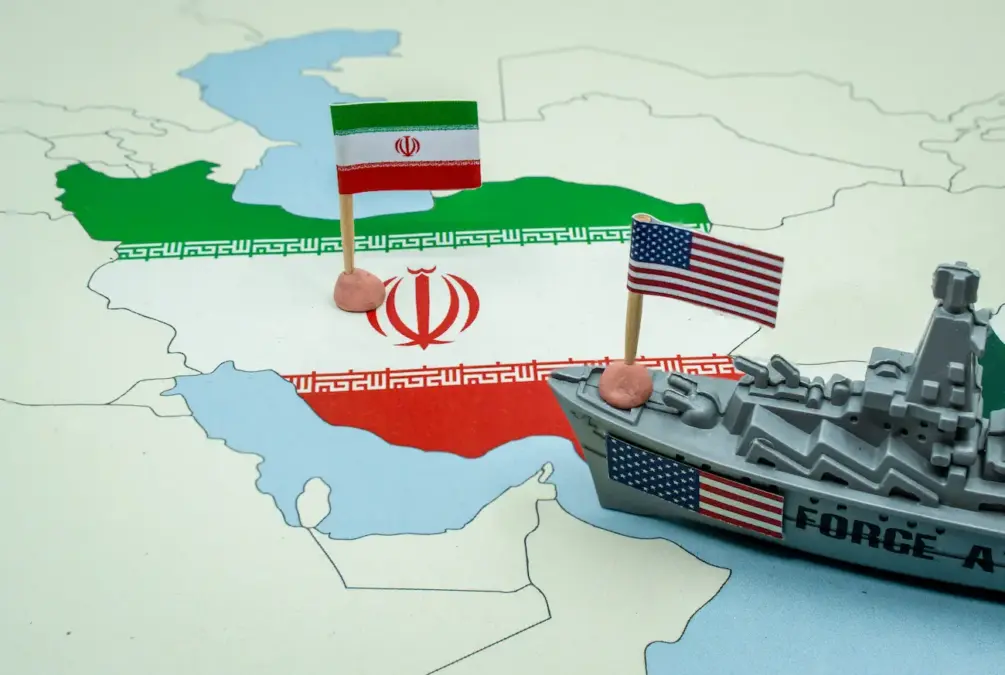
Thirty days into a war that was supposed to break it, Iran is negotiating from a position of strength that nobody in Washington or Tel Aviv anticipated. The country that entered this conflict with 40% inflation, a collapsing rial, and street protests is now demanding sovereignty over the Strait of Hormuz, war reparations, and security guarantees as the price of peace. The world’s most sanctioned economy has discovered something more powerful than a nuclear weapon: geography.
This is not a defense of Iran’s regime or its human rights record. It is an analysis of what the current trajectory of this conflict means for the global economic order — and whether Iran, regardless of who governs it after the guns stop, could leverage this moment into lasting economic power. The answer is more complicated, and more consequential, than most commentators are willing to admit.
The Strait of Hormuz Gave Iran Its Leverage
Every analysis of Iran’s potential economic emergence starts and ends with one body of water. The Strait of Hormuz handles roughly 15 million barrels of oil per day, 20% of global LNG trade, and 33% of the world’s seaborne fertilizers. When Iran declared it closed on March 4, it triggered what the International Energy Agency called the largest supply disruption in the history of the global oil market.
The numbers speak plainly. TIME reported that Lloyd’s List Intelligence tracked only 77 ships transiting the Strait in the first half of March, down from 1,229 in the same period last year — a 94% collapse. Brent crude hit $166 per barrel on March 19 before settling around $114 today. Kuwait Petroleum’s CEO called it “an economic blockade holding the world’s economy hostage.”
Here is the part that changes the calculus: Iran does not need to physically close the Strait to control it. As energy analyst Robert Rapier argued in TIME, the mere threat of disruption, combined with the withdrawal of marine insurance coverage, achieves the same effect. Ships will not sail without insurance. Insurers will not write policies in an active war zone. Iran has discovered a chokepoint weapon that costs almost nothing to maintain but inflicts billions in daily economic damage on the global economy.
Iran’s Five Demands Tell You Where This Is Heading
On March 25, Iran rejected President Trump’s 15-point ceasefire proposal and issued its own five-point counterdemand. NPR reported the conditions:
- Complete halt to all “aggression and assassinations”
- Concrete mechanisms to ensure the war cannot be reimposed
- Payment of war damages and reparations
- End of hostilities across all fronts, including all resistance groups
- Recognition of Iranian sovereignty over the Strait of Hormuz
A U.S. official called these demands “ridiculous and unrealistic.” Johns Hopkins professor Vali Nasr read them differently, telling reporters that Iran is not looking for a ceasefire — it is looking for a grand bargain. Trump himself floated the idea that the Strait could be “controlled jointly by me and the ayatollah,” signaling that even Washington recognizes the Strait’s status is now a negotiating chip, not a settled matter.
Iranian lawmakers are reportedly drafting legislation to formalize sovereignty over the Strait and establish a toll system for transit. The Gulf Cooperation Council has already accused Iran of charging fees for safe passage. If any version of this arrangement survives into a ceasefire agreement, Iran would effectively control a tollgate on 20% of the world’s oil supply — a revenue stream that dwarfs its current sanctioned oil exports.
The Economic Foundation: What Iran Actually Has
Strip away the sanctions, the inflation, and the war damage, and the underlying economic assets of Iran are formidable by any objective measure.
Iran holds 10% of the world’s proven oil reserves and 15% of its natural gas reserves — enough to produce oil for the next century, according to government estimates. Before sanctions tightened, production capacity was 4.5 million barrels per day with the potential to reach 5-7 million bpd with foreign investment. Even under the tightest sanctions regime, Iran managed to export 1.6 million bpd in 2025 by exploiting loopholes and routing crude through intermediaries to China.
Beyond hydrocarbons, Iran holds 7% of the world’s mineral resources despite having only 1% of the global population. It ranks among the top 15 mineral-rich countries globally, with reserves of copper, chromium, zinc, iron ore, gold, and strategic materials like barite and feldspar. Most of these reserves remain untapped — mining contributes less than 1% of GDP. That is not a weakness; it is optionality.
The human capital story is equally underappreciated. Iran’s 85 million population is young — half under 30 — and surprisingly well-educated. Iran produces more engineering graduates per capita than most Middle Eastern economies. The tech sector, while constrained by censorship and sanctions, has developed a domestic startup ecosystem that operates largely beneath Western radar. When sanctions briefly lifted under the 2015 JCPOA, GDP surged 12.5% in a single year. That was just oil. Imagine what happens if mining, tech, and manufacturing unlock simultaneously.
The Sanctions Trilemma: Why the Old Playbook Is Breaking
The United States currently sanctions three major oil producers simultaneously: Russia, Venezuela, and Iran. In normal times, this is manageable because global supply has enough slack to absorb the lost barrels. In a war that has shut the Strait of Hormuz and removed 4 million barrels per day of spare capacity, it is an impossible position.
The evidence is already visible. The Treasury Department has issued three separate 30-day sanctions waivers for Iranian oil currently sitting in tankers at sea. It has also issued general licenses for Russian and Venezuelan crude to flow more freely. Treasury Secretary Scott Bessent publicly said Washington would “consider removing sanctions on some Iranian oil” even as U.S. jets were striking targets near the Strait.
This is the crack in the wall. Every sanctions waiver, every general license, every exception carved out to prevent oil from hitting $150 weakens the sanctions architecture that has constrained Iran’s economy for decades. If Iran emerges from this war with a partial or complete sanctions rollback as part of a negotiated settlement, the economic unlocking would be seismic.
The BRICS Card: Real Alliance or Paper Tiger?
Iran joined BRICS in 2024 with expectations that the bloc would provide an economic counterweight to Western sanctions. The war has tested that thesis severely — and the results are mixed at best.
Carnegie Endowment analysis noted that neither China nor Russia rushed to help Iran in its “hour of greatest need.” Beijing declared neutrality, prioritizing its relationship with the Trump administration over solidarity with Tehran. Moscow offered rhetorical support but no meaningful military or economic intervention. Foreign Policy observed that “NATO and the G-7 are just as divided as BRICS” over the conflict, exposing fractures on both sides of the geopolitical divide.
But the BRICS infrastructure still matters for Iran’s long-term economic positioning. China has invested over $100 billion in Iranian energy and infrastructure projects. The BRICS Pay platform, while still nascent, represents a potential alternative to SWIFT for settling oil transactions outside the dollar system. And regardless of whether BRICS acts as a military alliance, it provides Iran diplomatic cover and market access that pure isolation would deny.
The honest assessment: BRICS will not save Iran militarily, but it gives Iran enough economic connectivity to survive sanctions and, potentially, to rebuild faster than Western policymakers expect.
Three Scenarios for Iran’s Post-War Economy
How Iran emerges from this conflict depends almost entirely on how it ends. Here are three plausible scenarios and their economic implications:
Scenario 1: The Grand Bargain. Iran trades its nuclear program and Strait control for comprehensive sanctions removal, security guarantees, and reparations. This is Iran’s stated demand and the most economically transformative outcome. A fully de-sanctioned Iran with foreign investment flowing into oil, gas, mining, and infrastructure could realistically add $300-500 billion in GDP over the next decade. The 2016 JCPOA precedent — 12.5% GDP growth in a single year from partial sanctions relief alone — suggests the upside is enormous. In this scenario, Iran does not just recover. It emerges as a genuine regional economic power competing with Saudi Arabia and the UAE.
Scenario 2: Partial Deal. Some sanctions are lifted on oil exports in exchange for nuclear concessions, but broader restrictions on banking and technology remain. This is the most likely outcome. Iran gets enough relief to stabilize its economy and rebuild damaged infrastructure, but not enough to attract the massive foreign investment needed to unlock its mining and manufacturing potential. Growth improves to 3-5% annually. Iran becomes stronger than it was pre-war but remains constrained. This is the outcome Washington probably prefers — strong enough to stop fighting, weak enough to not challenge the regional order.
Scenario 3: Regime Change or Collapse. The war destroys enough military and economic infrastructure that the current government falls. A successor regime, regardless of ideology, inherits the same geographic assets and resource base. If the new government is Western-aligned, sanctions disappear overnight and the investment floodgates open. Iran International reported that analysts have described Iran as “a trillion-dollar opportunity for America” under this scenario. If the successor is nationalistic but non-theocratic, Iran follows the Turkish model — economically liberalized but politically independent. Either way, the underlying economic assets remain intact.
What Intelligent Investors Should Watch
Direct investment in Iran remains impossible for most Western investors due to OFAC sanctions. But the second and third-order effects of Iran’s potential economic emergence are tradeable right now:
Oil prices: Any ceasefire or deal that reopens the Strait will crash oil prices by $15-30 overnight. Short-duration energy positions are extremely vulnerable to headline risk. Longer-term, a de-sanctioned Iran adding 2-3 million bpd to global supply would structurally lower the oil price ceiling for years.
Emerging market funds with Middle East exposure: Iran’s re-entry into global capital markets would eventually require index inclusion. ETFs tracking frontier and emerging Middle Eastern markets would see inflows. This is a 2-3 year horizon play, not a trade for tomorrow.
Mining and critical minerals: Iran’s untapped copper, chromium, zinc, and rare earth deposits become investable the moment sanctions lift. Companies already positioned in adjacent markets — Turkey, Central Asia, the Caucasus — would have first-mover advantage. Watch for early-stage mining exploration agreements in any ceasefire deal.
European energy: Dutch TTF gas benchmarks nearly doubled during the Strait closure. A partial or full reopening would relieve European energy prices immediately. European industrials, chemicals, and manufacturing stocks are the leveraged beneficiaries.
Insurance companies positioned for post-conflict reconstruction: marine insurers, political risk underwriters, and trade credit providers will see massive premium volume if Gulf shipping normalizes. Technology companies with AI infrastructure plays could benefit from Iranian demand for modernization if sanctions lift.
The Uncomfortable Truth
Wars reshape economic power. They always have. Japan emerged from World War II’s devastation to become the world’s second-largest economy. South Korea transformed from a war-ravaged peninsula into a technology superpower. Germany rebuilt itself into Europe’s industrial engine from literal rubble. The pattern is consistent: countries with strong underlying assets — educated populations, natural resources, strategic geography — can convert post-war reconstruction into long-term economic acceleration when the political conditions align.
Iran has all three ingredients. An 85-million-person market with a young, educated workforce. Hydrocarbon and mineral reserves that rank among the world’s largest. And geography that gives it permanent leverage over global energy flows regardless of who holds power in Tehran.
The variable is governance. Every scenario in which Iran becomes an economic power requires a political settlement that opens the economy to foreign capital and technology. Under the current regime, that means a negotiated deal with security guarantees strong enough to make Tehran comfortable lowering its guard. Under a successor regime, it means institutional stability sufficient to attract long-term investment. Neither outcome is guaranteed. But both are more plausible today than they were 60 days ago, precisely because the war has made Iran’s geographic leverage impossible to ignore.
The world spent 40 years trying to isolate Iran’s economy. Five weeks of war just proved that the world’s economy cannot function with Iran isolated. That is a structural shift — and structural shifts create structural opportunities for the investors paying attention.
This article is for informational and analytical purposes only. It does not constitute investment advice or an endorsement of any government or political system. Always conduct independent research and consult qualified advisors before making investment decisions.
Updated: March 30, 2026.