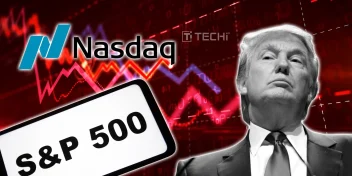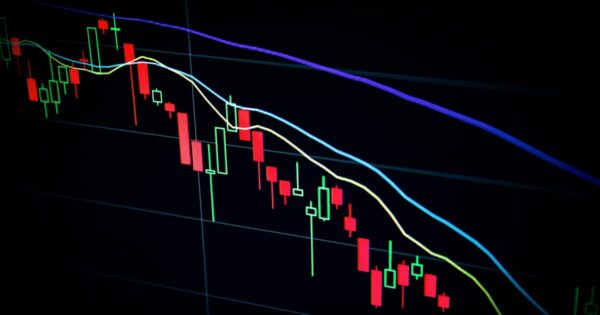
For the first time since the AI rally began in January 2023, every single Magnificent Seven stock is losing money in 2026. Combined, these seven companies have shed over $2 trillion in market cap from their all-time highs. The S&P 500 just posted its fifth straight losing week. The Dow entered correction territory on Friday, March 27. And the Nasdaq sits 13% below its October peak, with the VIX fear gauge spiking above 31. But buried in the wreckage is opportunity: one of these stocks now trades at its cheapest valuation in three years, and 41 of 42 Wall Street analysts still rate another as a buy. The magnificent seven stocks have never looked this vulnerable — or this interesting — at the same time.
Key Takeaways
- Combined Loss The Magnificent Seven have shed over $2 trillion in market cap from their all-time highs — $870 billion in the past week alone.
- Worst Performer Microsoft (MSFT) is down 23.4% YTD and 31.7% from its all-time high, making it the worst Magnificent Seven stock in 2026.
- Cheapest Valuation Alphabet (GOOGL) trades at just 17x forward earnings — the cheapest Magnificent Seven stock and its lowest relative valuation in years.
- Best Positioned Nvidia (NVDA) has 41 of 42 analyst Buy ratings with an average price target of $273 — representing 63% upside from $167.
- Key Risk Brent crude at $112 and the April 6 Iran deadline threaten to push oil higher, compressing growth multiples and raising recession odds.
In This Article
The Damage Report — How Far the Mighty Have Fallen
Friday, March 27 was another brutal session for the stock market. The magnificent seven stocks collectively lost $330 billion in a single day and $870 billion in one week. Every major index finished deep in the red: the S&P 500 dropped 1.67% to 6,368.85, the Dow fell 793 points to 45,166.64, and the Nasdaq tumbled 2.15% to 20,948.36.
Here is every mag 7 stock, ranked from worst to best performer year-to-date, with closing prices as of Friday, March 27, 2026:
| Company | Ticker | Price (Mar 27) | YTD Change | From ATH | Forward P/E | Key Issue |
|---|---|---|---|---|---|---|
| Microsoft | MSFT | $365 | -23.4% | -31.7% | 24x | Copilot monetization, Azure growth slowing |
| Meta Platforms | META | $526 | -15.2% | -15.2% | 18x | Antitrust verdict — two court defeats |
| Tesla | TSLA | $263 | -15.1% | -15.1% | 130x | Musk/DOGE backlash, brand erosion |
| Nvidia | NVDA | $167 | -10.0% | -21.2% | 22x | DeepSeek shock, capex ROI fears |
| Alphabet | GOOGL | $163 | -9.0% | -9.0% | 17x | AI search competition |
| Amazon | AMZN | $199 | -8.0% | -8.0% | 28x | Tariff/consumer spending fears |
| Apple | AAPL | $254 | -5.0% | -5.0% | 29x | China risk, Apple Intelligence slow rollout |
The Magnificent Seven’s weight in the S&P 500 has dropped from roughly 35% at peak to approximately 28% today. That concentration unwind — what strategists are calling “The Great Convergence” — has been painful for anyone overweight in mega-cap tech.
Why the Magnificent Seven Are Falling — Four Forces Colliding
This magnificent seven crash is not about one headline. Four structural forces are compressing valuations simultaneously, creating the worst environment for mega-cap tech since the 2022 rate-hike cycle.
1. The Oil & Inflation Tax
Brent crude closed at $112.57 on Friday, March 27 — up 45% year-to-date. The Iran escalation, combined with OPEC+ supply discipline, has pushed oil prices to levels that directly threaten corporate margins and consumer spending. The 10-year Treasury yield sits at 4.44%, and fed funds futures now price in zero rate cuts for 2026, with some contracts flirting with the possibility of a hike.
Higher energy costs act as a tax on every part of the economy. For tech companies operating massive data centers — and planning to spend $700 billion more on them — $112 oil is a direct hit to operating costs. It also compresses the price-to-earnings multiples that growth stocks depend on, because higher rates make future earnings less valuable in today’s dollars.
2. The DeepSeek Shock
In January 2025, Chinese AI lab DeepSeek demonstrated that high-performance AI models could be trained on significantly less computing power than Western companies assumed. That revelation sent Nvidia down 17% in a single day and planted a seed of doubt that still haunts the sector: if efficient architectures can commoditize the hardware layer, does it make sense to spend $700 billion building data centers?
The DeepSeek shock did not kill AI demand — Nvidia’s $78 billion Q1 guidance proves otherwise. But it introduced a permanent discount to the “picks and shovels” trade, forcing investors to ask whether hyperscaler capex will generate adequate returns or become the most expensive stranded assets in corporate history.
3. The Great Convergence
For three straight years, the Magnificent Seven dominated returns. Owning seven stocks was essentially owning the market. That trade is reversing hard. The Russell 2000 is outperforming the Nasdaq 100 (QQQ) for the first time in years, as institutional money rotates from mega-cap growth into value, small-cap, and energy names.
The Mag 7’s share of the S&P 500 dropping from 35% to 28% represents hundreds of billions in passive rebalancing flows moving away from these stocks. When index funds and ETFs rebalance, they mechanically sell the stocks whose weight has grown too large. That selling begets more selling, creating a reflexive downdraft.
For broader context on where the economy might be headed, the 2026 recession outlook examines the macro risks in detail.
4. Individual Headwinds
Beyond the macro forces, each company faces its own problems. Meta just lost two major antitrust rulings in the same week. Tesla is experiencing brand erosion tied to Elon Musk’s DOGE leadership role. Apple faces renewed China supply chain risks. Microsoft’s Copilot revenue is disappointing relative to the $80 billion+ AI capex commitment. Amazon is bracing for tariff-driven consumer pullbacks. Even Nvidia, the AI darling, cannot escape the overhang of DeepSeek-style efficiency breakthroughs.
The result: a perfect storm where macro headwinds, sector rotation, and company-specific problems all hit simultaneously.
Stock-by-Stock Verdict — Buy, Hold, or Sell
Not all mag 7 stocks are created equal. Some are trading at multi-year low valuations with accelerating fundamentals. Others are priced for perfection in a world that keeps delivering disappointment. Here is a stock-by-stock assessment as of Friday, March 27, 2026.
Nvidia (NVDA) — Verdict: Buy (Top Pick)
Bull case: Nvidia remains the undisputed infrastructure provider for the AI revolution. The company guided for $78 billion in Q1 revenue, a number so large it exceeds the entire annual revenue of most S&P 500 companies. The Vera Rubin architecture and Ultra Pod deployments are on track, locking in next-generation demand. At a 22x forward P/E, Nvidia trades at a fraction of its historical premium — cheaper than Microsoft, cheaper than Apple, cheaper than Amazon.
Bear case: DeepSeek proved efficient architectures can reduce hardware requirements. If training costs continue declining exponentially, hyperscaler capex could plateau faster than expected. Nvidia’s margins, currently above 70%, face pressure from AMD and custom silicon (Google TPUs, Amazon Trainium).
Verdict: 41 of 42 analysts rate Nvidia a Buy, with an average price target of $273 — representing 63% upside from current levels. The risk-reward at $167 is compelling. Nvidia is not a speculative AI bet; it is the picks-and-shovels monopoly of the most transformative technology cycle in decades. For a deep dive into Nvidia’s fundamentals and long-term thesis, see the full Nvidia stock analysis.
Alphabet (GOOGL) — Verdict: Buy (Best Value)
Bull case: At 17x forward earnings, Alphabet is the cheapest Magnificent Seven stock — and arguably the cheapest it has been relative to peers in a decade. Google Cloud is growing 30%+ year-over-year, closing the gap with AWS and Azure. The $75 billion+ capex commitment signals confidence in AI infrastructure monetization. And the core Search business, despite competition from Perplexity and ChatGPT, still commands 90%+ market share in global search.
Bear case: AI-powered search alternatives are eroding Google’s moat in real time. Antitrust scrutiny from the DOJ could force structural changes to the Search business. YouTube ad growth is decelerating. Waymo continues burning cash with no clear path to profitability.
Verdict: At 17x earnings, the market is pricing Alphabet like a legacy value stock, not the company that owns the world’s largest search engine, fastest-growing cloud platform, and most advanced autonomous driving technology. The valuation discount is too steep. For the full breakdown, read the Google stock analysis.
Microsoft (MSFT) — Verdict: Buy (Contrarian)
Bull case: Microsoft is the worst-performing Magnificent Seven stock in 2026, down 23.4% YTD and 31.7% from its all-time high near $534 in July 2025. That kind of drawdown in a company with Azure AI revenue growing 39% year-over-year creates a contrarian opportunity. Microsoft is not a broken business — it is the enterprise AI platform of record, with Copilot embedded across Office 365, Dynamics, GitHub, and Azure. The $80 billion+ AI capex commitment for FY2026 is aggressive, but Microsoft has a track record of converting infrastructure investment into durable subscription revenue.
Bear case: Copilot monetization has underwhelmed. Enterprise adoption is slower than projected, and competing AI assistants from Google and startups are closing the gap. At 24x forward earnings, Microsoft is not objectively cheap — it trades at a premium to Nvidia and Alphabet. The $80B capex figure is the largest in company history, and investors are rightfully questioning whether it will generate adequate returns.
Verdict: Microsoft at $365 is a contrarian buy for patient investors willing to look past near-term Copilot disappointment. The Azure cloud business alone justifies the current valuation, and AI monetization is a question of “when,” not “if.” The full thesis is available in the Microsoft stock analysis.
Amazon (AMZN) — Verdict: Hold
Bull case: AWS remains the largest cloud platform in the world, with AI services growing 30%+ year-over-year. Amazon’s $200 billion AI infrastructure investment — the largest of any hyperscaler — positions it as the default AI cloud for enterprises that do not want to build their own. The advertising business is a margin machine. Prime membership remains deeply embedded in consumer behavior.
Bear case: At 28x forward earnings, Amazon is not cheap enough to warrant aggressive accumulation in this environment. Tariff uncertainty directly threatens the e-commerce business, which still accounts for the majority of revenue. Consumer spending is weakening as oil prices erode disposable income. The $200B capex commitment is staggering, and the market is not giving Amazon credit for it yet.
Verdict: Amazon is a Hold. The fundamentals are strong, but the valuation needs to compress further — or the macro needs to improve — before the risk-reward shifts decisively in favor of buyers. A pullback to $180 or below would create a more compelling entry point.
Meta Platforms (META) — Verdict: Hold (Antitrust Risk)
Bull case: Meta serves 3.3 billion+ users across Facebook, Instagram, WhatsApp, and Threads — the largest social media audience on Earth. At 18x forward earnings, it is the second-cheapest Magnificent Seven stock behind Alphabet. The AI-powered recommendation engine is driving record engagement on Reels and Stories. Meta’s $200 billion+ AI infrastructure investment is building the foundation for next-generation advertising and the open-source Llama AI ecosystem.
Bear case: Two antitrust court defeats in a single week represent a genuine existential risk. If regulators force Meta to divest Instagram or WhatsApp — even partially — the sum-of-parts valuation could be significantly lower than the current integrated business. The $200B+ AI spend is among the most aggressive in corporate history, with uncertain monetization timelines. Reality Labs continues bleeding billions annually.
Verdict: Meta at 18x earnings would be a screaming buy — if not for the antitrust cloud. Until the regulatory picture clarifies, the stock carries binary risk that makes it a Hold rather than a Buy. For the complete regulatory analysis, visit the Meta stock analysis.
Apple (AAPL) — Verdict: Hold
Bull case: Apple is the best-performing Magnificent Seven stock in 2026, down only 5% YTD. The $3.71 trillion market cap reflects a defensive quality that investors prize in turbulent markets. Apple Intelligence is rolling out across the ecosystem, the iPhone 17 cycle is approaching, and Services revenue continues growing at double-digit rates with 80%+ gross margins.
Bear case: At 29x forward earnings, Apple is the most expensive Magnificent Seven stock relative to its growth rate. Revenue growth has been mid-single digits for the past several quarters. Apple Intelligence has underwhelmed compared to ChatGPT and Google Gemini. China supply chain risks remain elevated, and the company’s AI strategy appears to lag behind competitors. The stock’s resilience in 2026 may simply reflect defensive positioning rather than fundamental optimism.
Verdict: Apple is a Hold. The quality is undeniable, but paying 29x earnings for mid-single-digit growth in a rising rate environment is a stretch. Better values exist elsewhere in the Magnificent Seven — particularly Alphabet and Nvidia. For a full evaluation of Apple’s positioning, see the Apple stock analysis.
Tesla (TSLA) — Verdict: Sell / Underweight
Bull case: Tesla bulls point to three optionality stories: robotaxi, Full Self-Driving licensing, and energy storage. The energy storage business is growing 67% year-over-year, providing a genuine growth vector beyond automotive. If the robotaxi network launches at scale, the revenue model shifts from one-time vehicle sales to recurring ride-hailing revenue with software-like margins.
Bear case: At 130x forward earnings, Tesla is not priced as a car company — it is priced as a robotics and autonomous driving company that has not yet delivered on those promises. The Musk/DOGE association is causing measurable brand damage, with European sales declining and vandalism incidents rising. The robotaxi regulatory path remains unclear. Competition from BYD, Rivian, and legacy automakers is intensifying on every front.
Verdict: Tesla at 130x forward earnings requires a leap of faith that the robotaxi and FSD businesses will materialize at massive scale within 2-3 years. The core automotive business does not support the current valuation. This is the only Magnificent Seven stock that warrants an outright Sell or Underweight rating. If Tesla’s story plays out, there will be time to re-enter at lower prices with more certainty. For the detailed bull and bear cases, see the Tesla stock analysis.
The $700 Billion Question — Is AI Capex Worth It?
The four largest hyperscalers — Microsoft, Meta, Alphabet, and Amazon — are collectively planning to spend approximately $700 billion on AI infrastructure in the coming years. The breakdown: Amazon at $200B, Microsoft at $80B+, Alphabet at $75B+, and Meta at $60B+. These are the largest capital expenditure commitments in the history of the technology industry.
Goldman Sachs research indicates that infrastructure spending of this magnitude typically takes 3-5 years to generate returns. The investment thesis rests on the assumption that enterprise AI adoption will follow a similar curve to cloud computing — slow at first, then exponential. The risk is that DeepSeek-style efficiency breakthroughs could reduce the hardware required, turning today’s data centers into overbuilt monuments to a more wasteful era of AI computing.
The counter-argument is straightforward: demand is real. Nvidia’s $78 billion Q1 guidance was not invented. Enterprise AI adoption is accelerating, not decelerating. Every Fortune 500 company is either deploying AI or planning to. The question is whether the return on invested capital will justify the cost — and history suggests that the companies building the infrastructure for transformative technology cycles tend to be rewarded, even if the near-term payback period is longer than investors would prefer.
The best AI stocks are those positioned to benefit from infrastructure spending regardless of which AI models win the efficiency race.
How Much Magnificent Seven Exposure Should You Have?
The Magnificent Seven’s share of the S&P 500 went from 20% in early 2022 to 35% at the peak to approximately 28% today. If the equity portfolio sits entirely in QQQ or Nasdaq-heavy tech funds, that means roughly a third of every invested dollar is riding on seven companies. That is concentration risk, not diversification.
A reasonable allocation to Magnificent Seven stocks sits between 15% and 25% of total equity exposure, depending on risk tolerance, time horizon, and existing diversification. Here are two model frameworks:
| Asset Class | Conservative Portfolio | Aggressive Portfolio |
|---|---|---|
| Magnificent Seven | 15% | 30% |
| Other Tech / Growth | 25% | 20% |
| Energy / Commodities | 20% | 15% |
| Defensive / Dividend | 20% | 15% |
| Cash / Bonds / Gold | 20% | 20% |
The key takeaway: even in the aggressive model, Magnificent Seven exposure caps at 30%. The days of concentrating everything in mega-cap tech and coasting are over. A diversified approach across tech stocks, energy, defensives, and capital-preservation assets is the most rational positioning in this environment.
What to Watch Next
The next several weeks will determine whether this Magnificent Seven selloff is a buying opportunity or the beginning of something worse. Here are the critical dates and levels:
April 4: The March jobs report drops, though markets are closed for Good Friday. A hot number reignites rate-hike fears. A weak number raises recession alarm.
April 6: The Trump Iran deadline arrives. Any military escalation sends oil above $120 and hammers risk assets across the board.
April 28-29: The FOMC meeting will set the tone for the rest of 2026. The market needs dovish language — anything hawkish could trigger another leg down in growth stocks.
Mid-to-late April: Q1 earnings season begins. Banks report first, followed by big tech in late April and early May. Nvidia reports on May 27 — the single most important earnings date for the AI trade.
Key technical levels: Nasdaq 20,000 is the critical support level. Below that, the next major floor sits near 19,200. For individual stocks: NVDA has support at $150, MSFT at $340, and META at $500.
FAQs
Are Magnificent Seven stocks a good investment in 2026?
The Magnificent Seven stocks are a mixed bag in 2026. Three — Nvidia, Alphabet, and Microsoft — offer compelling valuations with strong AI-driven growth catalysts and are rated Buy. Amazon, Meta, and Apple are Holds due to elevated valuations or company-specific risks. Tesla is rated Sell at 130x forward earnings. The group as a whole remains investable, but selectivity matters more than ever. Blindly buying all seven through the MAGS ETF carries unnecessary exposure to overvalued names.
Which Magnificent Seven stock is the best buy right now?
Nvidia (NVDA) at $167 is the top pick, backed by 41 of 42 analyst Buy ratings, a $78 billion Q1 revenue guidance, and a 22x forward P/E that is cheaper than most of its Magnificent Seven peers. Alphabet (GOOGL) at 17x forward earnings offers the best pure value play, with Google Cloud growing 30%+ and the core Search business still dominating global market share.
Why are tech stocks falling in 2026?
Four forces are driving the 2026 tech selloff simultaneously: surging oil prices ($112 Brent crude) reigniting inflation fears and compressing growth multiples; the DeepSeek shock raising questions about $700 billion in hyperscaler AI capex; the Great Convergence rotation from mega-cap tech to small-cap and value stocks; and individual company headwinds including Meta antitrust rulings, Tesla brand damage, and Microsoft Copilot monetization concerns.
How much have Magnificent Seven stocks lost in 2026?
The Magnificent Seven have collectively lost over $2 trillion in market cap from their all-time highs. In the week ending Friday, March 27, 2026, the group shed $870 billion, including $330 billion in a single session on Friday. Microsoft is the worst performer at -23.4% YTD, while Apple is holding up best at -5% YTD. Every Magnificent Seven stock is in negative territory for 2026 — the first time all seven have been down simultaneously since the AI rally began in January 2023.
Should I sell my Magnificent Seven stocks?
Selling all Magnificent Seven exposure is not recommended for most investors. While the group faces meaningful headwinds, the selloff has created attractive valuations in select names. The recommended approach is to rebalance: trim overexposure (particularly Tesla, which is rated Sell), add to high-conviction names like Nvidia and Alphabet on weakness, and ensure Magnificent Seven allocation does not exceed 15-25% of total equity exposure. Panic selling at the bottom of a correction historically destroys more wealth than it preserves.
Last Updated: March 29, 2026. Market data reflects closing prices from Friday, March 27, 2026.
Disclaimer: This article is for informational purposes only and does not constitute investment advice. All investments involve risk, including the potential loss of principal. Past performance does not guarantee future results. Consult a licensed financial advisor before making investment decisions. TECHi and its authors may hold positions in the securities mentioned.