Last close • April 4, 2026
On Christmas Eve 2025, Nvidia quietly signed a $20 billion licensing deal with AI inference startup Groq that most of Wall Street initially shrugged off as another routine tech partnership. Three months later, the deal has become the most scrutinized transaction in semiconductor history, drawing a Senate investigation, FTC attention, and a fierce debate about whether the arrangement is a genuine licensing agreement or a cleverly disguised acquisition built to dodge antitrust review.
Here is what actually happened, why it matters for NVDA shareholders, and what the regulatory fallout could mean for the stock in 2026 and beyond.
What Nvidia Actually Bought (and What It Didn’t)
The deal announced on December 24, 2025, is structured as a non-exclusive licensing agreement, not a traditional acquisition. Under the terms, Nvidia paid $20 billion to license Groq’s inference chip architecture, specifically the Language Processing Unit (LPU) technology that had made Groq the fastest inference provider in the industry.
But here is where it gets complicated. Nvidia also hired Groq’s founder and CEO Jonathan Ross, president Sunny Madra, and the majority of Groq’s engineering talent. Groq technically remains an independent company under new CEO Simon Edwards, retains its intellectual property, and continues operating GroqCloud, its inference-as-a-service platform.
Critics argue this structure is an acqui-hire dressed up as a licensing deal. Supporters counter that Groq remains independent with its IP intact. The truth, as usual, sits somewhere in the middle, and that ambiguity is exactly what has regulators concerned.
Deal Structure at a Glance
| Component | What Nvidia Gets | What Groq Retains |
|---|---|---|
| IP License | Non-exclusive rights to LPU architecture | Full IP ownership; can license to others |
| Key Personnel | CEO Jonathan Ross, President Sunny Madra, core engineering team | New CEO Simon Edwards; remaining ops staff |
| Physical Assets | Manufacturing rights, hardware designs | GroqCloud infrastructure and Middle East contracts |
| Valuation | $20B total (2.9x Groq’s prior $6.8B valuation) | Independent entity status |
| Antitrust Filing | No Hart-Scott-Rodino filing was made (licensing deals are exempt) | |
Why Groq’s LPU Technology Changes the Inference Game
To understand why Nvidia paid $20 billion for a licensing deal, you need to understand what Groq’s LPU actually does differently.
Traditional GPUs, including Nvidia’s own H100 and Blackwell chips, use High Bandwidth Memory (HBM) stored off-chip. Every time the processor needs data, it has to reach out to external memory, creating a bottleneck. Groq’s LPU flips this model entirely by using on-chip SRAM as its primary working storage.
The numbers tell the story: Groq’s on-chip SRAM delivers roughly 150 TB/s of memory bandwidth per chip, compared to about 22 TB/s for a Vera Rubin GPU. That is nearly seven times faster. The result is inference speeds of 500 to 750 tokens per second versus roughly 100 tokens per second on comparable GPU setups. Energy consumption drops to 1 to 3 joules per token compared to 10 to 30 joules per token on GPU-based inference.
The tradeoff is capacity. Each LPU holds only 500 MB of SRAM versus the multiple gigabytes of HBM on a GPU. That means LPUs cannot handle the computationally intensive prefill and attention phases of large language model inference on their own. They excel at the decode phase, where low-latency, high-throughput token generation is the bottleneck.
Nvidia recognized this complementarity. Rather than competing against Groq, it made more sense to bolt LPU technology onto its existing GPU platform and let each architecture handle what it does best.
LPU vs. GPU: The Inference Performance Gap
| Metric | Groq LPU (SRAM) | Traditional GPU (HBM) | Advantage |
|---|---|---|---|
| On-Chip Memory Bandwidth | 150 TB/s per chip | ~22 TB/s per chip | LPU ~7x faster |
| Token Generation Speed | 500–750 tok/s | ~100 tok/s | LPU 5–7x faster |
| Energy per Token | 1–3 joules | 10–30 joules | LPU ~10x efficient |
| On-Chip Memory Capacity | 500 MB SRAM | Multiple GB HBM | GPU far larger |
| Best Use Case | Decode phase, low-latency serving | Prefill, attention, training | Complementary |
Groq 3 LPU: The First Product from the Deal
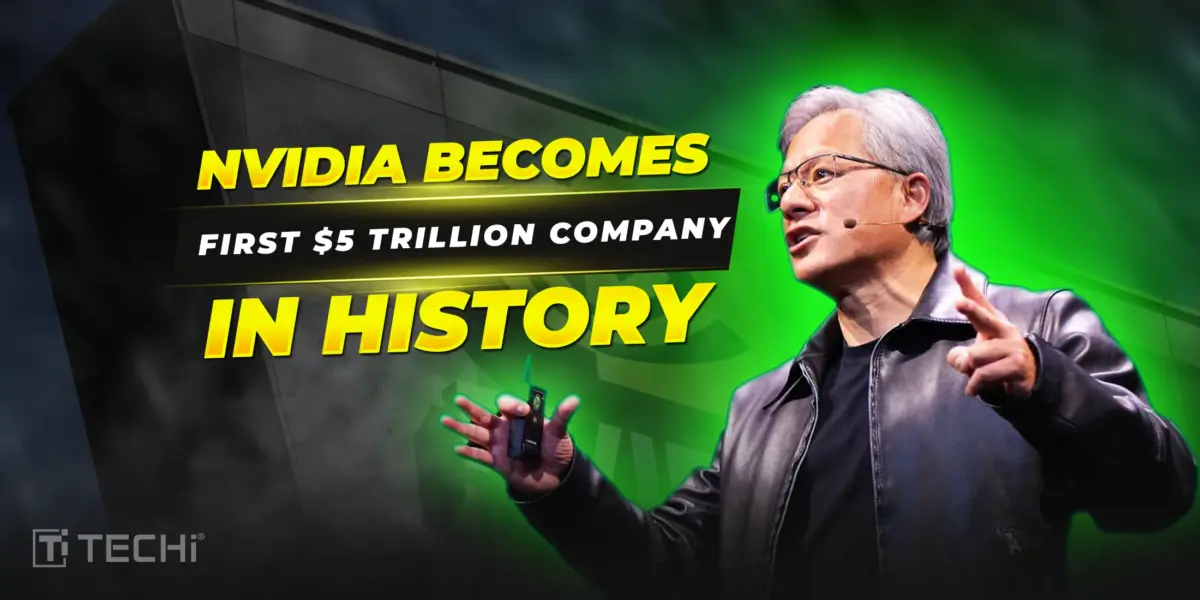
Nvidia wasted no time. At GTC 2026 in March, Jensen Huang unveiled the Groq 3 LPU, the first chip to emerge from the partnership. Manufactured by Samsung on a 4nm process, the Groq 3 slots into the Vera Rubin platform as a dedicated decode-phase co-processor.
The system architecture uses what Nvidia calls Attention-FFN Disaggregation (AFD). The Vera Rubin GPUs handle prefill, KV cache creation, and full-context attention operations. The Groq 3 LPUs take over for the latency-sensitive feed-forward networks, MoE expert execution, and pointwise operations where SRAM bandwidth dominance matters most.
Groq 3 LPX Rack Specifications
| Specification | LPX Rack (256 LPUs) | Per Tray (8 LPUs) |
|---|---|---|
| FP8 Compute | 315 PFLOPS | 9.6 PFLOPS |
| Total SRAM | 128 GB | 4 GB |
| SRAM Bandwidth | 40 PB/s | 1.2 PB/s |
| Scale-Up Bandwidth | 640 TB/s | 20 TB/s |
| Chip-to-Chip Links | 96 links per device at 112 Gbps (2.5 TB/s per chip) | |
| Configuration | 32 liquid-cooled 1U trays | 8 Groq 3 LPU accelerators |
| DRAM Expansion | Up to 384 GB per tray (256 GB fabric + 128 GB host) | |
The headline performance claim from Nvidia: the LPX rack paired with a Vera Rubin NVL72 delivers 35 times higher inference throughput per megawatt than Blackwell NVL72 alone for trillion-parameter models, at a target of $45 per million tokens.
Samsung has already begun mass production on its 4nm process, with shipments expected in Q3 2026. This is a remarkably fast timeline, just nine months from deal announcement to silicon shipping.
The Senate Investigation: What Warren and Blumenthal Want
On March 20, 2026, Senators Elizabeth Warren (D-MA) and Richard Blumenthal (D-CT) sent a letter to Jensen Huang raising pointed questions about whether the Groq deal was deliberately structured to evade antitrust review.
Their core argument: Nvidia controls roughly 90% of the GPU market. Groq was one of the few credible competitors in AI inference, with an architecture that was genuinely faster and more energy-efficient for certain workloads. By licensing Groq’s technology and hiring its leadership team while technically leaving the company independent, Nvidia may have found a loophole to consolidate its dominance without triggering the Hart-Scott-Rodino premerger notification requirements.
The senators set an April 3, 2026, deadline for Nvidia to respond to their questions. They also urged the DOJ and FTC to open formal investigations.
Key Regulatory Questions
| Question | Why It Matters |
|---|---|
| Was the deal structured to avoid HSR filing? | Licensing deals are exempt from premerger notification; acquisitions are not |
| Does hiring the CEO + core team constitute de facto control? | If yes, the deal could be reclassified as an acquisition retroactively |
| Can Groq realistically compete after losing its founder and top engineers? | If Groq is effectively hollowed out, the “independent company” argument collapses |
| Is the non-exclusive license meaningfully non-exclusive? | If no other company licenses LPU tech, exclusivity exists in practice |
| Does this fit the “reverse acqui-hire” pattern? | FTC is already investigating Microsoft-Inflection for the same structure |
This investigation sits alongside broader regulatory scrutiny of Big Tech acqui-hires. In January 2026, FTC Chair Andrew Ferguson announced the agency would investigate these types of deals across the tech industry. The Microsoft-Inflection AI deal is already under active FTC investigation for being what regulators call a “merger in disguise.”
What This Means for NVDA Stock
Nvidia shares closed at $177.39 on April 4, with a market cap of $4.33 trillion. The 38 analysts covering the stock maintain a consensus Strong Buy rating with an average price target of $266, implying roughly 50% upside from current levels. The highest target sits at $360, while the most bearish estimate is $100.
The Groq deal creates both significant upside and measurable risk for shareholders.
The Bull Case
Inference is where the money goes next. Training dominated the first wave of AI infrastructure spending, but as models mature, inference workloads are expected to account for 60 to 80 percent of total AI compute spending by 2028. Nvidia buying its way into purpose-built inference hardware positions it to capture both sides of the market.
The 35x efficiency claim is a competitive moat. If the Groq 3 LPX delivers anywhere close to 35 times the throughput per megawatt of Blackwell, hyperscalers building out inference infrastructure will have a hard time justifying AMD or custom ASIC alternatives. The $45 per million tokens target is aggressive enough to pressure every competitor in the inference space.
Samsung manufacturing diversifies supply chain risk. Nvidia’s GPU production is concentrated at TSMC. Having Samsung produce the Groq 3 on 4nm gives Nvidia a second manufacturing partner and reduces its dependence on a single foundry, a concern that has grown louder amid Taiwan Strait tensions.
Full-stack dominance. At GTC 2026, Nvidia introduced three new systems simultaneously: the Groq LPX inference rack, the Vera ETL256 CPU rack, and the STX storage reference architecture. Combined with existing GPU leadership, Nvidia now offers the complete AI data center stack from training to inference to storage. No competitor matches this breadth.
The Bear Case
Regulatory overhang is real. If the FTC reclassifies the deal as an acquisition, Nvidia could face an unwinding order, forced divestiture of the license, or substantial fines. The Microsoft-Inflection precedent suggests regulators are willing to look past deal labels and focus on economic substance.
$20 billion is a lot for a licensing deal. Groq’s last private valuation was $6.8 billion. Paying 2.9 times that for a non-exclusive license raises questions about capital allocation, especially when Nvidia could have invested that money in developing its own SRAM-based inference architecture internally.
The acqui-hire label invites ongoing scrutiny. Even if the FTC does not force an unwind, the regulatory cloud creates uncertainty for institutional investors. ESG-focused funds and governance-conscious allocators may trim NVDA positions until the legal picture clarifies.
AMD and custom silicon are not standing still. AMD’s MI450 accelerators have secured major commitments from OpenAI. Google continues developing its TPU inference stack. Amazon’s Inferentia chips are gaining traction in AWS workloads. The inference market is not winner-take-all the way training has been.
NVDA Analyst Snapshot
| Metric | Value |
|---|---|
| Consensus Rating | Strong Buy (38 analysts) |
| Average Price Target | $266 |
| Highest Target | $360 |
| Lowest Target | $100 |
| Implied Upside (from $177.39) | ~50% |
| Current Market Cap | $4.33 Trillion |
Competitive Landscape: Who Loses if Groq 3 Delivers
The Groq deal does not exist in a vacuum. Nvidia’s move into purpose-built inference hardware reshuffles the competitive dynamics across the entire AI chip industry.
| Competitor | Inference Product | Threat Level from Groq 3 | Why |
|---|---|---|---|
| AMD (AMD) | MI450 Instinct | High | MI450 is GPU-based inference; 35x efficiency gap would be devastating if validated |
| Google (GOOGL) | TPU v6 Trillium | Medium | TPUs are captive to Google Cloud; less exposed to merchant silicon market |
| Amazon (AMZN) | Inferentia3 | Medium | Inferentia serves AWS workloads; Groq 3 competes in colo and on-prem |
| Cerebras (Private) | CS-3 WSE | Medium-High | Wafer-scale approach targets similar large-model inference workloads |
| Intel (INTC) | Gaudi 3 | Low | Intel is focused on training and cost-sensitive inference; different market segment |
The most vulnerable player is AMD. Its MI450, while a capable GPU-based inference accelerator, faces an architectural disadvantage against SRAM-based designs for latency-sensitive decode workloads. AMD secured a major OpenAI partnership, but if hyperscalers start adopting Groq 3 LPX racks for their inference fleets, AMD’s inference market share could erode faster than the market currently prices in.
Timeline: What Happens Next
| Date | Event | Impact |
|---|---|---|
| April 3, 2026 | Nvidia’s deadline to respond to Warren/Blumenthal letter | Response tone will signal legal strategy |
| Q2 2026 | FTC expected to announce whether formal investigation proceeds | Binary event for NVDA sentiment |
| Q3 2026 | Groq 3 LPU shipments begin (Samsung 4nm) | First real-world performance validation |
| Q3 2026 | Nvidia FY2027 Q2 earnings | First quarter with Groq-related revenue guidance |
| H2 2026 | Hyperscaler inference deployment decisions | Determines whether 35x claim translates to purchase orders |
| 2027+ | Potential Senate hearings on acqui-hire regulation | Could reshape M&A rules across tech sector |
The Verdict: A Brilliant Move Wrapped in Legal Risk
The Nvidia-Groq deal is one of the most strategically significant transactions in semiconductor history. By licensing LPU technology and hiring the team that built it, Nvidia positioned itself to dominate both training and inference, the two pillars of AI compute, with purpose-built hardware for each.
The Groq 3 LPU’s specifications are genuinely impressive. 315 PFLOPS of FP8 compute, 40 PB/s of SRAM bandwidth, and a 35x efficiency improvement over Blackwell for trillion-parameter inference are the kind of numbers that force competitors to rethink their roadmaps. Samsung manufacturing on 4nm with Q3 2026 shipments means this is not vaporware; it is shipping silicon.
But the regulatory risk is not trivial. The Warren-Blumenthal investigation has legs. The FTC’s broader crackdown on acqui-hires, the Microsoft-Inflection precedent, and Nvidia’s existing 90% GPU market share all create a legal environment where this deal faces genuine scrutiny. An adverse ruling could force Nvidia to unwind the license, divest the technology, or face penalties that temporarily pressure the stock.
For investors, the calculus comes down to time horizon. If you believe the Groq 3 delivers on its performance promises and the regulatory investigation ultimately resolves favorably, this deal transforms Nvidia from a GPU company into the undisputed AI infrastructure platform company. If regulators force a restructuring, the $20 billion investment becomes a write-down risk.
At $177.39 with a $266 consensus price target, NVDA trades at a roughly 50% discount to Wall Street’s expectations. The Groq deal is a significant reason analysts remain bullish. Whether the market agrees will depend on what comes out of Q3 2026: working silicon and regulatory clarity, or Congressional subpoenas and FTC complaints.
Frequently Asked Questions
No, the deal is structured as a non-exclusive licensing agreement, not an acquisition. Nvidia paid $20 billion to license Groq’s LPU inference technology and hired key personnel including CEO Jonathan Ross and President Sunny Madra. Groq remains an independent company under new CEO Simon Edwards and retains full ownership of its intellectual property. However, Senators Warren and Blumenthal have questioned whether this structure constitutes a de facto acquisition designed to avoid antitrust review.
The Groq 3 LPU is an SRAM-based inference accelerator unveiled at GTC 2026. It integrates into Nvidia’s Vera Rubin platform as a decode-phase co-processor, delivering 150 TB/s of on-chip SRAM bandwidth per chip and 315 PFLOPS of FP8 compute across a full LPX rack. Samsung is manufacturing it on a 4nm process, with shipments expected in Q3 2026.
Senators Warren and Blumenthal argue the deal may be a “reverse acqui-hire” structured to avoid Hart-Scott-Rodino premerger notification requirements. Since licensing deals are exempt from antitrust filing while acquisitions are not, they believe Nvidia may have deliberately used a licensing framework to consolidate control over AI inference technology without regulatory review. They set an April 3, 2026, deadline for Nvidia to respond and urged the DOJ and FTC to investigate.
The Groq 3 LPU and Nvidia GPUs serve complementary roles. GPUs handle computationally intensive prefill and attention operations using large HBM memory pools. The Groq 3 LPU excels at the decode phase where low-latency token generation matters, thanks to 150 TB/s SRAM bandwidth versus about 22 TB/s for GPU HBM. Nvidia claims the combined system delivers 35 times higher inference throughput per megawatt than Blackwell NVL72 alone for trillion-parameter models.
The primary risk is regulatory. If the FTC reclassifies the licensing deal as a de facto acquisition, Nvidia could face an unwinding order, forced divestiture, or substantial fines. The Microsoft-Inflection AI deal is already under FTC investigation for a similar structure. Beyond regulatory risk, the $20 billion price tag represents 2.9 times Groq’s prior valuation, raising capital allocation questions if the Groq 3 LPU underperforms its efficiency claims.
Disclosure: This article is for informational purposes only and does not constitute investment advice. The author and TECHi may hold positions in securities mentioned. Always conduct your own research or consult a licensed financial advisor before making investment decisions. Stock prices and analyst targets are as of the date published and subject to change.