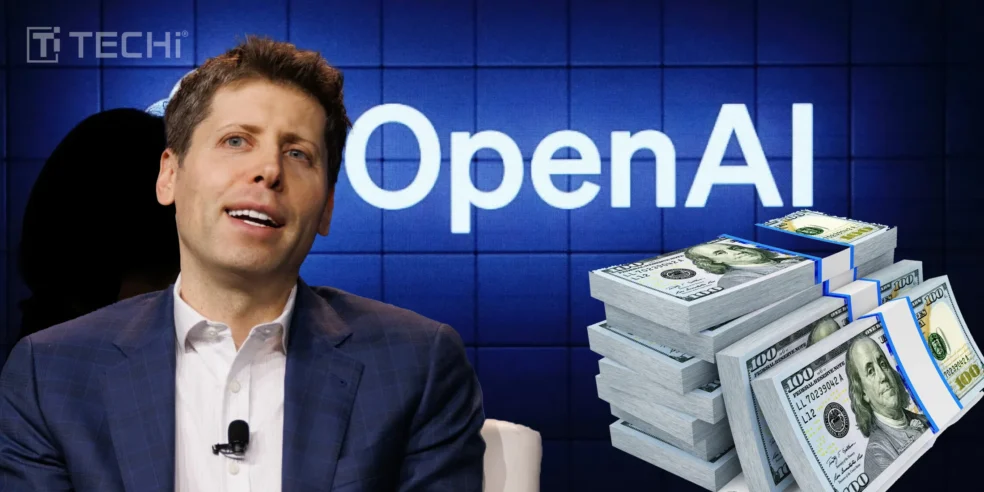
OpenAI is on the verge of what could become the most consequential technology IPO since Google went public in 2004. The company behind ChatGPT has surpassed $25 billion in annualized revenue, closed the largest private funding round in history at $110 billion, and is now in active discussions with Wall Street banks about a public listing that could value it near $1 trillion. If it files this year, OpenAI would instantly become one of the 20 most valuable public companies on Earth — before generating a single dollar of profit.
I have been tracking OpenAI’s path to public markets since the earliest Microsoft restructuring talks in 2025. What follows is everything investors, founders, and technologists need to know about the most anticipated IPO of the decade — the financials behind the hype, the risks nobody is talking about, and exactly how to position yourself before the S-1 drops.
OpenAI’s Revenue Is Growing Faster Than Any Enterprise Software Company in History
The numbers are staggering by any standard. The Information reported in early March that OpenAI crossed $25 billion in annualized revenue at the end of February 2026, up from $21.4 billion at year-end 2025 and roughly $6 billion at the end of 2024. That is a 4x increase in 14 months — a growth trajectory that outpaces Salesforce, Snowflake, and every other enterprise software company at comparable scale.
ChatGPT now serves more than 900 million weekly active users globally. The company counts over 9 million paying business customers. And CFO Sarah Friar has told internal stakeholders that OpenAI projects revenue exceeding $280 billion by 2030 — a number that would put it in the same tier as Apple and Amazon’s cloud division.
But there is a crucial asterisk. OpenAI shares 20% of its revenue with Microsoft under their partnership agreement, meaning the $25 billion headline figure overstates what the company actually retains. For Azure-based sales, OpenAI only books its 20% cut. The real net revenue picture is murkier than the press releases suggest — and this is something prospective IPO investors need to understand before the S-1 filing makes it impossible to ignore.
Revenue composition matters too. Unlike ChatGPT’s consumer subscription base, the enterprise API business is where the margin potential lives. OpenAI has 1 million enterprise customers, but here is the uncomfortable truth: according to Morningstar analysis, OpenAI has never publicly disclosed its enterprise customer retention rate. For a company approaching a trillion-dollar valuation, that is a conspicuous omission. PitchBook’s research concluded that among the three major AI IPO candidates — OpenAI, Anthropic, and Databricks — OpenAI scores weakest on business quality fundamentals despite commanding the highest valuation.
The $110 Billion Funding Round That Changed Everything
In February 2026, OpenAI closed a $110 billion funding round — the largest private technology financing in history — at a pre-money valuation of $730 billion ($840 billion post-money). The investor lineup reads like a who’s who of big tech:
- Amazon: $50 billion (starting with $15 billion upfront, with $35 billion conditional on milestones)
- Nvidia: $30 billion (largely in dedicated GPU capacity and infrastructure commitments rather than cash)
- SoftBank: $30 billion (structured in three $10 billion tranches arriving April, July, and October 2026)
The round was later extended to $120 billion with additional sovereign wealth fund participation. As of late March, OpenAI has received approximately $25 billion in immediate capital: $15 billion from Amazon and $10 billion from SoftBank’s first tranche.
This funding structure tells a story that goes beyond the headline number. Amazon’s investment came bundled with an agreement for OpenAI to spend $100 billion on AWS over eight years. Nvidia’s contribution was primarily compute capacity, not cash. These are not clean equity investments — they are strategic commercial arrangements disguised as funding rounds, and Wall Street has begun raising concerns about “circular financing” where companies invest in and sign supply deals with each other, artificially inflating both revenue and demand figures.
For IPO investors, the question is: how much of OpenAI’s reported revenue growth is organic demand versus contractual spending commitments from its own investors? The S-1 will need to answer this clearly.
The IPO Timeline: SoftBank’s $40 Billion Loan Is the Loudest Signal Yet
OpenAI has not officially announced an IPO. But every signal from the company and its investors points to a filing in the second half of 2026, with a potential listing in Q4 2026 or Q1 2027.
The strongest evidence came on March 27, when TechCrunch reported that SoftBank secured a $40 billion unsecured bridge loan with a 12-month term, arranged by JPMorgan, Goldman Sachs, Mizuho, SMBC, and MUFG. The loan’s purpose is explicitly to fund SoftBank’s $30 billion OpenAI commitment.
The loan structure is telling. An unsecured 12-month term means these banks — JPMorgan and Goldman Sachs specifically — believe SoftBank will have a clear liquidity event within that window. The most obvious liquidity event is an OpenAI IPO that allows SoftBank to either refinance against publicly traded shares or partially exit its position. Banks do not extend $40 billion in unsecured credit on hope alone; they are positioning themselves as lead underwriters for the offering.
CNBC reported separately that OpenAI is in “informal talks” with Wall Street banks about a potential IPO, and that Sam Altman has been meeting with investment banks for months. The company has also been hiring aggressively for IPO readiness roles, including a new chief accounting officer and a business finance officer to lead investor relations.
There is also a competitive dimension accelerating the timeline. Anthropic is engaged in parallel discussions about going public as early as Q4 2026, with projections of raising more than $60 billion. OpenAI’s board is reportedly concerned that if Anthropic lists first, it could absorb significant pent-up retail investor demand for AI exposure, dampening the reception for OpenAI’s own offering.
The Profitability Problem: $14 Billion in Projected Losses
Revenue is growing explosively. Losses are growing alongside it. OpenAI is projected to lose approximately $14 billion in 2026 alone, driven primarily by the astronomical cost of compute power, research spending, and infrastructure buildout. The company’s revised long-term spending projections total approximately $115 billion through 2029, with annual expenditures escalating to $17 billion in 2026, $35 billion in 2027, and $45 billion in 2028.
This matters enormously for the IPO. OpenAI is not profitable and does not expect to reach breakeven until 2030, according to internal projections. Annual cash burn is projected to reach $57 billion by 2027. In practical terms, the $110 billion funding round does not give OpenAI a multi-year runway — it gives the company roughly 18-24 months of operational funding before it needs to raise again.
The IPO is not optional. It is a financial necessity. Without access to public capital markets, OpenAI’s burn rate would force another massive private raise by late 2027 — likely at worse terms as investors demand demonstrable progress toward profitability. Going public now, while the narrative is strong and AI enthusiasm remains elevated, gives OpenAI the best possible terms for the capital it desperately needs.
Investors should compare this to Amazon’s IPO playbook: invest aggressively, report losses, and ask shareholders to trust the long-term margin potential of the platform. The difference is that Amazon had positive unit economics from day one — each additional customer was marginally profitable even as total spending grew. OpenAI has not yet demonstrated that dynamic. Each additional inference query costs real compute dollars, and the pricing power required to generate per-unit profits at scale has not been proven.
The Anthropic Threat: A Rival Closing Fast
The competitive picture has shifted dramatically since OpenAI first began IPO discussions in late 2025. Anthropic, the company behind Claude AI, has surged to $19 billion in annualized revenue — roughly 14 times higher than a year earlier. The gap between OpenAI ($25 billion) and Anthropic ($19 billion) has compressed to just $6 billion.
More concerning for OpenAI is the trajectory. Anthropic’s revenue has been growing at approximately 10x per year, versus OpenAI’s 3.4x. Epoch AI projects that at current growth rates, Anthropic will surpass OpenAI in annualized revenue by mid-2026. Among U.S. businesses tracked by Ramp Economics Lab, Anthropic’s share of combined OpenAI-plus-Anthropic enterprise spend has gone from roughly 10% at the start of 2025 to over 65% by February 2026.
The enterprise API market tells the most revealing story. OpenAI’s enterprise LLM API share has fallen from 50% in 2023 to 25% by mid-2025, while Anthropic rose from 12% to 32% over the same period. Anthropic is now the enterprise API market leader, driven largely by Claude Code, which alone generates $2.5 billion in annualized revenue and is responsible for 4% of all public GitHub commits globally.
OpenAI CEO Sam Altman declared a company-wide “code red” in December 2025, pausing non-core projects to accelerate development in response to competitive pressure from both Anthropic and Google’s Gemini 3. The company plans to nearly double its workforce to 8,000 employees by year-end 2026, hiring across engineering, research, sales, and a new “technical ambassador” program designed to drive enterprise adoption.
The Cap Table: Who Owns OpenAI and Who Benefits From the IPO
Understanding who sits on OpenAI’s cap table is essential for evaluating what happens after the IPO. Here are the major stakeholders based on public reporting:
- Microsoft: Approximately 27% ownership after investing $13 billion across multiple rounds. Microsoft’s stake comes with unique revenue-sharing terms — it receives 20% of OpenAI’s revenue and exclusive cloud infrastructure arrangements. Microsoft did not participate in the February 2026 round.
- SoftBank: Total investment of $64.6 billion across multiple rounds, representing approximately 13% ownership. SoftBank is the single largest cash investor and used a $40 billion bridge loan to fund its commitment.
- Amazon: $50 billion commitment (largest single-round investor) bundled with an $100 billion AWS spending agreement. Exact ownership percentage not disclosed.
- Nvidia: $30 billion in GPU capacity commitments. This is primarily compute infrastructure, not cash equity.
- Other institutional investors: Thrive Capital, Abu Dhabi’s MGX, Tiger Global, Andreessen Horowitz, Sequoia, T. Rowe Price, Fidelity, and several sovereign wealth funds.
- Employees: OpenAI conducted a $10.3 billion secondary share sale in August 2025 at a $500 billion valuation, creating what analysts described as the largest non-founder employee wealth event in tech history.
An IPO would create liquid, publicly-traded shares that allow these investors to realize returns. For SoftBank in particular, an OpenAI IPO is the exit event that justifies the $40 billion bridge loan. For employees, it replaces the company-controlled tender offer system — where OpenAI decided who could sell and at what price — with open-market trading.
The Restructuring Story: From Nonprofit to Public Benefit Corporation
OpenAI’s path to public markets required a fundamental corporate restructuring that took most of 2025 to complete. The company was originally founded in 2015 as a nonprofit research lab. To go public, it needed to convert to a for-profit structure — specifically, a Delaware public benefit corporation — while satisfying California Attorney General Rob Bonta that the nonprofit’s original mission and assets were being properly protected.
The process was politically charged. OpenAI hired Democratic operatives including former Senator Laphonza Butler, San Francisco Mayor Daniel Lurie personally lobbied Bonta, and over 30 experts — including AI pioneer Geoffrey Hinton and nine former OpenAI employees — opposed the conversion, warning it would eliminate governance protections.
Ultimately, California approved the restructuring in late October 2025, clearing the final regulatory hurdle for a future IPO. The agreement preserved some nonprofit oversight while allowing OpenAI to operate as a commercial entity. Simultaneously, OpenAI renegotiated its Microsoft partnership, reducing its dependency on a single cloud provider — a move that enabled the subsequent Amazon and Nvidia investments.
Strategic M&A: Using the IPO as a Weapon
Going public unlocks something potentially more valuable than the capital raised: the ability to use publicly-traded stock as acquisition currency at massive scale. OpenAI has already demonstrated aggressive M&A appetite while still private:
- io Products (Jony Ive’s startup): $6.5 billion all-stock acquisition, the largest venture-backed acquisition by a private buyer
- Statsig: $1.1 billion all-stock deal, bringing founder Vijaye Raji as CTO of Applications
- Neptune: AI model training infrastructure acquisition
- Roi: Fintech startup extending reach into financial technology
- Total: Seven acquisitions spanning AI infrastructure to consumer hardware
As a public company valued at $1 trillion, OpenAI could execute $10 billion acquisitions representing just 1% dilution. That gives it firepower to consolidate the AI startup ecosystem in a way no private company can match. Expect acquisition activity to accelerate significantly post-IPO.
How to Position Yourself Before the IPO
Individual investors cannot buy OpenAI shares today through traditional brokerages. But there are several ways to gain exposure ahead of the listing:
Pre-IPO secondary markets: Platforms like Forge Global and EquityZen facilitate trades in OpenAI employee and early-investor shares. Minimum investments typically start at $10,000-$25,000 and require accredited investor status. Shares have been trading at premiums to the last funding round valuation.
Proxy plays through public companies: Microsoft (MSFT) owns ~27% of OpenAI and stands to benefit directly from the IPO through both its equity stake and the revenue-sharing arrangement. SoftBank Group (9984.T / SFTBY) holds the second-largest position. Amazon (AMZN) has the largest single-round investment at $50 billion. Nvidia (NVDA) has $30 billion in compute commitments tied to OpenAI.
Day-one IPO allocation: When the S-1 is filed, retail investors should check whether their brokerages offer IPO access programs. Fidelity, Robinhood, and SoFi have all expanded IPO participation for retail accounts in recent years. Allocation will be extremely limited given anticipated demand.
Wait for the lock-up expiration: The most disciplined approach may be waiting 90-180 days post-IPO for the lock-up period to expire, when insider selling typically creates a dip. This worked well with Meta’s 2012 IPO (shares dropped 50% before recovering) and less well with Google’s 2004 IPO (shares never returned to their opening price before climbing significantly higher).
The Bull Case for OpenAI at $1 Trillion
The bullish argument starts with market size. The total addressable market for AI infrastructure, applications, and services is projected to exceed $2 trillion by 2030 — and OpenAI is the most recognized brand in the space. ChatGPT has become a verb in the way that “Google it” defined search. That brand awareness translates into distribution advantage that is nearly impossible for competitors to replicate.
Revenue growth at this scale is genuinely unprecedented. No enterprise software company has ever gone from $6 billion to $25 billion in 14 months. If OpenAI hits its $280 billion revenue target by 2030, even a modest 15% operating margin would generate $42 billion in annual profit — justifying a $1 trillion valuation on earnings alone.
The platform lock-in is deepening. With 9 million paying business customers, an expanding API ecosystem, and integrations across Microsoft’s Office suite, Salesforce, and thousands of third-party applications, switching costs are rising quarter by quarter. OpenAI is building the AWS of AI — the infrastructure layer that everything else runs on.
The Bear Case: What Could Go Wrong
The bear case is equally compelling, and prospective investors need to take it seriously.
Profitability is nowhere in sight. A projected $14 billion loss in 2026 and $57 billion annual cash burn by 2027 means OpenAI is spending more than $150 million every single day. The path to breakeven requires either dramatic cost reductions (which could come from efficiency breakthroughs like Google’s TurboQuant) or sustained pricing power that has not been demonstrated.
Anthropic is eating OpenAI’s lunch in enterprise. The enterprise API market share data is alarming: OpenAI’s share dropped from 50% to 25% while Anthropic rose from 12% to 32%. If this trajectory continues, OpenAI’s enterprise growth story — which is essential to the bull case — falls apart.
Circular financing inflates the numbers. When your largest investors are also your largest customers (Amazon, Microsoft, Nvidia), the line between genuine market demand and contractual spending commitments gets blurry. How much of OpenAI’s $25 billion in revenue comes from arms-length transactions versus spend-back agreements with its own shareholders?
The moat may be narrower than it appears. OpenAI’s competitive advantage is its brand, not its technology. Open-source models from Meta (Llama), Mistral, and others are rapidly approaching frontier capability. Google’s Gemini has closed the quality gap while leveraging distribution advantages through Android, Chrome, and Search. If foundation models commoditize — and the trend lines suggest they will — OpenAI needs to build defensible product layers on top, which it has been slower to do than competitors.
What to Watch: The IPO Catalyst Calendar
Here are the specific dates and events that will determine the trajectory of OpenAI’s IPO:
- April 1, 2026: SoftBank’s second $10 billion tranche arrives. Confirms funding commitments remain on track.
- Q2 2026: OpenAI workforce expected to surpass 6,000 (from 4,500 today). Office expansion across 1M+ sq ft in San Francisco signals operational scaling.
- Mid-2026: Anthropic’s potential S-1 filing. If Anthropic files first, expect OpenAI to accelerate its own timeline to avoid ceding the narrative.
- July 1, 2026: SoftBank’s third $10 billion tranche. The three-tranche structure aligns with a Q4 IPO window.
- Q3 2026: Expected S-1 filing window. The filing will contain the first audited financials and provide the market’s first clear look at OpenAI’s true unit economics.
- Q4 2026 / Q1 2027: Likely IPO listing date, potentially on NASDAQ. Market conditions, geopolitical stability, and competitive timing will determine the exact week.
The Bottom Line
OpenAI’s IPO will be the defining financial event of the AI era. The company’s revenue growth is genuinely historic, its brand recognition is unmatched, and the investor lineup behind it includes the most powerful names in technology. If the bull case plays out — if OpenAI can maintain growth, achieve profitability by 2030, and defend its market position against Anthropic, Google, and the open-source community — this IPO could generate generational wealth for early shareholders.
But the risks are proportional to the opportunity. A $1 trillion valuation for a company losing $14 billion per year, facing accelerating competition from a rival growing 3x faster, and relying on circular financing from its own investors is not a sure thing. It is a bet on the future of artificial intelligence itself — and on OpenAI’s ability to remain the center of that future.
The S-1 filing will separate the narrative from the numbers. Until then, every investor should be doing their homework. This article will be updated continuously as new developments emerge.
This is a developing story. Last updated: March 30, 2026.