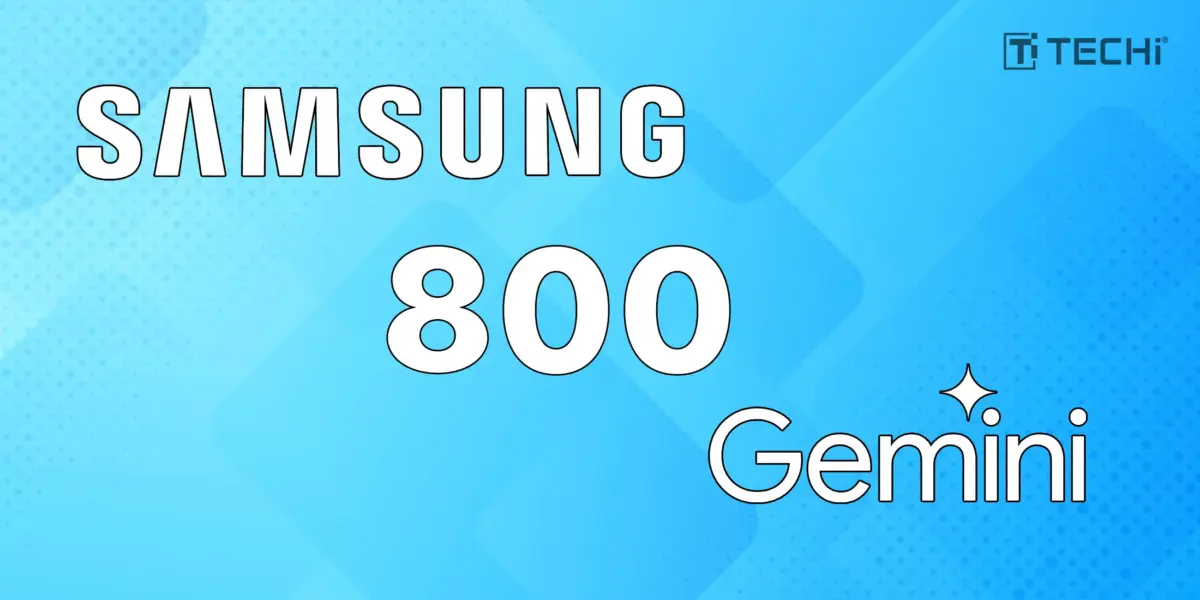
Samsung Electronics is tightening its efforts in the field of artificial intelligence and is planning to expand the business frameworks to embrace 800 million more mobile devices powered by Google Gemini AI in 2026.
This is a huge jump compared with the 400 million smartphones and tablets that had the technology in the last year as cited by the co-CEO TM Roh in a Reuters exclusive on January 5, 2026.
AI Everywhere
Roh, the head of Samsung mobile, television and appliance divisions has threatened to weave artificial intelligence in every product, all functions as well as all services in the shortest time possible.
Such measures build a stronger position of Google against stiff competition with OpenAI.
In November 2025, it debuted Gemini 3, which had benchmark superiority and led to OpenAI leader Sam Altman declaring code red and rushing publication of GPT-5.2 in December.
In line with Samsung surveys, Galaxy AI awareness has increased to 80% instead of 30% in a year.
Search, image editing, translation, and summary functions (functions stimulating everyday use) are preferred by the users.
Co-CEO TM Roh said:
“Even though the AI technology might seem a bit doubtful right now, within six months to a year, these technologies will become more widespread,”
Market Edge and Challenges
Samsung focuses on replacing Apple, the dominant smartphone manufacturer, which was in the same case in 2025.
The company has close to two-thirds of the foldable market (Q3 2025 data) and has held the market since 2019 enabling it to be the first to have this technology, although growth is limited due to engineering challenges and lack of uses.
Brand loyalty is high, and the majority of the consumers are willing to purchase foldable devices again. The squeeze in margins comes in smartphones, televisions, and appliances as a result of a memory-chip crunch.
In a warning that any company is not immune to it, Roh says that we might end up increasing our prices as the worldwide smart phone market is predicted to shrink in 2026 by IDC and Counterpoint.
“As this situation is unprecedented, no company is immune to its impact,”
Adding that the crisis affects not only mobile phones but other consumer electronics, from TVs to home appliances”.
Bold Outlook Ahead
The Gemini campaign puts Samsung and by extension, Google in a position to rule the AI adoption by consumers. The mainstream contribution can be realized within two to three years, but only through application development and the possibility of Apple entering this field.
Despite this, low stocks of semiconductor create the need to be prudent in the procurement strategies. Roh estimates that in six months to a year such technologies will be even more common.
Other innovations in the field of artificial intelligence can be expected to revolutionize consumer electronics, which could give Samsung an extra competitive edge in case the chain of supply stabilizes, and thus, sweeten the share prices in the context of the AI boom in 2026.