
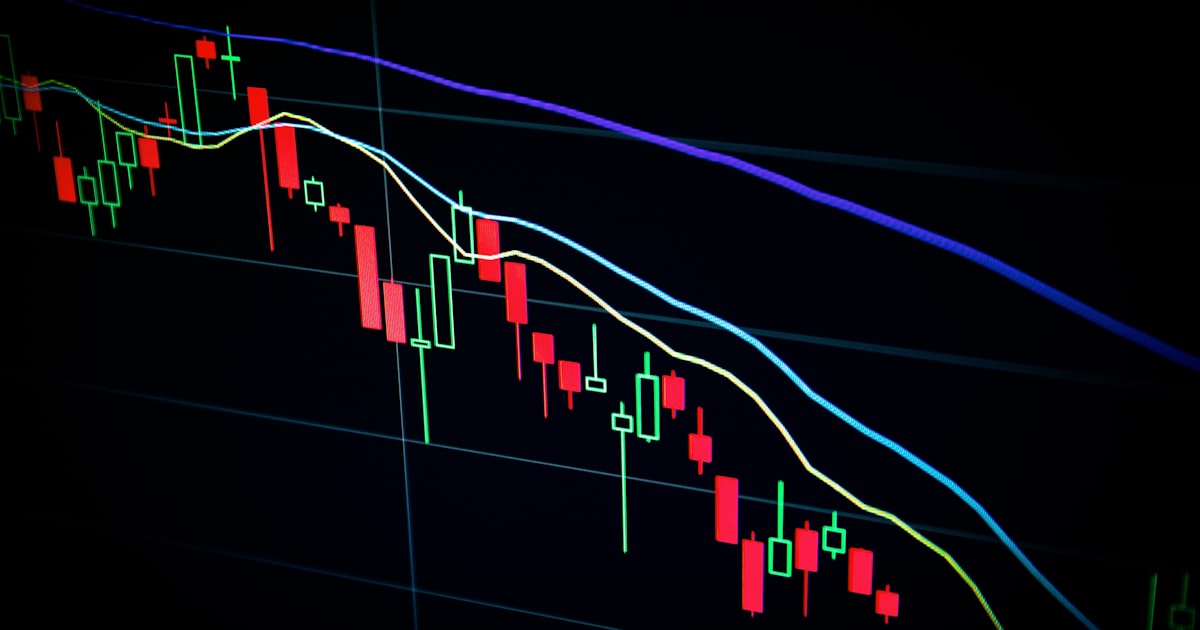
Eight days from now, on April 6, 2026, President Trump’s deadline for Iran to reopen the Strait of Hormuz expires — and the consequences for global markets could rival or exceed the Liberation Day tariff shock of April 2025. Brent crude has already surged 45% year-to-date to $112.57 per barrel. The S&P 500 just posted its fifth consecutive losing week, shedding 1.67% on Friday alone. The VIX fear index sits at 31.05 — deep in anxiety territory. Gold has punched to $4,524 per ounce, and Goldman Sachs has raised its U.S. recession probability to 30%. Whether April 6 delivers a diplomatic breakthrough, another deadline extension, or military escalation against Iranian energy infrastructure, the outcome will reshape portfolio strategy for the rest of 2026. This analysis maps the three scenarios, their market implications, and exactly how to position before the clock runs out.
Key Takeaways
- Deadline: April 6 is Trump's final deadline for Iran to reopen the Strait of Hormuz — or face military strikes on Iranian energy infrastructure.
- Oil: Brent crude at $112.57/bbl (+45% YTD). Macquarie warns of $200 oil if Hormuz stays closed through June. Physical Dubai benchmark already trading at $126.
- Stocks: S&P 500 at 6,368 after five straight losing weeks. VIX at 31.05. Bear case: S&P drops to 5,500-5,800. Bull case: 8-12% rally on diplomatic deal.
- Positioning: Energy, gold, and defense benefit in 2 of 3 scenarios (75-85% combined probability). Tech and consumer only win in the 15-20% bull case.
- Fed Risk: CME FedWatch prices >50% probability of a rate HIKE at April 28-29 FOMC. OECD inflation forecast revised to 4.2%. The Fed cannot rescue markets this time.
Last updated: March 29, 2026. All market data reflects the March 27 closing session. Oil prices as of March 27 close ($112.57 Brent / $99.64 WTI).
In This Article
What Is the April 6 Deadline?
The April 6 deadline is the date President Donald Trump set for Iran to fully reopen the Strait of Hormuz to international commercial shipping — or face military strikes against Iranian energy infrastructure. Understanding how this moment arrived requires tracing a rapid and dangerous escalation that has compressed months of geopolitical risk into less than four weeks.
The Strait of Hormuz normally handles roughly 20% of the world’s oil supply — approximately 21 million barrels per day of crude and petroleum products. Iran’s closure has removed an estimated 4.5 to 5 million barrels per day from Western-accessible markets, according to BCA Research’s Marko Papic. That number could double by mid-April as tanker rerouting logistics break down further.
Iran’s position has hardened, not softened. Foreign Minister Araghchi stated publicly that no negotiations have occurred and none are planned. The yuan-based toll system — which allows Chinese and Russian vessels through while blocking Western-flagged tankers — represents a deliberate strategy to fracture the Western alliance by creating economic winners and losers within the blockade. This development directly accelerates the de-dollarization trend that was already reshaping global energy trade.
Trump’s threat is specific: strikes on Iranian energy infrastructure, meaning refineries, export terminals, and potentially oil fields. The military has the capability. The question is whether the political will holds when oil prices are already straining American consumers and a partial government shutdown has TSA officers working without pay.
The Three Scenarios
Every credible Wall Street strategist is now modeling three distinct outcomes for April 6. Each scenario carries dramatically different implications for stocks, oil, bonds, gold, and portfolio positioning. The probabilities assigned here reflect the consensus of major bank research desks as of late March 2026.
Scenario 1 — Diplomatic Breakthrough (Bull Case)
A diplomatic breakthrough before or shortly after April 6 would represent the most bullish scenario for broad equity markets. If the Strait of Hormuz reopens to full commercial traffic, Brent crude drops to the $80–90 range within one to two weeks as supply normalizes and the war premium evaporates.
The downstream effects cascade rapidly. The S&P 500 rallies 8–12% over the following month as recession fears recede and the inflation trajectory improves. Tech stocks and the Nasdaq — currently down 13% from their October highs — stage the sharpest rebound because growth stocks benefit most from falling inflation expectations and a less hawkish Fed. Goldman Sachs’ year-end S&P target of 6,800 comes back into play if a diplomatic resolution arrives by mid-year.
Wall Street’s “TACO” thesis — Trump Always Caves Once the economic pain becomes unbearable — provides the intellectual framework for this scenario. BCA Research’s Pain Point Index currently sits at two standard deviations above average, suggesting the political cost of continued escalation is approaching the threshold where past administrations have reversed course. The counterargument: Iran’s total refusal to negotiate makes a deal structurally harder than any tariff rollback.
Scenario 2 — Another Extension (Base Case)
The most likely outcome, according to the plurality of Wall Street strategists, is that Trump extends the deadline again — perhaps to late April or early May — while claiming progress behind the scenes. This matches the pattern observed during the initial March 15 deadline, which passed without action and was simply pushed to April 6.
In this scenario, the Wall Street “grind lower” thesis dominates. Oil stays in the $100–115 range as the partial blockade continues. The S&P 500 drifts toward 6,100–6,200 as earnings estimates get revised down. Volatility remains elevated but manageable — the VIX hovers in the 25–32 range rather than spiking into crisis levels.
The slow bleed is arguably more damaging to long-term portfolio returns than either a clean resolution or a sharp selloff, because it prevents the capitulation event that typically marks tradeable bottoms. Investors are left in limbo — unable to buy the dip with conviction, unwilling to sell into strength that might be the start of a relief rally.
Q1 earnings season begins mid-April with bank results, and forward guidance becomes the battleground. Companies dependent on consumer spending, international shipping, and energy costs as inputs face the toughest guidance calls in years. Nvidia, Tesla, and the broader tech sector face margin compression from rising energy costs that flow through data center operations and manufacturing supply chains.
Scenario 3 — Military Escalation (Bear Case)
Military escalation is the scenario that would trigger the most violent market repricing since the 2020 pandemic crash. If the U.S. strikes Iranian energy infrastructure after the April 6 deadline, the immediate market response looks severe across every asset class.
Oil surges to $150–200 per barrel. Macquarie’s modeling shows that a full Hormuz closure lasting through June pushes Brent to $200 — surpassing the 2008 all-time high. Even a partial escalation that removes an additional 2–3 million barrels per day sends crude above $150 within weeks.
The S&P 500 drops to 5,500–5,800, representing an additional 10–14% decline from current levels and a full 20%+ bear market from the February highs. Goldman Sachs’ recession probability would likely jump to 60% or higher, aligning with Moody’s AI model that already flags a 49% probability. Defense stocks and energy names surge, but they cannot offset the damage to the other 85% of the market.
Gold pushes above $5,500 per ounce, potentially challenging the January all-time high of $5,589. Safe-haven demand combines with inflation panic to drive the metal sharply higher. Bitcoin, currently around $66,600, likely falls further as institutional investors dump risk assets for cash — the digital gold narrative breaks down during genuine military crises, as demonstrated repeatedly during the March sell-off when BTC dropped 48% from its all-time high.
The OECD’s revised U.S. 2026 inflation estimate of 4.2% (up from 2.8%) would prove optimistic in this scenario, with energy-driven inflation potentially pushing above 6%. Gasoline at $6+ per gallon nationwide creates a consumer spending crisis that feeds directly into recession.
Oil Price Impact — The $100 to $200 Range
The oil market is experiencing the most severe supply disruption since the 1973 Arab oil embargo. The math is straightforward and alarming: the world has lost 4.5 to 5 million barrels per day of supply accessible to Western economies, and BCA Research projects that number doubles by mid-April as rerouting capacity hits physical limits.
A critical divergence has emerged between physical and paper oil markets. While Brent crude futures trade at $112.57, the physical Dubai benchmark — which reflects actual cargo transactions in the Persian Gulf — trades at approximately $126 per barrel. That $14 spread represents the real-world premium that refiners are paying to secure physical barrels in a supply-constrained environment. When physical markets lead paper markets by this margin, it historically signals that futures prices have further to rise.
Chevron CEO Mike Wirth, speaking at the CERAWeek energy conference in Houston, acknowledged that global spare production capacity is insufficient to replace Hormuz volumes. Saudi Arabia and the UAE hold the world’s largest spare capacity — estimated at 3 to 4 million barrels per day combined — but bringing that capacity online requires weeks, not days, and much of it would need to be shipped through alternative routes that are already congested.
The energy sector is pricing in sustained high oil, but the range of outcomes is extraordinarily wide. The table below maps oil price levels to their market catalysts.
| Oil Price (Brent) | Scenario Trigger | S&P 500 Impact | Recession Risk |
|---|---|---|---|
| $80–90 | Full diplomatic resolution; Strait reopens | +8–12% rally | Falls to 15–20% |
| $100–115 | Status quo; partial blockade continues | Flat to -5% | 30–40% |
| $130–150 | Escalation; limited military strikes | -10–15% | 50–60% |
| $150–200 | Full conflict; Hormuz closed through June | -15–25% | 60–80% |
Iran’s yuan-based toll system adds a geopolitical layer that has no precedent. Chinese and Russian-flagged vessels continue transiting the Strait by paying yuan fees, effectively creating a two-tier global oil market. This arrangement accelerates the de-dollarization of energy trade and could have structural consequences that persist long after the military conflict resolves. Meanwhile, China opened a trade probe against the U.S. in retaliation for tariffs — a second front in the economic war that further complicates the diplomatic calculus.
Stock Market Positioning — Sector Playbook
The April 6 deadline creates a binary event for sector positioning. The right allocation depends entirely on which scenario unfolds — and because no one can predict geopolitics with certainty, the optimal approach is building a portfolio that performs adequately under all three scenarios rather than making a concentrated bet on one outcome.
The following sector matrix shows expected performance under each scenario, based on composite analyst estimates from Goldman Sachs, JPMorgan, Morgan Stanley, and BCA Research.
| Sector | Bull Case (Deal) | Base Case (Extension) | Bear Case (Strikes) |
|---|---|---|---|
| Energy / Oil | -15–25% | +5–10% | +20–40% |
| Defense / Aerospace | -5–10% | +3–8% | +15–25% |
| Gold / Miners | -10–15% | +5–10% | +20–35% |
| Tech / AI | +12–18% | -5–10% | -15–25% |
| Consumer Discretionary | +10–15% | -5–8% | -15–20% |
| Utilities / Staples | +3–5% | +2–5% | -3–8% |
| Bitcoin / Crypto | +15–25% | -5–10% | -20–30% |
Energy and defense are the only sectors that benefit from both the base case and bear case, which collectively carry 75–85% probability. This asymmetry explains why institutional money has poured into energy names despite the sector already being up 41% — the risk/reward still favors overweight positioning given the probability-weighted outcomes.
Tech and consumer discretionary only outperform in the bull case — the lowest-probability scenario. That does not mean investors should avoid Nvidia or Tesla entirely, but position sizing should reflect the skewed probability distribution. A 15–20% chance of a tech rebound does not justify a 40% tech allocation.
Utilities and consumer staples offer the narrowest range of outcomes — modest upside in all scenarios, limited downside even in the bear case. For capital preservation, these defensive sectors provide a portfolio anchor while the April 6 uncertainty resolves.
The Fed Wild Card — April 28-29 FOMC
The April 28-29 FOMC meeting arrives just three weeks after the Iran deadline, and the Fed faces its most agonizing policy dilemma since the 2022 inflation crisis. Energy-driven inflation is surging — the OECD revised its U.S. 2026 inflation forecast to 4.2% from 2.8% — while the economy is simultaneously weakening under the weight of $100+ oil, trade disruptions, and consumer confidence collapse.
This is the textbook definition of stagflation: rising prices combined with falling growth. The Fed’s toolkit is designed for conditions where inflation and growth move in the same direction. When they move in opposite directions, every policy option carries significant costs.
If the Fed raises rates, it crushes an already weakening economy and housing market, accelerating the recession that Goldman puts at 30% probability. Mortgage rates above 8% would freeze residential real estate. Corporate borrowing costs spike, hitting the most leveraged companies hardest.
If the Fed holds or cuts rates, it risks letting inflation expectations become unanchored — the cardinal sin of central banking. With oil at $100+ and the OECD projecting 4.2% inflation, any signal that the Fed is pivoting toward accommodation sends long-term bond yields higher as markets price in persistent inflation. The 10-year Treasury yield, already elevated, could surge past 5%.
The practical implication for investors: the Fed cannot rescue markets this time. Unlike every downturn since 2008, where the Fed could cut rates and launch quantitative easing to backstop falling asset prices, the current stagflationary environment removes that safety net. Markets must find their own bottom based on earnings fundamentals, geopolitical resolution, or both — and the April 6 deadline outcome will largely determine which path the Fed takes three weeks later.
Your Portfolio Action Plan
Two model portfolios below reflect different risk tolerances heading into the April 6 deadline. Both are designed to perform across all three scenarios, with different emphasis on capital preservation versus upside capture.
| Allocation | Conservative Portfolio | Aggressive Portfolio |
|---|---|---|
| Energy / Oil Stocks | 30% | 40% |
| Gold / Miners | 20% | 15% |
| Utilities / Consumer Staples | 20% | — |
| Cash / T-Bills | 15% | 20% |
| Quality Tech (profitable AI) | 15% | — |
| Defense | — | 10% |
| Short Positions / Inverse ETFs | — | 15% |
The conservative portfolio prioritizes capital preservation with a 30% energy overweight that benefits from both the base case and bear case (75–85% combined probability). The 20% gold allocation provides crisis insurance. Utilities and staples add ballast with the narrowest range of outcomes. The 15% quality tech allocation — focused on profitable AI companies with pricing power — provides upside if the bull case materializes. A 15% cash position allows opportunistic buying after the deadline resolves in either direction.
The aggressive portfolio leans heavily into the base and bear case thesis. The 40% energy allocation captures maximum upside from continued disruption. The 15% short position — through inverse ETFs on the Nasdaq (SQQQ) or broad market (SH) — provides a direct hedge against equity declines. The 20% cash allocation is deliberately high, creating dry powder for what could be the buying opportunity of 2026 if the bull case surprise materializes.
Both portfolios share a common philosophy: overweight the scenarios with the highest probability, hedge against the tail risks, and maintain enough cash to be opportunistic. The worst-positioned investors heading into April 6 are those with concentrated tech portfolios and no energy or commodity exposure — essentially betting entirely on the 15–20% probability bull case.
What to Watch This Week (March 31 – April 6)
The final week before the deadline is packed with economic data that will shape market expectations for both the Iran outcome and the Fed’s April decision. Every data point lands in the context of the most binary geopolitical setup in decades.
The March jobs report on April 4 deserves special attention. It arrives two days before the deadline and will be the last major data point influencing both the geopolitical calculus and the Fed’s April meeting framework. A weak report (below 150,000 jobs added) simultaneously increases the odds of a Fed hold and strengthens the argument for avoiding further escalation — potentially tilting the April 6 outcome toward extension rather than strikes.
For the latest daily coverage, follow TECHi’s stock market today page and oil price today tracker.
Frequently Asked Questions
What happens on April 6, 2026?
April 6, 2026 is the deadline President Trump set for Iran to reopen the Strait of Hormuz to international commercial shipping. If Iran does not comply, Trump has threatened military strikes against Iranian energy infrastructure including refineries and export terminals. The three most likely outcomes are a last-minute diplomatic deal (15-20% probability), another deadline extension (45-50%), or military escalation (30-35%). Markets will begin pricing the outcome in Sunday night futures trading, and the April 7 open is expected to see extreme volatility regardless of which scenario unfolds.
Will the stock market crash if the Iran war escalates?
If the U.S. launches military strikes against Iranian energy infrastructure, the Su0026amp;P 500 could fall 10-15% from current levels to the 5,500-5,800 range, which would constitute a full bear market decline of 20%+ from February highs. Oil surging to $150-200 per barrel would crush consumer spending, spike inflation above 5%, and push Goldman Sachs recession probability above 60%. However, certain sectors would rally sharply — energy stocks could gain 20-40%, gold miners 20-35%, and defense contractors 15-25%. A broad market crash does not mean every stock falls.
Should I sell stocks before April 6?
Selling everything before April 6 is a market-timing bet that risks missing a potential 8-12% rally if a diplomatic breakthrough occurs. A more disciplined approach is reducing exposure to the sectors most vulnerable to escalation (tech, consumer discretionary, crypto) while increasing allocations to sectors that benefit from continued conflict (energy, gold, defense). Most Wall Street strategists recommend raising cash to 15-20% of portfolio value heading into the deadline — enough to protect against downside while maintaining enough equity exposure to capture upside if the bull case materializes.
What stocks do well during war?
Energy stocks, defense contractors, and gold miners historically outperform during military conflicts. In 2026, the Energy Select Sector SPDR ETF (XLE) has returned over 40% year-to-date while the Su0026amp;P 500 has declined 6%. Top-performing names include ExxonMobil (XOM, +39%), Chevron (CVX, +35%), Devon Energy (DVN, +53%), and Lockheed Martin (LMT, +22%). Gold has surged to $4,524 per ounce, benefiting miners like Newmont and Barrick Gold. Utilities and consumer staples also hold up relatively well as defensive sectors during geopolitical crises.
How high can oil go if the Strait of Hormuz stays closed?
Macquarie analysts project Brent crude could reach $200 per barrel if the Strait of Hormuz blockade continues through June 2026, which would surpass the all-time record of $147 set in 2008. The Strait handles approximately 20% of global oil supply. BCA Research estimates the world has already lost 4.5-5 million barrels per day, and that figure could double by mid-April. Even a partial resolution that leaves 2-3 million barrels offline would support Brent above $100 through year-end. The current physical-paper spread ($126 Dubai vs $112 Brent) suggests futures prices have further to rise.
For more investment analysis, explore our guides to the best AI stocks, tech stocks, oil prices today, stock market today, gold price today, best oil stocks, Nvidia stock, Tesla stock, and Bitcoin price prediction.
About TECHi®: TECHi (TECH Intelligence) delivers expert analysis of AI stocks, Magnificent 7 earnings, cryptocurrency markets, and emerging technology. Our investment coverage combines Wall Street-grade financial analysis with deep technical understanding. Learn more about our editorial standards.
Disclaimer
This article is for informational purposes only and does not constitute financial advice, investment recommendations, or an endorsement to buy, sell, or hold any securities. All investment decisions should be based on your own research and consultation with a qualified financial advisor. The data and analysis presented here reflect publicly available information at the time of writing and may not reflect the most current market conditions. Past performance does not guarantee future results. Stock investments carry risk, including the potential loss of principal. TECHi and its authors may hold positions in securities discussed in this article.