

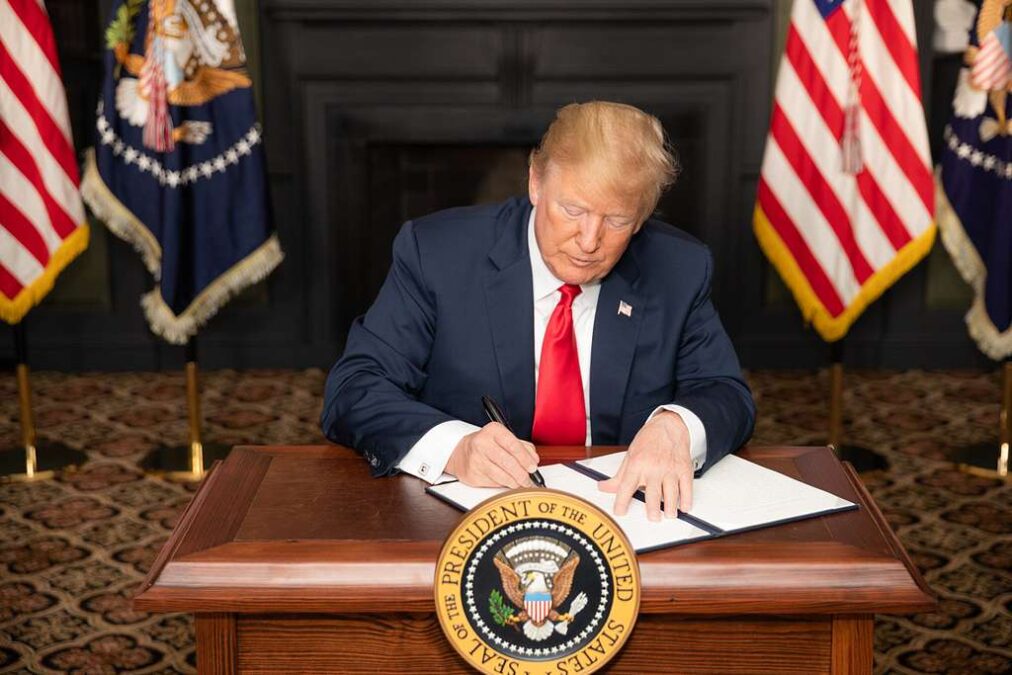
President Donald Trump declared on March 31, 2026, that U.S. military operations in Iran could wrap up within two to three weeks, sending shockwaves through global markets. Speaking to reporters outside the White House, Trump said: “I would say that within two weeks, maybe two weeks, maybe three. We’ll leave because there’s no reason for us to do this.” The statement came roughly one month after Operation Epic Fury launched on February 28, and it immediately raised questions about whether the conflict’s end is truly in sight or whether investors should brace for more volatility.
Markets responded with a sharp rally. The S&P 500 closed at 6,528.52, up 2.91% on the day, while the Nasdaq surged 3.83% to 21,590.63. Oil futures pulled back modestly as traders priced in a potential reopening of the Strait of Hormuz, which Iran had partially blocked since mid-March. Bitcoin climbed roughly 2.65% to around $68,207. But behind the optimism, analysts warn the road from a presidential soundbite to an actual ceasefire is rarely straight.
What Trump Actually Said and Why It Matters
Trump’s comments were notably casual for a statement about ending a major military campaign. He framed the timeline around military objectives being met “extremely ahead of schedule,” a phrase he has used in previous conflicts to set the stage for rapid drawdowns. According to The Hill, the president added that “operations will end when military objectives are met,” suggesting conditions on the ground still take priority over calendar dates.
This matters for investors because Trump’s war-related statements have moved markets repeatedly since Operation Epic Fury began. His April 6 deadline to pause strikes on energy infrastructure already created a pricing event in oil futures. Now, a full withdrawal timeline adds another layer of speculation to an already jittery market.
The key detail traders are watching: whether this is a genuine signal backed by diplomatic progress or campaign-season rhetoric ahead of the 2026 midterms. The White House has not released a formal withdrawal plan, and Al Jazeera reports that Iran’s Foreign Minister Araghchi said “the trust level is at zero” regarding any deal with Washington.
Operation Epic Fury: Where Things Stand After One Month
Operation Epic Fury launched as a joint U.S.-Israeli campaign on February 28, 2026, with four stated objectives: prevent Iran from developing nuclear weapons, destroy its ballistic missile arsenal, degrade proxy networks, and neutralize its naval capacity. According to the Department of Defense, coalition forces have struck over 9,000 targets since the operation began.
The military campaign has been one of the most intensive air operations since the 2003 Iraq invasion. Iranian air defenses were largely suppressed within the first week, and the country’s known nuclear enrichment facilities at Natanz and Fordow sustained heavy damage. But ground-level intelligence suggests Iran’s dispersed military infrastructure makes a clean “mission accomplished” moment difficult to define.
On the diplomatic side, Iranian President Masoud Pezeshkian has reportedly signaled openness to ending hostilities with guarantees, according to CBS News. A 15-point peace proposal drafted by U.S. envoy Steve Witkoff is circulating, though no formal negotiations have begun. The gap between Trump’s optimistic timeline and the diplomatic reality is where market risk lives right now.
Oil Markets: The Strait of Hormuz Factor
Crude oil has been the most direct barometer of the Iran conflict. Since the war began, Brent crude has surged past $117 and WTI has pushed above $101, representing increases of more than 40% from pre-conflict levels. Iran’s partial blockade of the Strait of Hormuz, through which roughly 20% of the world’s oil transits daily, has been the single biggest driver of those gains.
Trump’s withdrawal comments triggered an immediate, if modest, pullback in crude futures. Brent dipped about 1.2% in after-hours trading as speculative longs took profits. But energy analysts at Bloomberg cautioned that sustained price relief requires more than rhetoric. The Strait needs to be fully reopened, shipping insurance premiums need to normalize, and OPEC+ needs clarity on Iranian production coming back online.
For American consumers, the stakes are personal. Gas prices have already averaged $3.98 nationally, up 33% since the conflict started. If operations genuinely wind down and Hormuz traffic resumes, analysts expect a gradual decline toward the $85-$90 Brent range over the following quarter. If the timeline slips, $120+ oil is not off the table.
Stock Market Reaction: Relief Rally or Something More?
Wall Street responded to Trump’s comments with the kind of broad-based rally that signals genuine risk appetite returning. All 11 S&P 500 sectors finished in the green, with technology and consumer discretionary leading gains. The Dow Jones Industrial Average added over 1,000 points to close at 46,341.51, while the VIX fear gauge dropped to 30.61, still elevated but well off its mid-March highs above 40.
The rally built on momentum from earlier in the day, when deescalation hopes had already pushed equities higher. Defense contractors like Lockheed Martin and Raytheon (RTX) pulled back modestly, while airlines, cruise lines, and energy-intensive industrials led the charge upward. This sector rotation suggests traders are beginning to price in a post-conflict economic environment.
But not everyone is buying the narrative. Goldman Sachs told clients that “ceasefire optimism has historically been a poor timing signal” and that equity markets tend to give back gains when timelines extend. The recession risk from elevated energy costs, disrupted supply chains, and tighter financial conditions does not disappear the moment a president says “two to three weeks.” A sustained rally needs follow-through in the form of diplomatic deals, not just presidential quotes.
Crypto’s War Premium: Bitcoin, Gold and Safe Haven Flows
Bitcoin has traded as a hybrid asset throughout this conflict, sometimes moving with risk assets, sometimes tracking gold. On March 31, it rallied to approximately $68,207, up about 2.65% on the day. Gold, meanwhile, held firm near $4,513 per ounce, suggesting safe-haven demand has not fully unwound despite the optimistic headlines.
The crypto market’s reaction was more nuanced than stocks. While Bitcoin gained, altcoins and DeFi tokens saw outsized moves. Ethereum rose over 4%, and oil-linked crypto tokens that had been popular war trades saw sharp selloffs. According to CoinDesk, derivatives data showed traders unwinding bearish bets on Bitcoin, a signal that the market is leaning toward a risk-on interpretation of Trump’s comments.
The critical question for crypto investors is whether Bitcoin holds above $65,000 if the withdrawal timeline proves aspirational rather than actual. During previous geopolitical deescalation fakeouts, Bitcoin has tended to sell off harder than equities because of thinner liquidity and higher leverage in the system. Traders with concentrated crypto positions should watch the April 6 energy strikes deadline as the next major catalyst.
What Could Go Wrong: Three Scenarios Investors Should Watch
Scenario 1: Smooth withdrawal, lasting ceasefire. In this best case, U.S. forces begin drawing down on schedule, Hormuz reopens fully, and oil drops below $95 within six weeks. The S&P 500 could retest its January highs near 6,800, and Bitcoin might push toward $75,000 on renewed risk appetite. Probability, according to consensus estimates from CSIS: roughly 25%.
Scenario 2: Timeline extends, partial deescalation. Operations continue past the two-to-three-week window, but at reduced intensity. Oil settles in the $95-$105 range, equities trade sideways, and crypto remains range-bound. This is the base case most Wall Street strategists are modeling, with a probability around 45%.
Scenario 3: Escalation resumes. Diplomatic talks collapse, Iran retaliates against Gulf state allies or Israeli targets, and the conflict intensifies. Oil spikes past $130, equities enter a formal correction, and Bitcoin tests $55,000 support. While the least likely scenario at roughly 20% probability, it carries the most severe portfolio damage and is why the VIX remains above 30.
The Diplomatic Gap Between Words and Deals
Perhaps the biggest risk in Trump’s statement is the gap between his casual timeline and the complex diplomatic reality. The 15-point Witkoff peace proposal reportedly includes demands for complete nuclear disarmament verification, release of detained dual citizens, and guarantees on proxy group activity in Lebanon, Syria, Yemen, and Iraq. Iran has historically treated each of those as a separate negotiation track, not a package deal.
Iran’s bargaining position, while weakened militarily, is not nonexistent. The country still controls significant leverage through proxy networks, its geographic chokehold on Hormuz, and the simple political reality that reconstruction and sanctions relief require Washington’s cooperation. As CSIS analysts have noted, wars end at the negotiating table, and Iran has not yet sat down.
For investors, this means the next two weeks are less about military timelines and more about whether back-channel diplomatic signals match Trump’s public optimism. Watch for statements from Witkoff, signals from Gulf state mediators (particularly Oman and Qatar), and any changes to the April 6 energy infrastructure strikes deadline.
How to Position Your Portfolio Right Now
The temptation after a rally like March 31 is to chase momentum. History suggests a more measured approach. Here is what portfolio managers at major firms are telling clients:
Trim energy overweights gradually. If you loaded up on oil stocks and energy ETFs during the conflict, start taking partial profits. The risk-reward has shifted from “war premium” to “peace discount,” and energy names tend to give back gains quickly when conflict premiums unwind.
Rebuild tech and growth exposure. The Nasdaq’s 3.83% surge signals that money is rotating back into growth. Companies with strong earnings and minimal energy cost exposure, such as the Magnificent Seven, stand to benefit most from falling oil prices.
Keep hedges in place. The VIX at 30.61 is still pricing in significant uncertainty. Options are expensive but justified given the range of outcomes. Consider maintaining put protection through mid-April at minimum, covering the April 6 deadline and the two-to-three-week withdrawal window.
Watch Bitcoin’s $65,000 level. A sustained hold above this level on pullbacks would confirm the bullish interpretation of deescalation. A break below it would suggest the rally was short covering, not genuine accumulation.
The Bottom Line for Investors
Trump’s two-to-three-week timeline for ending Iran operations is the most concrete withdrawal signal since the conflict began. Markets are right to rally on it. But presidential timelines on Middle Eastern conflicts have a long history of slipping, and the diplomatic infrastructure for a lasting peace simply does not exist yet. The smart move is to lean into the optimism with position sizing, not conviction. Take partial profits on war trades, add selectively to quality growth names, and keep your hedges until the Strait of Hormuz is open and a ceasefire is signed, not just promised.
Last updated: March 31, 2026, 8:45 PM ET. Market data reflects closing prices for March 31, 2026.
Disclaimer: This article is for informational purposes only and does not constitute investment advice. Always consult a qualified financial advisor before making investment decisions.
Watch: Trump Announces Iran Operations Winding Down
When did Trump say the Iran war would end?
On March 31, 2026, President Trump told reporters outside the White House that U.S. military operations in Iran could conclude within two to three weeks, saying forces would leave because there is no reason to continue once military objectives are met.
What is Operation Epic Fury?
Operation Epic Fury is the joint U.S.-Israeli military campaign against Iran that launched on February 28, 2026. Its four stated objectives are preventing Iranian nuclear weapon development, destroying ballistic missiles, degrading proxy networks, and neutralizing Iran’s naval capacity. Over 9,000 targets have been struck in one month.
How did the stock market react to Trump’s Iran withdrawal comments?
Markets rallied sharply on March 31, 2026. The S&P 500 gained 2.91% to close at 6,528.52, the Nasdaq surged 3.83% to 21,590.63, and the Dow rose over 1,000 points. All 11 S&P 500 sectors closed higher.
What happened to oil prices after Trump’s statement?
Crude oil futures pulled back modestly in after-hours trading, with Brent dipping about 1.2%. However, prices remain elevated, with Brent above $117 and WTI above $101, reflecting ongoing supply concerns related to the Strait of Hormuz blockade.
How did Bitcoin respond to the Iran deescalation news?
Bitcoin rallied approximately 2.65% to around $68,207 on March 31, 2026. Ethereum gained over 4%. Derivatives data showed traders unwinding bearish positions, suggesting the crypto market interpreted Trump’s comments as a risk-on signal.
What is the April 6 Iran deadline?
Trump previously set an April 6, 2026, deadline to pause strikes on Iranian energy infrastructure as a goodwill gesture toward peace negotiations. This date remains a critical catalyst for oil prices and broader markets.
Should investors buy stocks after the Iran war rally?
Analysts recommend a measured approach. Consider trimming energy overweights, gradually rebuilding tech and growth exposure, and maintaining put protection through mid-April. The VIX remains above 30, indicating markets still price in significant uncertainty about the conflict timeline.