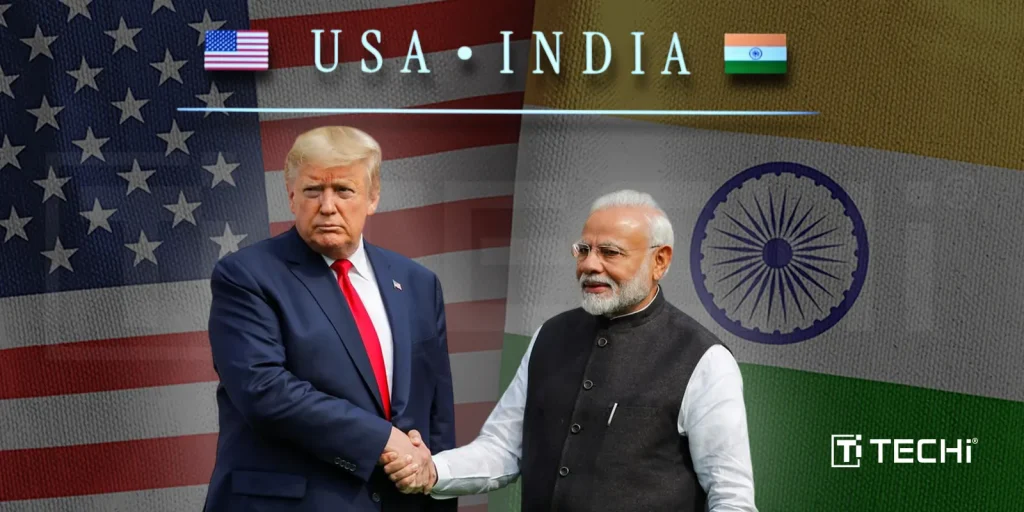
On April 22, in a landmark move set to redefine US-India tech and trade dynamics, the two largest democracies finalized the terms of a groundbreaking Bilateral Trade Agreement (BTA) during US Vice President J.D. Vance’s four-day visit to India. The ambitious deal aims to double bilateral trade to a staggering $500 billion by 2030. As negotiations reached a pivotal moment, a senior official told The Economic Times
“The BTA aims to enhance and expand bilateral trade, technology and economic ties in a mutually beneficial manner so that the India-US ties can deliver greater prosperity and well-being for the people of the two countries,”Apple in India
US-India Bilateral Dialogues 🔗
From April 23, US and Indian officials will hold bilateral dialogues on the terms of reference (ToRs) covering about 19 chapters, such as tariffs, non-tariff barriers, and customs facilitation. The two countries are looking for cooperation in energy, defence, and strategic technologies.
About these ongoing talks, the US Trade Representative (USTR) Jamieson Greer said
“India’s constructive engagement so far has been welcomed, and I look forward to creating new opportunities for workers, farmers, and entrepreneurs in both countries,”
Jamieson Greener further added that these ongoing talks will help achieve balance and reciprocity by opening new markets for American goods and addressing unfair practices that were harming the US economy.
US-India Trade Deficit 🔗
In 2024, the U.S. ran a $45.7 billion goods trade deficit with India, a 5.1% increase over 2023. The U.S. total goods trade with India was estimated at $129.2 billion in 2024. According to the U.S., India’s average applied tariff is 17%, among the highest of the world’s largest economies, while America’s average applied tariff is 3.3%. To reduce this deficit, India reduced tariffs on US goods after the Trump-Modi meeting in February 2025.
Impact of US-India BTA on Tech Industry 🔗
With a $500 billion trade target by 2030, this trade agreement will strengthen supply chain resilience against geopolitical shifts after Trump’s tariff war. Moreover, by reducing trade barriers and aligning regulatory frameworks, the agreement will accelerate cross-border investments, enabling American tech giants to expand manufacturing in India while Indian startups will gain deeper access to US markets.
Impact of US-India BTA on Big Five 🔗
Through this agreement, tech giants like Apple, Google, Microsoft, and Amazon stand to benefit from streamlined regulations that may accelerate their shift from China. Apple, which already manufactures iPhones in Tamil Nadu, could expand production under the deal’s incentives, reducing reliance on China. Google and Microsoft will also gain smoother access to India’s AI talent pool, accelerating the development of generative AI tools like Gemini and Copilot. Amazon may also benefit from relaxed e-commerce regulations, enabling faster expansion in India’s huge consumer market. By aligning tech policies, the deal promises Big Tech that they can diversify supply chains while reducing reliance on China.
Although the stakes are high for both countries, the impact of BTA on the tech industry will be further clarified after the deal is completely disclosed and implemented.