
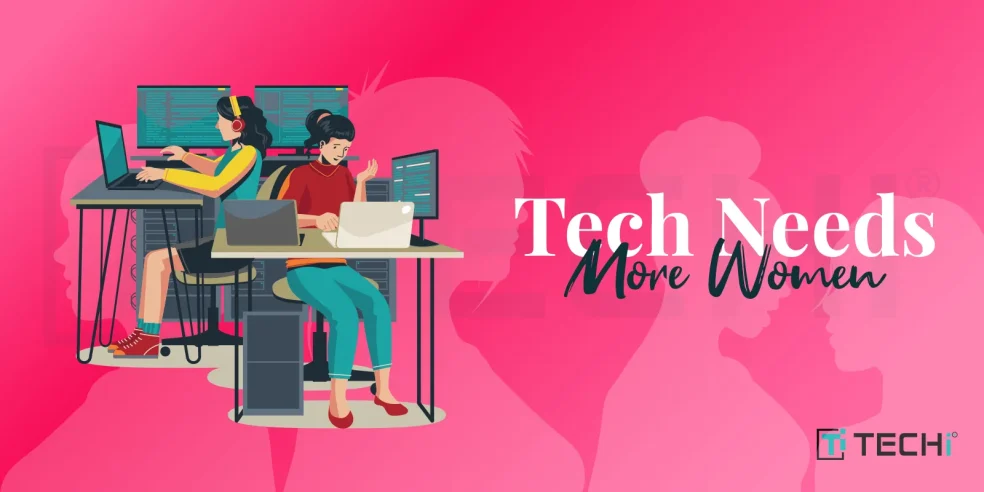
Many people have contributed to the revolutionization of the tech industry for decades. However, women are always overlooked in this picture. Since the industry is synonymous with innovation and constantly pushing to exceed the possibilities. Thus, there is an area where the tech industry lags and it is widely recalled as gender diversity. This thought has become word of mouth due to male dominance in the respective industry.
However, women in tech are still facing numerous challenges to pave a path for themselves, purposely to let them showcase their abilities and skills.
When we talk about technology, it does not only involve computers. It encompasses multiple professions including engineering roles. And women have been part of it and illuminated the world with their contributions. However, they never got recognition and acknowledgement, unlike men, due to the existing gender gap.
Current Statistics & Trends 🔗
As the 20th century unfolded, a few strong women were bucking the norm around the globe in a diverse manner. According to the lifewire, women comprise 26.7% of the tech industry.
The reason for this disclosure is to acknowledge the abilities and skills of women who have forged paths, shaped the future and are leading us to modern life. Thus the disparity is even more considered in leadership positions where women only comprised 11% of executive roles. In another report by Boston Consulting Group and SISTA, only 10% of start-ups are created by all-women in Europe and 12% by mixed genders.
Analysts have also made a statement that by the end of 2027 women’s presence in the tech industry will decline to 21% in Europe. If this gender imbalance will be continued then it will act as a constraint on innovation, growth and well-being of mankind.
These statistics highlight the gender imbalance and indicate that unless proactive steps are taken, the industry could continue to see a decline in female participation. The lack of representation in leadership roles is particularly concerning, as decision-making positions remain male-dominated, limiting the diverse perspectives necessary for innovation and inclusivity. To eradicate it from the tech industry, firstly we should know about the factors which are jeopardizing the inclusion.
Factors Contributing to Continuous Disparity 🔗
This doom and gloom situation in the tech industry has come from multiple sources. Since they all are linked. So, they end up creating a reinforcing cycle. All of the reasons behind this disparity are the following:
Educational Challenges 🔗
One of the primary contributors to this gender gap in the tech industry is that women are not the representative of STEM degrees. These degrees encourage startups and entrepreneurship. Due to some stereotypes and norms, women are discouraged from pursuing these fields as a career.
Mickensy reports an 18% drop in women’s interest in pursuing a STEM career as their first choice. A PWC report shows that only 3% of girls are interested in taking tech as their career. And they often face a shortage of role models and awareness about the industry.
Issues in Fundraising 🔗
If somehow women step into entrepreneurship, the prominent issue that they face is fundraising. The OECD report “Bridging the Digital Gender Divide” says that only 11% of innovative startups are founded by women.
In the sample of 25,000 startups across a set of countries, “Breschi, Lessebie and Memon, 2018“ stated a piece of descriptive evidence that startups related to venture capital investments, companies with women founders are less preferred for funding compared to male-led startups.
Workplace Culture 🔗
When women enter the tech industry, they face numerous challenges, including:
- Unconscious Bias: Gender stereotypes which often lead to women being overlooked for promotions or technical roles.
- Limited Mentorship: A lack of female mentors makes it harder for women to navigate the industry and progress in their careers.
- Work-Life Balance: Many companies still lack supportive policies such as flexible working hours, parental leave, and structured mentorship programs, which could encourage women to stay and advance in their careers.
- A word called brogramming is often used as a satire that the tech world is male-centric. This results in further alienation of women and discourages them from the tech industry.
Also Read: What is Big Data and Why It’s Bigger Than You Realize
Benefits of Gender Diversity in Tech 🔗
To create a more inclusive and innovative culture in the tech industry, you don’t only need to fill the gender gap but have to work on different factors to produce a better outcome. So, the tech industry can excel with a balanced perspective.
Enhanced Innovation 🔗
Diverse teams bring different perspectives, fostering creativity and innovation. Studies show that gender-diverse teams perform better in problem-solving and decision-making. Having more women in tech can lead to the development of products and services that cater to a broader audience.
Improved Financial Performance 🔗
Companies that prioritize gender diversity often see higher financial returns. Research has shown that organizations with a balanced workforce tend to outperform their competitors. A McKinsey study found that companies in the top quartile for gender diversity are 25% more likely to experience above-average profitability.
Success Stories 🔗
Despite the challenges, many women have made significant contributions to technology, paving the way for future generations. Ada Lovelace, often regarded as the first computer programmer, played a fundamental role in computing history. Sister Mary Kenneth Keller was the first woman to do a Ph.D. in Computer science and has developed a programming language BASIC.
Radia Perlman is often named the mother of the internet. She was an American computer scientist who played a leading role in the male-dominant tech industry by inventing the STP ( Spanning Tree Protocol), which prevents loops in computer networks. She has also been awarded with multiple awards and owns the title for a reason.
More recently, Reshma Saujani, founder of Girls Who Code, has been instrumental in promoting STEM education among young girls. Organizations such as Women Who Code and Girls in Tech continue to support and empower women, creating opportunities for them to thrive in the industry.
These pioneers have paved a path for future generations. Ensuring that everyone understands the critical need for gender diversity in the tech industry.
Strategies To Increase Female Participation 🔗
Here are a few proactive ways to revolutionize the industry;
Educational Initiatives 🔗
Encouraging young girls to explore STEM fields through workshops, coding boot camps, and mentorship programs is essential. Schools and universities should collaborate with tech companies to provide scholarships and hands-on experiences to inspire future female tech leaders.
Policy Changes 🔗
Companies must implement policies that foster an inclusive work environment. This includes pay transparency, anti-bias training, equitable hiring practices, and flexible work arrangements. Leadership programs aimed at promoting women to senior roles are also crucial.
Community Support 🔗
Building strong networks and communities for women in tech can provide mentorship, support, and professional development opportunities. Events, hackathons, and networking forums specifically designed for women can help bridge the gap and create a more inclusive industry.
Conclusion 🔗
The tech industry has started to add women by giving them a chance to come forward. It Will not only fill the gender gap but allow the world to see technology from a different perspective. Progress has been made but there is still a long way to go. A collective effort from individuals to organizations is necessary. By fostering a culture of inclusion, supporting women’s education and entrepreneurship, and ensuring equitable workplace policies, the tech industry can unlock its full potential and shape a more diverse, innovative future.
Also Read: The Currency of The Internet Is Personal Data