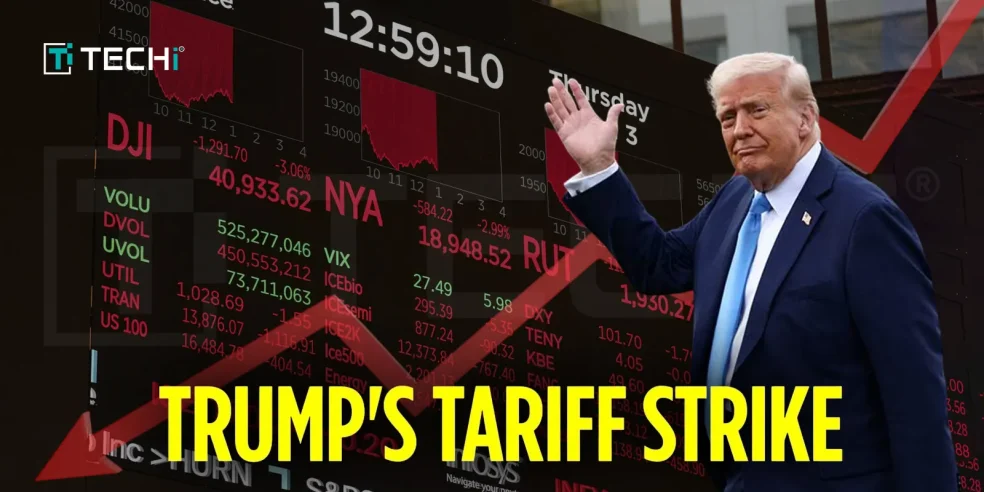
Big changes are coming to the tech world. President Donald Trump has introduced new tariffs, adding extra costs to products coming into the U.S. from other countries. This move is already shaking things up for major tech companies. Expect to see higher prices for everything from smartphones to gaming laptops. Some products might even become harder to find. It’s not just about the cost. This could change how tech is made, sold, and bought forever. The way we experience gadgets is about to get more complicated.
Trump has long championed “America First,” and with these tariffs, that now extends deep into the tech world. But what does that mean for everything from the latest smartphones to the gaming laptops we use every day?
You might be wondering how these new tariffs will affect the tech products I buy? Will prices go up? Will my favorite gadgets be harder to find? Will companies like Apple and Nvidia be able to handle these changes?
In the coming sections, we’ll break down exactly how these tariffs will impact everything from the latest smartphones to gaming laptops, and what it means for you, the everyday tech user.
What Are These New Tariffs? 🔗
While tariffs are often seen as just another part of trade policy, this latest move by Trump is a game-changer. Here’s a quick overview of what’s at stake:
- A 10% tariff on all goods imported into the U.S. from other countries.
- Additional tariffs on major tech suppliers:
- China: 34%
- India: 26%
- Taiwan: 32%
- Vietnam: 46%
- South Korea: 25%
These aren’t just small price hikes; they represent a major shift in the global tech landscape, affecting where and how products are made.
How Are Big Tech Companies Affected? 🔗
Apple: Expect Higher Prices 🔗
Apple, a company heavily reliant on Chinese manufacturing, stands to lose the most. The tariffs will increase the cost of producing iPhones, MacBooks, and other popular products. While Apple might look to move some of its production to other countries or even the U.S., that won’t happen overnight, leading to potential delays and price hikes on future releases. Will prices go up? Yes, expect price increases due to rising production costs. To cover the cost of the tariffs, Apple might need to increase prices by 17% to 18% on its products in the U.S., according to Morgan Stanley analyst Erik Woodring in an interview with CNBC’s “Closing Bell.”
Nvidia: Facing Delays 🔗
Nvidia, a giant in chip manufacturing, also faces major hurdles. With Taiwan and South Korea being key suppliers for its chips, these tariffs will drive up production costs and could delay shipments of critical components. As a result, tech products such as gaming PCs and AI systems could become more expensive and harder to find. Will my favorite gadgets be harder to find? Yes, Nvidia’s chip supply issues could lead to delays, making certain tech products less accessible.
Nvidia’s stock dropped by over 7%, and its competitor, Advanced Micro Devices (AMD), also fell by about 4%. Broadcom (AVGO) saw a sharp drop of 7%, while Micron Technology (MU), which supplies memory chips for Nvidia’s GPUs, lost 7% as well. TSMC, the large Taiwanese company that makes advanced chips for firms like Nvidia and Apple, also saw a 5% decrease in its value.
Top IT Companies Feeling the Pressure 🔗
Dave Warrick said, executive vice president of Overhaul
“Today has actually been quite devastating. I think there’s a lot of head scratching happening in the tech sector,”
Meta, Snapchat, and Social Media 🔗
While social media platforms like Meta (Facebook), Snapchat, and Pinterest don’t manufacture gadgets, they still feel the impact. These companies rely on networking equipment and data centers from countries like Taiwan and South Korea. With the tariffs pushing up costs, users might face higher advertising rates or see changes in services as these companies adjust to new pricing.
Cybersecurity Firms Facing Price Hikes 🔗
Cybersecurity companies like Cisco and Fortinet, which depend on hardware made in Asia, will also feel the sting. With the cost of networking equipment rising, consumers and businesses alike may face higher fees for cybersecurity services.
What Does This Mean for You, the Consumer? 🔗
So, how do these changes affect you, the average consumer? Here’s what you can expect:
- Price Increases: Whether you’re eyeing a new smartphone, laptop, or gaming console, prices are likely to climb. These increases are directly tied to higher production costs resulting from the tariffs.
- Delayed Product Releases: Supply chain issues and manufacturing disruptions could delay the release of new products, making you wait longer for the latest gadgets.
- Fewer Budget Options: As costs rise, affordable tech products could become less available. If you’re used to budget-friendly options, you may need to adjust your expectations.
Will prices go up? Yes, prices are likely to increase, particularly for popular items like smartphones and gaming consoles. Will my favorite gadgets be harder to find? Yes, delays in production and supply chains could make new gadgets more difficult to find.
What’s the Future of Global Tech Manufacturing? 🔗
The effects of these tariffs are not short-term. Trump’s tariffs could fundamentally reshape how and where tech products are made. Could U.S. manufacturing see a comeback? It’s possible, but the transition won’t be easy. Building new factories takes time and money, and labor costs in the U.S. are higher, making domestic production more expensive. Countries like India and Vietnam, which have played a major role in affordable tech manufacturing, may struggle to remain competitive.
Tech’s Tough Transition 🔗
Tech companies are already looking for ways to adapt to these new tariffs. Some may alter their business models, shift production, or increase prices. Consumers will feel the impact as tech becomes more expensive and harder to access.
Will companies like Apple and Nvidia be able to adjust? 🔗
While companies are working on solutions, expect delays and higher costs to persist as they adjust to the new tariff landscape.
Trump’s Vision for America’s Industrial Rebirth 🔗
Trump framed the tax hikes as a blow against unfair trade practices painting a portrait of the US as a country exploited by even its closest allies.
“For decades, our country has been looted, pillaged, raped and plundered by nations near and far, both friend and foe alike,”
Trump told an audience of manufacturing workers, cabinet members, and journalists.
“ Foreign leaders have stolen our jobs. Foreign cheaters have ransacked our factories. And foreign scavengers have torn apart our once-beautiful American dream.”
But he proclaimed that Wednesday would mark a turning point in US history, marking an end to the “vicious attacks” he said the country had weathered. Trump said.
“ April 2, 2025, will forever be remembered as the day American industry was reborn, the day America’s destiny was reclaimed,”
Tech’s Turning Point 🔗
Trump’s new tariffs are more than just a trade policy; they represent a pivotal moment for the global tech industry. Major players like Apple, Nvidia, Meta, and Cisco are already feeling the pressure, and consumers will soon see the consequences: rising costs, fewer affordable choices, and longer waits for the latest tech innovations. This isn’t just a temporary disruption, it’s a shift that could alter how tech is made, sold, and used around the world. As companies navigate these changes, one thing is clear: the way we interact with technology is about to change, and the world will be watching.