


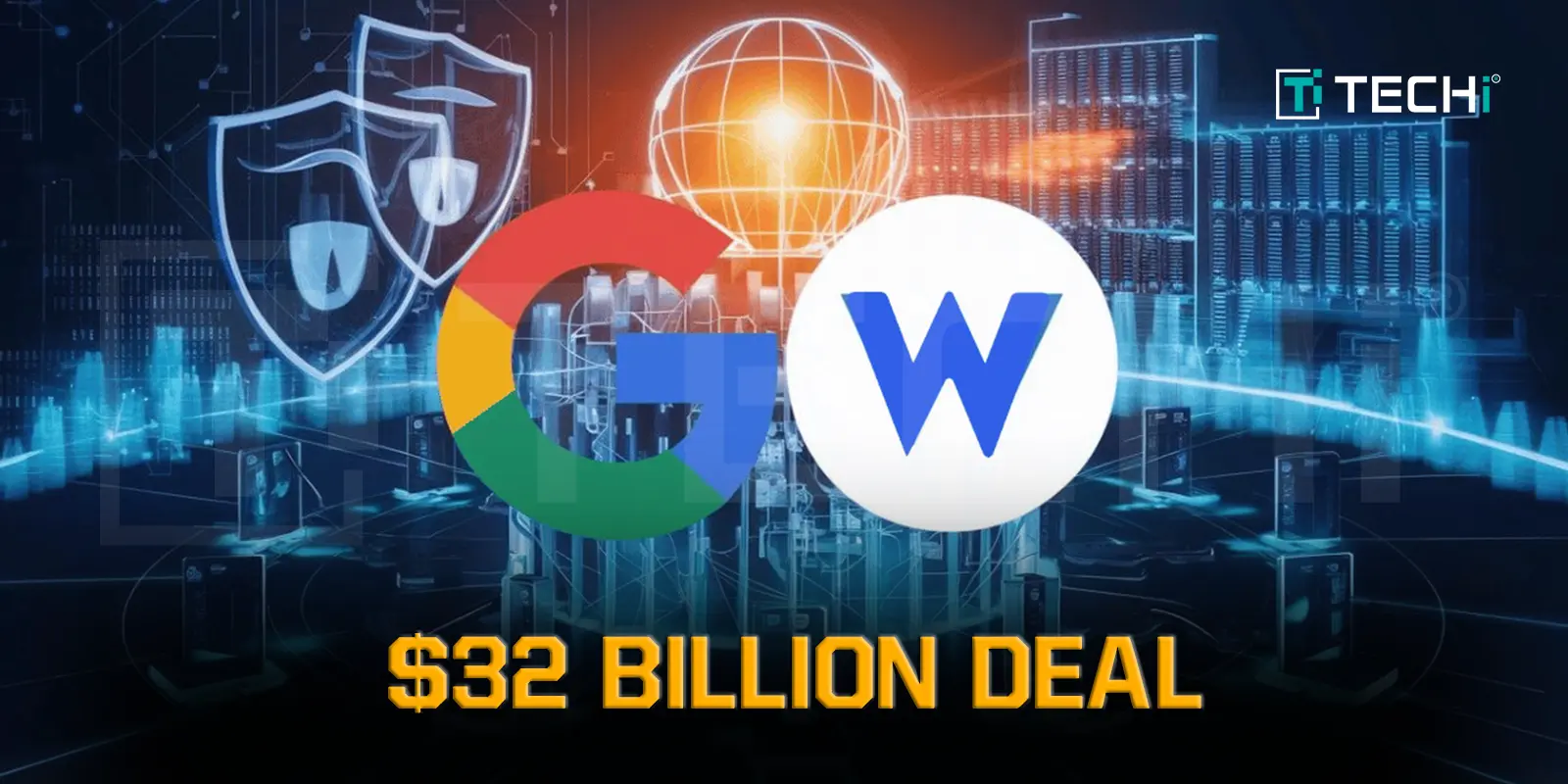
Alphabet, the parent company of Google, has agreed to pay $32 billion US to acquire cybersecurity company Wiz. During a boom in artificial intelligence, Google is aggressively expanding into cloud computing, which includes the proposed merger that was revealed Tuesday.
Competition Intensifies Among Tech Giants
In addition to increasing competition between Google and two other tech giants, Microsoft and Amazon, the frenzy is fueling demand for data centres that supply the processing capacity for AI technology. Wiz will become a part of Google Cloud if authorities accept the all-cash purchase. Although search and advertising still account for the majority of Alphabet's $350 billion US yearly income, the cloud segment at Google has emerged as a rising star since the introduction of artificial intelligence. The division's yearly revenue jumped 64% to $43.2 billion US last year from $26.3 billion US in 2022.
Wiz, which is headquartered in New York, will keep selling on rival clouds after the deal closes. Google's announcement says Wiz's products "will continue to work and be available across all major clouds, including Amazon Web Services, Microsoft Azure, and Oracle Cloud platforms," and that Google Cloud will keep offering rival security tools through the Google Cloud Marketplace. Sundar Pichai put the multicloud point at the centre of his pitch: "Together, Google Cloud and Wiz will turbocharge improved cloud security and the ability to use multiple clouds."
Regulatory Scrutiny and Antitrust Concerns
The U.S. Justice Department's antitrust complaint, which targets Google's ad distribution infrastructure online, now includes the DoubleClick deal. This year, a decision is anticipated in that case, which concerns claims that Google unlawfully misused its authority to control the cost of digital ads.
US regulators are likely to closely examine the acquisition. The Department of Justice (DOJ) had previously submitted a case about Google, alleging that the company engaged in dominant practices in internet advertising and through the internet search. A federal judge last year found that Google argued an exclusive position on search by including being the primary search engine on electronics and browsers.
DOJ’s Proposed Penalty and Legal Implications
According to Alphabet Investor Relations, Google would have to stop paying businesses like Apple to make Google its primary search engine and sell its Chrome browser as part of the DOJ's recommended penalty. The position of Google in digital advertising is the subject of a different antitrust case called the DoubleClick trial.
Wiz’s Strategic Decision to Sell Instead of IPO
Following a reported $23 billion deal last year, which the firm turned down in favour of exploring a stock market offering (IPO), Wiz has decided to go ahead with Google's offer. Wiz's decision to choose a strategic sale over going public was probably impacted by fluctuations in markets and the state of the industry.
Founded in 2020, Wiz was valued at $12 billion in its last private round and says roughly half of the Fortune 100 use its platform, which protects 5 million cloud workloads and scans 230 billion files a day. Its argument against the incumbents is blunt. "Siloed security tools and scanners – even best in class – simply can't provide the perspective that today's security professionals need," co-founder and CEO Assaf Rappaport says in the company's own description of its approach. On the sale, Rappaport said Wiz and Google Cloud "are fully committed to continue supporting and protecting customers across all major clouds," and that the deal "will bolster our mission to improve security and prevent breaches by providing additional resources and deep AI expertise."
Cybersecurity Industry Trends and Google's AI Edge
The transaction is indicative of larger patterns in the cybersecurity industry, where consolidation is being fueled by increasing customer demand for cloud security and artificial intelligence. Google Cloud chief Thomas Kurian said the two companies "share a joint vision to make cybersecurity more accessible and simpler to use for organizations of any size and industry," and that helping more firms prevent attacks "will help organizations minimize the cost, disruption and hassle caused by cybersecurity incidents." Given the increasing security risks facing the AI sector, analysts think the acquisition could provide Google a competitive edge in safeguarding sensitive data and guarding AI equipment. Google has bought its way into security before, picking up [Siemplify for about $500 million](https://www.reuters.com/markets/deals/google-beefs-up-internet-security-with-siemplify-buyout-2022-01-04/) in January 2022 and [Mandiant for $5.4 billion](https://www.theverge.com/2022/9/12/23349213/google-mandiant-acquisition-cloud-security-threat-intelligence) later that year. Wiz dwarfs both and is the largest acquisition in Google's history, well ahead of the $12.5 billion it paid for Motorola Mobility in 2012. Rival cloud-security vendors now face a competitor with Google's balance sheet behind it. The market's response to the purchase was ambivalent, despite its strategic importance. Alphabet's stock dropped 2% after the news, indicating investor concerns about the acquisition's hefty cost and potential regulatory issues.
Disclaimer
This article is for informational purposes only and does not constitute financial, investment, tax, or legal advice. Market data, tax rules, and prices can change after the article date. TECHi and its authors may hold positions in securities or digital assets mentioned. Always conduct your own research and consult a licensed financial, tax, or legal professional before making decisions.
About the Author

Rabia Majeed covers indices, ETFs, and portfolio construction for TECHi readers building allocations rather than picking single names. Her coverage spans S&P 500 internals, sector-rotation signals, factor premiums (quality, momentum, low-vol), and the cost-basis details — expense ratios, tracking error, tax efficiency — that compound over long holds. She writes about the fund-structure decisions most retail coverage skips.




Comments