



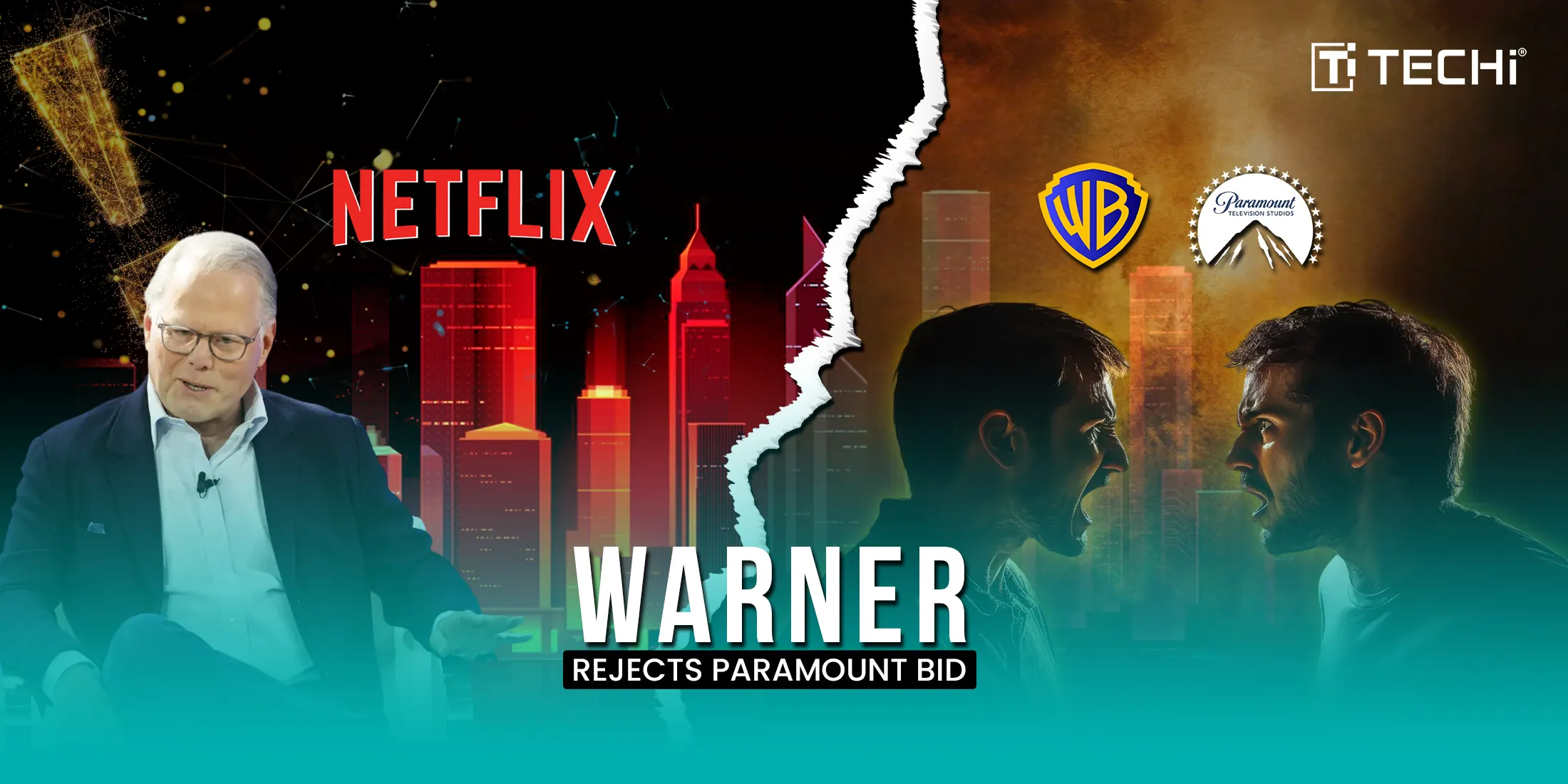
In an editorial, Netflix co-chief executive Greg Peters (in an interview about the Warner/Bros Discovery acquisition with Financial Times, 23 January 2026) said the rival proposal by Paramount Skydance to acquire Warner Bros. Discovery does not pass the sniff test.
As the recently organized all-cash bid of $82.7 billion with Netflix is encountering solid board support, the battle to control the crown jewel in Hollywood is set to escalate with investors considering the riskiness of debt financing versus the certainty of a solid cash base.
Netflix's balance sheet is unusually strong for the sector, with a debt-to-equity ratio near 0.56 and an Altman Z-score of 10.31, which is a sign of high financial strength.
Bid Breakdown
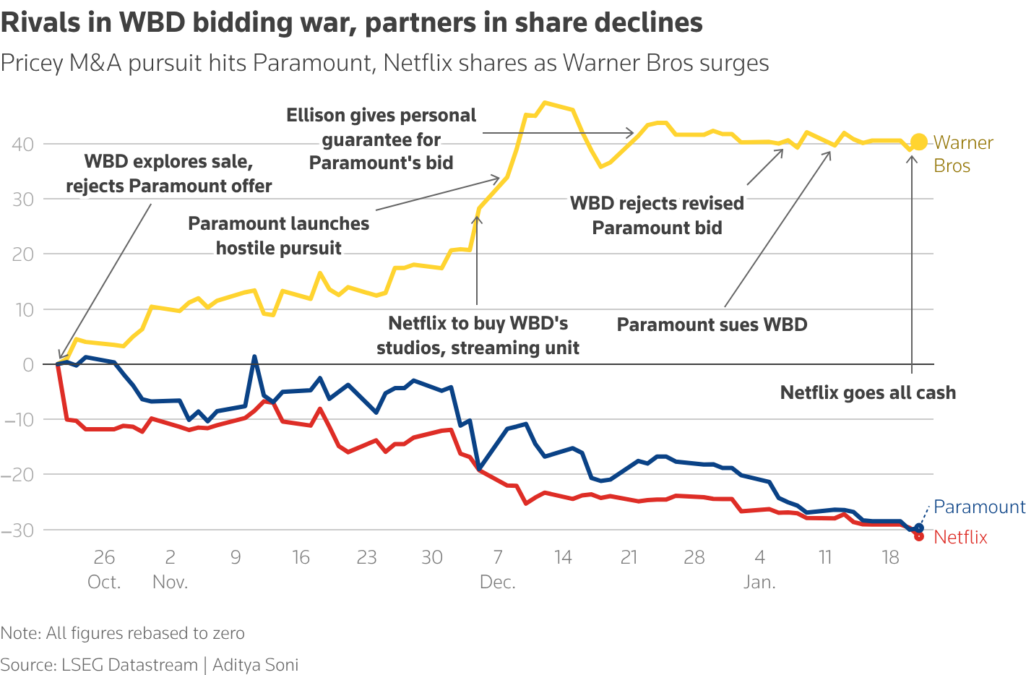
The hostile offer by Paramount Skydance with a valuation of $108 billion, including $77.9 billion in equity and $55 billion in debts, provided the shareholders with $30 per share but lacked momentum.
According to recent filings, shareholders approved the $27.75 per share proposal made by Netflix by the company, while Warner's board rejected Paramount's rival offer over the heavy debt risks it carried. A change to pure cash offer on 20 January resulted in unanimous board approval of Netflix and prevented share price volatility that followed the announcement, falling on average.
Expert Firepower
This new agreement only ramps up the pressure, Fitch said.
The changes show that Netflix is serious about winning, and the accelerated shareholder vote means Paramount needs to act with urgency. Now, it is up to Paramount to provide a clearly superior offer if they want to get this done.
Outlook
Netflix has a competitive benefit since the deadline to reply by Paramount ends on 20 February and an ensuing shareholder vote is slated after April. Government agencies are considering the possibility of monopolistic implications since Netflix controls 20% of the market in the U.S. streaming business, although complementary resources with the Warner cinema rated hold might affect the results of the approvals.
The positive outcome to Netflix may redefine this business by imparting the control of streaming domination with studio facilities, thus creating expansion prospects by 2026; on the other hand, the dependence of Paramount on debt may cause its downfall in case the tender activity will slump.
Disclaimer
This article is for informational purposes only and does not constitute financial, investment, tax, or legal advice. Market data, tax rules, and prices can change after the article date. TECHi and its authors may hold positions in securities or digital assets mentioned. Always conduct your own research and consult a licensed financial, tax, or legal professional before making decisions.
About the Author

Warisha Rashid covers AI stocks and crypto markets for TECHi. Recent work explains what changed when Worldcoin cut its WLD token unlock, how AMD's rack-scale Helios design fits an asset-light strategy, and how Nvidia, Alphabet, Palantir, AMD and Broadcom compare as AI businesses.


Comments