



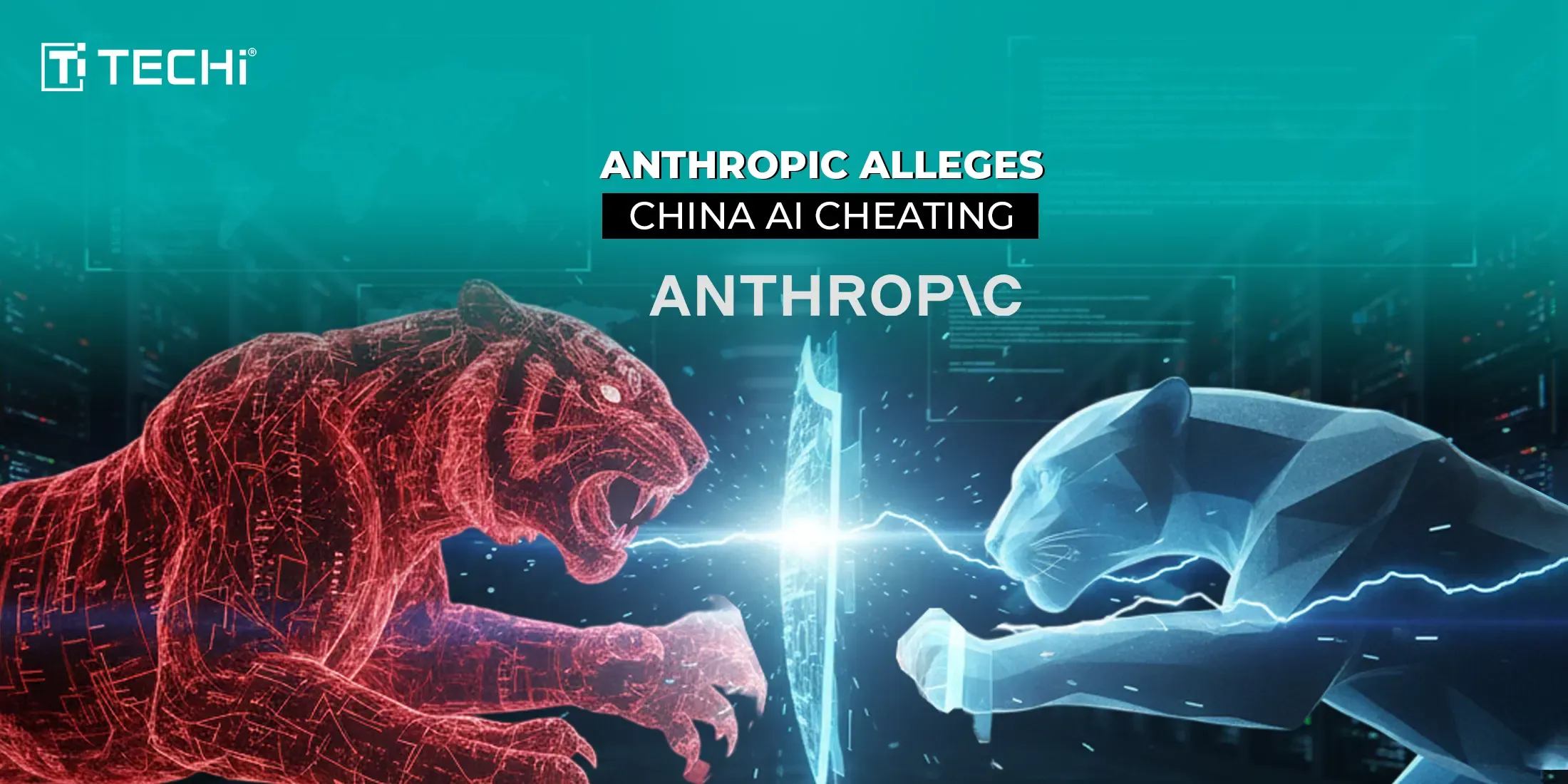
A US-based AI company has raised concerns about Chinese competitors, three Chinese scientists from AI companies DeepSeek, Moonshot AI, and Minimax have drawn attention amid a technology rivalry with the US-based Claude AI model.
Anthropic alleges these companies stole technology by organizing campaigns with about 24,000 fake accounts, generating over 16 million interactions with Claude. These actions reportedly violated Claude's terms of service and geographic controls.
What Happened
Anthropic claims the Chinese labs used these interactions to train their own AI systems, taking advantage of Claude's reasoning, tool usage, and advanced coding abilities for their products. While distillation is an established AI training method, Anthropic argues that competitors misused it to speed up research and reduce costs.
Reportedly, DeepSeek had over 150,000 exchanges, Moonshot about 3.4 million, and Minimax around 13 million. Anthropic's analysis says Minimax changed its approach soon after a new Claude update, capturing new features within 24 hours.
Response and Concerns in Industry
The event has been felt across the AI industry. The management of Anthropic has been promoting a concerted effort of technology companies, cloud computing companies, and governments in order to reduce these practices. Analysts caution that the models trained on the products collected during harvesting might not have the necessary safety measures and thus increase the chances of their abuse during cyberattacks, misinformation, or even biosecurity threats.
So, the case of the researcher published in TechCrunch tells us that the frontier AI discovery of exporting should be heavily regulated and controlled by the government, as explained by Dmitri Alperovitch, a co-founder of the cybersecurity company CrowdStrike.
Wider Strategic Extrapolations
These allegations intersect with ongoing US-China competition in AI leadership and tech export policy. Recently, the U.S. regulators have eased some restrictions on the importation and exportation of sophisticated artificial-intelligence chips, but opponents argue that doing so can only strengthen other competing foreign powers accidentally.
The leadership of technological development and protection of intellectual property in this competitive environment is of paramount importance as illustrated by the position of Anthropic.
The Road Ahead
Since the two companies already occupy influential roles, the current rivalry is likely to influence the regulative framework of AI and competitiveness in the world by 2026. In the event that governments increase export controls and enforce cross-border AI security laws, the rate of capability transfer can slow down and might shift the innovation into regional ecosystems.
On the other hand, a stalemate may create disjointed AI specifications and spur a technology arms race. In this connection, it can be concluded that in the future, the increased scrutiny of AI training practices, more stringent access permission, and the possible international conventions regulating the ethical development of AI and technology transfer are likely.
About the Author

Layloma Rashid writes about AI platforms and the companies selling them, from OpenAI's new teen alert on ChatGPT and GPT-5.6's arrival on Amazon Bedrock to C3.ai's enterprise AI earnings. She also follows chip policy for TECHi, including how many Nvidia H200s are shipping to China.



Comments