
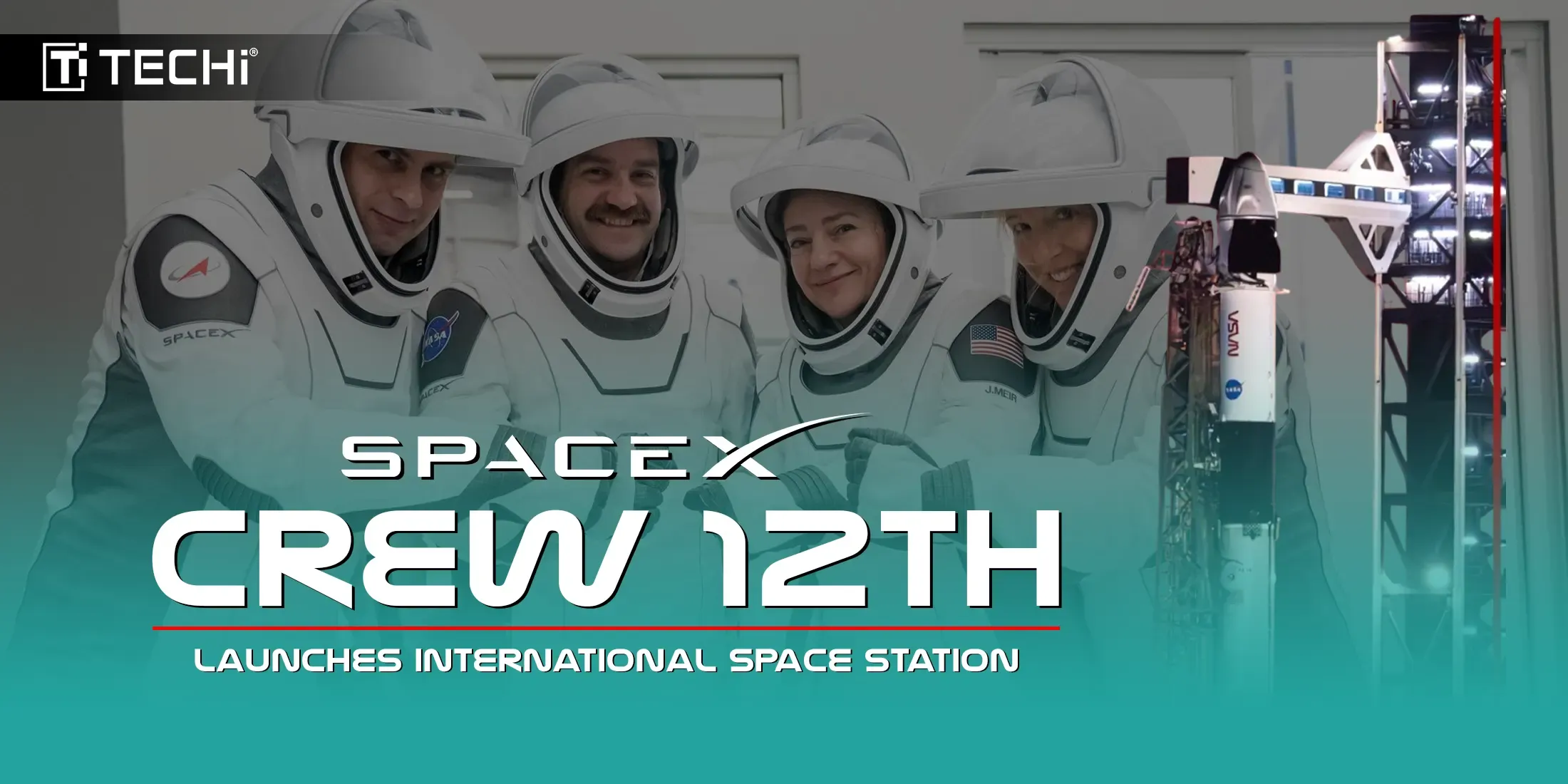
On Friday, SpaceX sent a Falcon 9 rocket climbing into the Florida sky, carrying a crew of four astronauts towards the International Space Station on a scientific trip that would span eight months.
At 5:15 a.m. Eastern Standard Time off of Cape Canaveral Space Force Station, the 9 Merlin engines of the 15 story Falcon 9 rocket burned through hundreds of tons of propellant in the first minutes of flight and produced the dramatic effect of propulsion that was transmitted to a global audience through the NASA-SpaceX webcast.
Stellar Crew Takes Flight
The head of this mission is the 48-year-old marine biologist, Commander Jessica Meir, who, in 2019, took part, alongside Christina Koch, in the first all-female spacewalk outside the ISS.
She has the trainee NASA pilot, Jack Hathaway, a former Navy fighter pilot; an ESA astronaut, Sophie Adenot, 43, who is a French helicopter specialist; and Fedyaev, a veteran military pilot making another arrival. On the autonomous Crew Dragon Freedom, the crew will be able to dock with the ISS on Saturday after a 34-hour orbital rendezvous at an altitude of about 400 km.
Proven Powerhouse
SpaceX has recently finished some 20 crewed orbital missions of its Crew Dragon since the capsule's first astronaut flight in 2020; thus, reducing reliance of the United States on Russian Soyuz rockets. Having a footprint of over 100m and dating back more than 25 years, the ISS experiences the fruits of multinational involvement that was developed in the post-Cold War period and united the United States and Russia and Canada and Japan, as well as European nations.
According to NASA's Commercial Crew Program leadership, the agency has partnered with SpaceX to transform the human spaceflight to provide reliability at scale. Crew-12 follows in this series of zero launch failures, which underscore the maturity of commercial spaceflight, with well over 400 Falcon 9 flights already flown.
Bold Horizon Ahead
NASA plans to continue to maintain the operation of ISS by 2030 with the entrance of private station missions by Axiom and Blue Origin. Meanwhile, the information obtained during Crew 12 will perfect the preparations of deep space missions, though; the geopolitical issues and the aging infrastructure require further innovation. The predicted crewed Starship experiments will help lower the launch prices and favor a long-term plan of colonization from Mars to Moon, thus forever altering the orbital dynamics.

About the Author

Warisha Rashid writes about public companies, AI infrastructure and cryptocurrency markets for TECHi. Her portfolio includes stock comparisons, semiconductor businesses, quantum computing and crypto-token events. Her reporting also follows how technology regulation and geopolitical developments affect companies and markets.


Comments