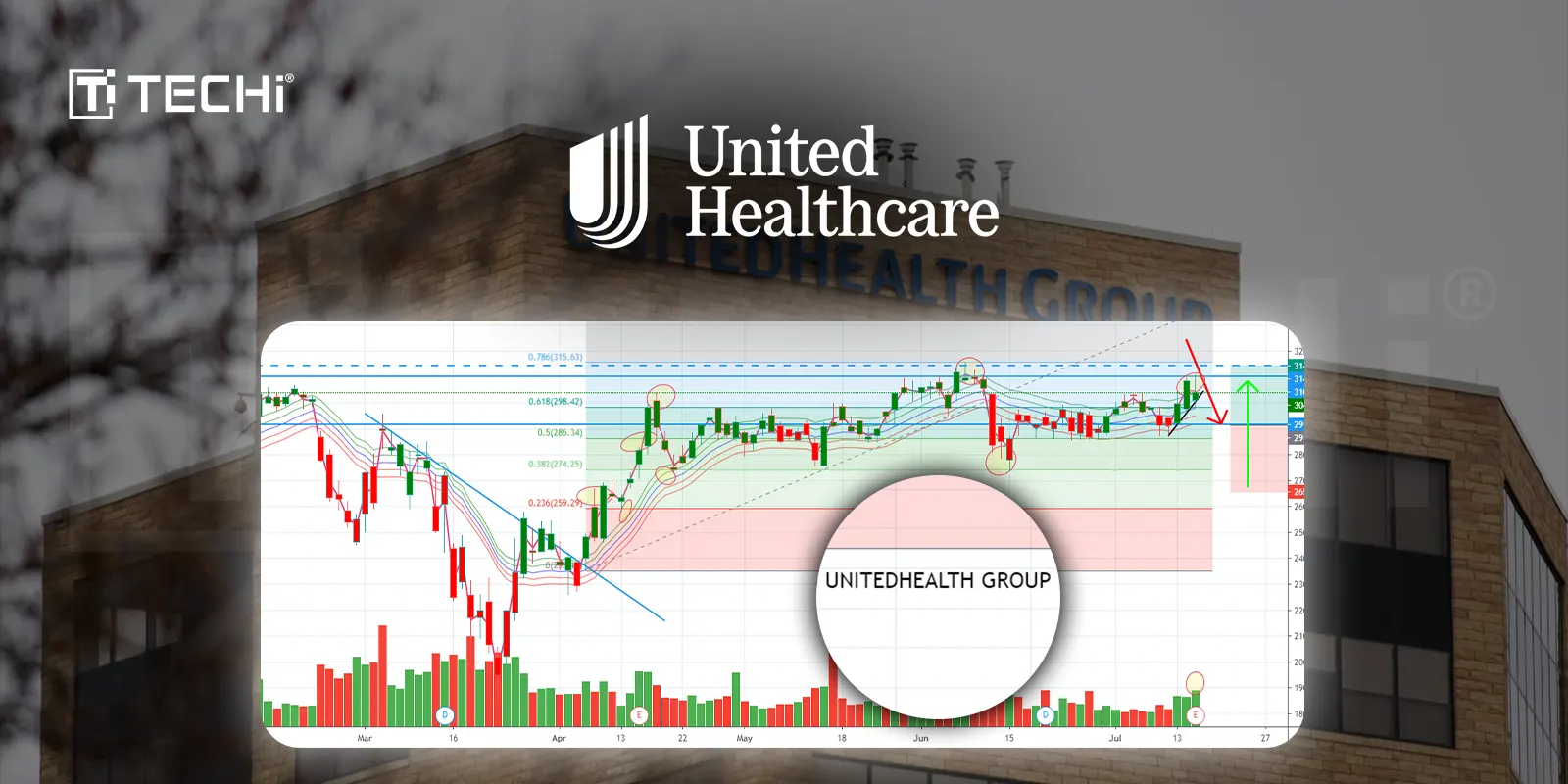
If Wall Street had a stress ball, it probably would have popped today with a loud bang. In a move so shocking that even the most expert analysts weren't prepared for it, the health insurance giant introduced a heavy dose of pain when it reduced its 2025 earnings forecast, sending its own stock into free fall and taking much of the healthcare sectors down with it.
Shares of UnitedHealth Group (UNH) plunged Thursday after the company reduced its annual profit forecast due to unexpectedly high medical care costs. The stock is down 19%, which blasted billions from market value and set shockwaves across the entire health insurance industry.
The company's unfavorable outlook is quite contrary to those earlier indicators. UnitedHealth revised its outlook for 2025 adjusted earnings per share sharply, estimating it to be in the range of $26 to $26.50, down from the previous guidance range of $29.50 to $30. Analysts had expected that figure to be $29.73 per share for 2025, according to LSEG. Kevin Gade, chief operating officer at Bahl & Gaynor, which owns UnitedHealth’s stock said,
“Nobody was expecting this level of a miss or cut to guidance.”
Surges in Medical Demand under Medicare Advantage
UnitedHealth has blamed the downgrade on the increased use of outpatient and physician services in its Medicare Advantage plans, services for senior citizens and individuals with disabilities. Since about the middle of 2023, demand surged and there is no indication it will slow, resulting in expenses that challenge the financial shortfalls in the company's budget.
CEO Andrew Witty, while acknowledging the loss said in a statement,
“UnitedHealth Group grew to serve more people more comprehensively but did not perform up to our expectations, and we are aggressively addressing those challenges to position us well for the years ahead.”
While health insurers would typically welcome increased demand as a sign of healthy operating activity, the current pressure is placing serious cost implications on the market, particularly under government funded plans with limited price control.
Broad Ripples in the Sector
UnitedHealth's drastic guidance cut did not only rattle its own shareholders, the warning proceeded to also drag down shares of big competitors like, Elevance Health, CVS Health, Cigna, Centene, and Humana. Their shares fell between 3% and 13% in premarket trading, putting the sector on a path to drop more than $130 billion in valuations if the losses were to hold.
Ironically, hospital operators such as HCA Healthcare and Tenet Healthcare witnessed an increase of between 3% and 7%, with expectations that demand for medical services would remain robust, it is a cost to insurers but a revenue driver for providers.
Unrest and Political Stress
The insurance industry found itself in an even rougher 2024, with reduced government reimbursements, higher medical costs, and public outcry. Adding fuel to the scrutiny was the murder of UnitedHealth insurance unit head Brian Thompson at the end of last year. The violence evoked tremendous outrage among audiences on social media and were against health insurance practices, and perhaps contributed to some recent loss of consumer confidence. Despite all the unrest, the insurance stocks had performed much better during the last few months under critical market worries even though the entire market continued to suffer the effects of panic induced by increasing fears surrounding President Donald Trump's tariffs. Gade said,
“This was a stock that was a safe haven for so many among tariffs and policy uncertainty.”
In UnitedHealth's case, the gloomy outlook is not merely another corporate blunder but rather a wake-up call for the wider health insurance industry. Costs in care, particularly under government programs, are not new issues, but the level of misconception here is alarming. UNH may bounce back at some point, but the present outlook indicates that the wiser investment strategy would be to observe cautiously rather than aggressively buy into the stock at this time.

Disclaimer
This article is for informational purposes only and does not constitute financial, investment, tax, or legal advice. Market data, tax rules, and prices can change after the article date. TECHi and its authors may hold positions in securities or digital assets mentioned. Always conduct your own research and consult a licensed financial, tax, or legal professional before making decisions.
About the Author

Fatimah Misbah Hussain writes about public companies, semiconductors and the financing of AI infrastructure for TECHi. Her portfolio includes earnings analysis, stock comparisons and conditional forecasts, alongside cryptocurrency developments and technology policy. Her reporting examines revenue, margins, funding requirements and the business assumptions behind market expectations.


Comments