

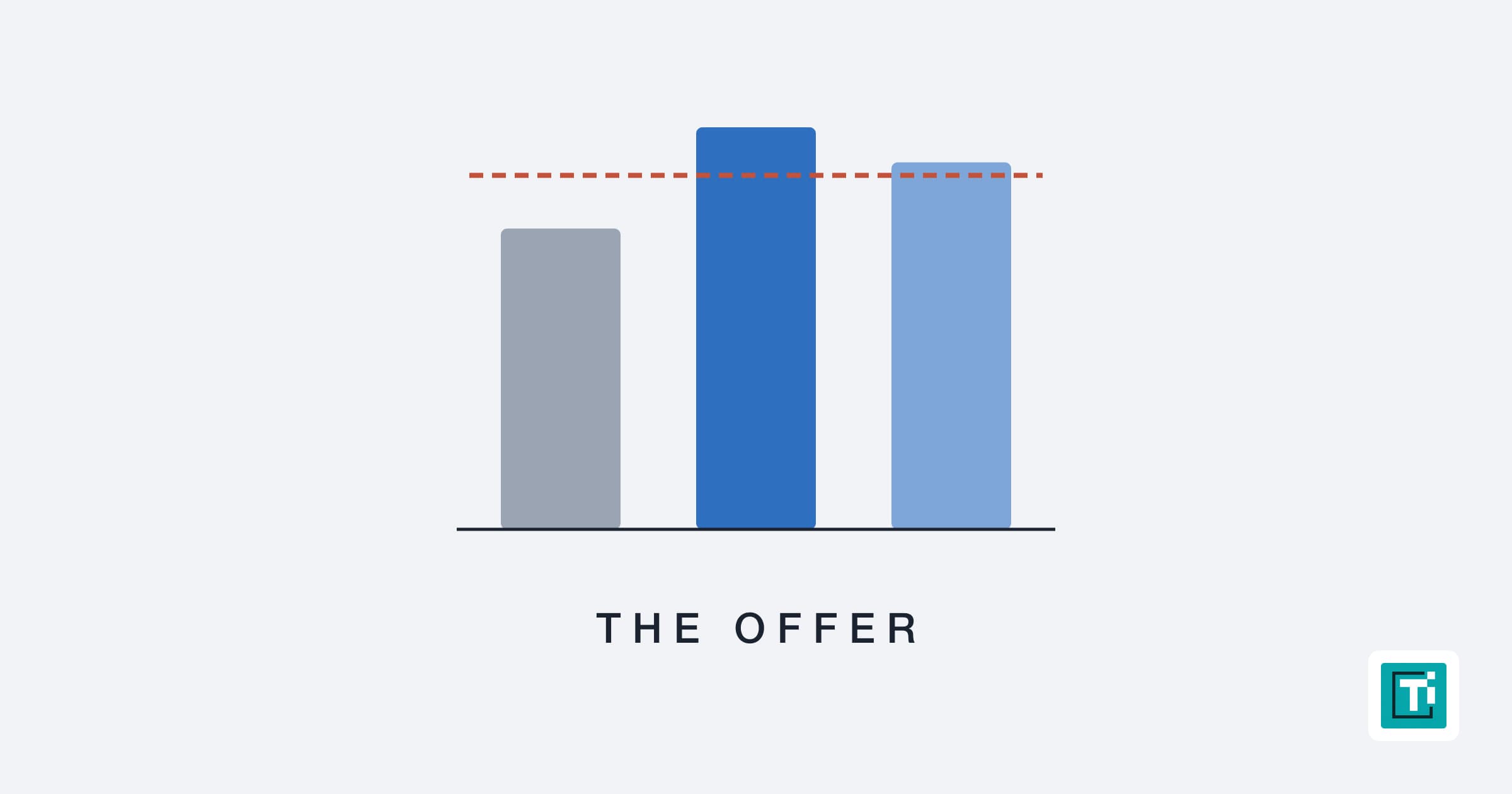
Editorial illustration drawn to scale. Each bar is a full 100%. The blue bars show Zscaler's share of the two companies' combined revenue, annual recurring revenue and free cash flow for the quarter ended October 31, 2026; the red bar shows its holders' share of the combined company under the CrowdStrike deal. Illustration: TECHi, from the companies' filings.
Zscaler's last quarter as an independent company, reported on Monday morning about an hour after its sale to CrowdStrike was announced, shows how much of the combined business it would bring. In the three months to October 31, 2026, Zscaler's annual recurring revenue rose 21% to $3.88 billion and its free cash flow reached a record $416.5 million, according to its results filing. CrowdStrike's quarter ended on the same day.
Put side by side, Zscaler would account for about 38% of the two companies' combined ARR, 37.5% of their revenue and 47% of their free cash flow for that quarter, TECHi's calculation shows. Its shareholders would own about 15.9% of the combined company. The gap reflects how differently the market prices the two: CrowdStrike was valued at about 37.5 times its ARR at Friday's close, Zscaler at 8.2 times.
Key Takeaways
- The quarterZscaler’s revenue rose 20% to $949.3 million and its ARR 21% to $3.88 billion in the three months to October 31; free cash flow was a record $416.5 million.
- No forecastZscaler canceled its earnings call and withdrew its financial guidance because of the CrowdStrike deal.
- The splitZscaler would bring about 38% of the combined ARR, 37.5% of revenue and 47% of free cash flow for the quarter, for 15.9% of the shares.
- The reasonAt Friday’s close the market valued CrowdStrike at about 37.5 times its ARR and Zscaler at 8.2 times, so Zscaler was about 12% of their combined value.
- Before the bellCrowdStrike’s 8.0% pre-market fall valued the offer at about $239.60 a Zscaler share, a 23.0% premium.
What did Zscaler report?
Steady growth and more cash. Revenue rose 20% to $949.3 million from $788.1 million a year earlier. ARR rose 21% to $3,882 million. Net new ARR was $111 million, which Zscaler said grew 22% once the $98 million contributed a year earlier by its purchase of Red Canary is set aside.
On an adjusted basis Zscaler earned $230.2 million from operations, 24.3% of revenue, up from 21.8%. Under standard accounting it lost $33.2 million from operations and $27.4 million overall, or 17 cents a share, against adjusted earnings of $1.23 a share, up from 96 cents. Cash from operations was $541.0 million, 57% of revenue, the same share as a year earlier. Free cash flow was $416.5 million, 44% of revenue, against 52% a year earlier. Remaining performance obligations, the contracted revenue not yet recognized, rose 23% to $7.29 billion, and the company held $3.89 billion in cash and short-term investments.
Why is there no forecast?
Because of the deal. Zscaler said it would not hold its scheduled conference call and is withdrawing its previously issued financial guidance as a result of the agreement with CrowdStrike. That leaves its investors without the company's own view of the year, at a time when the fixed exchange ratio already ties Zscaler's share price to CrowdStrike's.
How do the two quarters compare?
CrowdStrike grows faster; Zscaler turns more of its revenue into cash. In the same three months CrowdStrike's revenue rose 28% to $1.58 billion and its ARR 27% to $6.26 billion, according to its own results. Its free cash flow of $474 million was 30% of revenue, against 44% at Zscaler.
| Measure | CrowdStrike | Zscaler | Zscaler share of the two |
|---|---|---|---|
| Revenue, three months to Oct 31 | $1.58 billion | $949.3 million | 37.5% |
| Revenue growth | 28% | 20% | n/a |
| ARR at Oct 31 | $6.26 billion | $3.88 billion | 38.3% |
| ARR growth | 27% | 21% | n/a |
| Free cash flow | $474 million | $416.5 million | 46.8% |
| Free cash flow, % of revenue | 30% | 44% | n/a |
| Market value at Friday close | $235 billion | $32.0 billion | 12.0% |
| Market value per dollar of ARR | 37.5x | 8.2x | n/a |
| Ownership of the combined company | 84.1% | 15.9% | 15.9% |
Added together, the two companies had about $10.14 billion of ARR at the end of October, in line with the more than $10 billion the companies said the combined business would start with.
What else is in Zscaler's numbers?
A slower pace of new business. Zscaler added $111 million of net new ARR in the quarter, against CrowdStrike's $419.2 million, so it brought about 21% of the new recurring revenue the two added, roughly half its 38% share of the total. That slower pace is one reason investors may pay less for each of its dollars.
It also brings a strong balance sheet. Its $3.89 billion of cash and short-term investments is about $2.17 billion more than the $1.725 billion of convertible notes listed in the merger agreement. Its contracted but unrecognized revenue of $7.29 billion is about 1.9 times its ARR.
Why do Zscaler's holders get only 15.9%?
Because the split follows market value, not revenue. At Friday's closing prices, on the latest reported share counts, CrowdStrike was worth about $235 billion and Zscaler about $32.0 billion, so Zscaler was about 12.0% of the two together. The 34% premium lifts that to about 15.4% on the same share counts. The companies put the figure at 15.9% in the announcement, which does not give the share counts behind it.
What the market pays for is growth. Each dollar of CrowdStrike's ARR was valued at about $37.50 on Friday and each dollar of Zscaler's at about $8.20. CrowdStrike's ARR grows 6 points a year faster, and CrowdStrike says its growth has accelerated for five quarters in a row. The difference in valuation is far larger than the difference in growth, which is why a business that brings nearly half the cash flow gets less than a sixth of the shares.
How did the gap open?
Over the past year. On November 20, 2025, Zscaler closed at $279.73 and CrowdStrike at $125.33, adjusted for CrowdStrike's four-for-one split, Nasdaq data show. On the share counts each reported at the time, Zscaler was worth about $44.6 billion and CrowdStrike about $126.4 billion, so Zscaler was about 26% of the two together. By Friday its shares had fallen 30.4% while CrowdStrike's had risen 83.1%, and its weight had fallen to 12.0%.
Most of that change came from the price the market put on each dollar of recurring revenue rather than from the businesses. Zscaler's ARR grew 21% over the year and CrowdStrike's 27%. But CrowdStrike's market value per dollar of ARR rose from about 25.6 times to 37.5 times, on its ARR a year earlier implied by that growth rate, while Zscaler's fell from about 13.9 times to 8.2 times. Since the end of 2025, CrowdStrike's shares have risen 95.8% and Zscaler's have fallen 13.4%.
That matters for the terms. An all-stock deal fixes the exchange at current relative prices, so Zscaler's holders are swapping into CrowdStrike after a year in which the gap between the two valuations widened sharply.
Is it a good trade for Zscaler's holders?
It depends on what CrowdStrike's shares are worth. In exchange for a business growing ARR at 21%, they get a premium and a stake in one growing at 27%. If the market keeps valuing CrowdStrike as it did on Friday, that is a good exchange; if CrowdStrike's valuation falls toward Zscaler's, the stake shrinks with it.
The first test came before the bell. CrowdStrike was down 8.0% at $211.10 at 8:37 a.m. Eastern, Nasdaq pre-market data show, which values the offer at about $239.60 a Zscaler share, a 23.0% premium rather than the 34% announced. Zscaler was up 19.4% at $232.60, 3.0% below that value, as TECHi reported on the deal.
What does it mean for shareholders?
For CrowdStrike's owners, the arithmetic is attractive on paper: they keep about 84% of a company that adds about 62% to their own recurring revenue and 88% to their quarterly free cash flow. The risks are integration, a year or more of waiting for approvals, and paying in shares at a time when the market is marking those shares down.
For Zscaler's owners, the quarter is a reminder of what they are giving up: a business that turns more of each dollar of revenue into cash than its buyer does. TECHi reported in September that both stocks rose as investors treated security as a beneficiary of AI spending. Its quarterly report and the proxy statement for the shareholder vote come next.
What to watch
The open at 9:30 a.m., and whether Zscaler's gap to the value of the offer narrows. Zscaler's quarterly report, due within 40 days of the quarter's end, which will carry its own account of the deal's risks. The proxy statement, which will set out the background to the deal and the advisers' valuation work, and the antitrust filings. TECHi's CrowdStrike quote page carries the live price.

Disclaimer
This article is for informational purposes only and does not constitute financial, investment, tax, or legal advice. Market data, tax rules, and prices can change after the article date. TECHi and its authors may hold positions in securities or digital assets mentioned. Always conduct your own research and consult a licensed financial, tax, or legal professional before making decisions.


Comments