




- New angleThe biggest AI job risk is not only replacement. It is the disappearance of junior tasks that used to train workers into senior roles.
- Current signalAI was cited in 21,490 U.S. job cuts in April 2026, while half of U.S. employees now use AI at work at least occasionally.
- Labor evidenceStanford payroll research shows early-career workers in highly AI-exposed jobs have already seen a relative employment decline.
- Global splitAdvanced economies face higher immediate exposure; lower-income countries may face a slower but more dangerous services-ladder problem.
- TECH Intelligence lensAI is only the model layer. The real impact comes from the wider system of compute, capital, energy, workflow design and human training.
The most useful way to understand AI’s impact on work is not to ask whether machines will replace humans. That question is too blunt for what is actually happening.
The sharper question is this: what happens when AI removes the work that taught people how to become valuable?
As of May 2026, the fear is no longer abstract. Challenger, Gray & Christmas reported that U.S. employers announced 83,387 job cuts in April, and that artificial intelligence was cited for 21,490 of them, or 26% of the month’s cuts, making AI the top stated reason for the second consecutive month in its April job-cuts report. Gallup’s latest workplace survey found that half of employed U.S. adults now use AI at least a few times a year, while 18% say it is very or somewhat likely their job will be eliminated within five years because of AI or automation, according to Gallup’s Q1 2026 workforce research.
Those two numbers capture the contradiction of the moment. AI is becoming normal at work, and people are still afraid of it.
But the deeper story is not mass unemployment in one dramatic wave. The deeper story is the disappearance of the apprenticeship layer. AI is eating drafts, summaries, basic code, first-pass analysis, research memos, call-center scripts, spreadsheet cleanup, document review and low-risk design work. Those tasks were never glamorous. They were the first rung of the ladder.
This is where TECH Intelligence matters. Artificial intelligence is the model layer. TECH Intelligence is the full system around it: models, chips, cloud infrastructure, electricity, workflow design, governance, capital allocation and human skill formation. AI changes the output of a task. TECH Intelligence changes the shape of the institution.
The labor shock is coming from that wider system.
The numbers are not saying “everyone loses”
The current labor data does not support the cartoon version of AI where every job disappears. The World Economic Forum’s 2025 Future of Jobs work projects 170 million new jobs by 2030 and 92 million displaced jobs, for a net gain of 78 million roles, while also estimating that job disruption will touch 22% of today’s formal jobs, according to the WEF’s report summary.
The International Labour Organization’s 2025 refined exposure index is even more precise: one in four workers globally is in an occupation with some generative-AI exposure, while 3.3% of global employment falls into the highest exposure category, with higher exposure in high-income countries, according to the ILO–NASK global index. The ILO also says most jobs are likely to be transformed rather than fully substituted because most occupations still include tasks requiring human input.
The IMF makes the same point from a macro lens. It estimates that almost 40% of global employment is exposed to AI, with exposure rising to about 60% in advanced economies, and warns that AI could worsen inequality if productivity gains accrue mainly to workers and firms already positioned to use it, according to the IMF’s analysis.
So the best read is not apocalypse. It is reweighting.
Some jobs disappear. Some jobs grow. Many jobs get hollowed out and rebuilt around software. The danger is that the rebuilding happens faster than training systems, schools, managers and labor markets can adapt.
The first rung is already under pressure
The strongest early evidence is coming from young workers.
A Stanford Digital Economy Lab working paper using high-frequency payroll data found that, since widespread generative-AI adoption, workers aged 22 to 25 in the most AI-exposed occupations saw a 16% relative employment decline, even after controlling for firm-level shocks, while older workers in the same occupations remained stable or grew, according to Stanford’s “Canaries in the Coal Mine?” study.
That finding matters because it points to a structural issue. AI does not need to replace a senior accountant, lawyer, analyst, designer or engineer to damage the future labor pipeline. It only needs to replace enough junior work that companies hire fewer people at the bottom.
A junior analyst learns by cleaning data, building the first model, writing the rough memo and getting corrected. A junior developer learns by fixing small bugs, writing tests and reading other people’s code. A young lawyer learns through document review, research and drafting. A designer learns by producing versions that a creative director rejects.
If AI does the first version instantly, the senior worker becomes more productive. The company may get the output faster. But the junior worker loses the practice ground.
That is the missing-rung problem.
It is not only a labor-market issue. It is a knowledge-transfer issue. Institutions have always relied on low-status tasks to train high-skill people. If those tasks are automated without a replacement training model, the organization gains efficiency today and creates a talent shortage tomorrow.
TECHi has already tracked the same pattern in finance, where our coverage of AI entering Wall Street through Claude, OpenAI and junior analyst workflows showed why AI is most consequential when it targets the work that once trained analysts.
What AI eats first
AI is not equally dangerous to every kind of work. It is strongest where the task is text-heavy, pattern-based, repeatable, measurable and easy to review after the fact.
That means the first exposed layer includes customer-support responses, internal summaries, call notes, research briefs, translation drafts, marketing copy variants, spreadsheet cleanup, basic code generation, legal discovery, procurement comparison, HR screening support and financial-document extraction.
The ILO’s earlier global analysis found clerical work had the greatest exposure, with nearly a quarter of tasks highly exposed and more than half at medium exposure, according to the ILO’s 2023 generative-AI jobs release. Its 2025 update says clerical occupations still show the highest exposure, while some digitized professional and technical roles have moved higher as models improved.
That does not mean every clerk, paralegal, analyst or support worker is gone. It means the unit economics changed.
If one experienced person using AI can produce the output of three juniors, management does not need to announce a philosophical belief about automation. The budget tells the story. Challenger’s April report captured that shift bluntly when Andy Challenger said technology firms are citing AI spend and innovation, and that whether individual jobs are replaced by AI or not, “the money for those roles is,” in the same April layoff report.
That is the payroll-to-compute trade.
The fear is rational, but incomplete
Workers are not imagining the risk. Pew Research Center found that 52% of U.S. workers were worried about future AI use in the workplace, and 32% thought it would lead to fewer job opportunities for them over the long run, according to Pew’s 2025 workplace AI survey.
At the same time, fear can become misleading if it treats AI as a single all-powerful force. AI does not replace a job title. It replaces or compresses tasks inside a job title. That distinction matters.
A journalist is not one task. A software engineer is not one task. A teacher is not one task. A nurse is not one task. Each role is a bundle of judgment, communication, coordination, responsibility, empathy, legal accountability and routine production. AI is already good at pieces of the bundle. It is weaker at owning the consequences.
That is why the next phase will look uneven. Companies will remove some roles completely, reduce hiring for others, and raise the productivity expectations attached to the rest.
For workers, that can feel worse than a clean replacement story. The job still exists, but the output bar rises, the team gets smaller, the training time shrinks and the acceptable error rate falls.
The upside is also real
A serious article about AI’s labor impact has to include the upside because the productivity case is not imaginary.
McKinsey Global Institute estimated that activities accounting for up to 30% of hours worked across the U.S. economy could be automated by 2030, but also argued that generative AI is more likely to enhance work for STEM, creative, business and legal professionals than eliminate those categories outright, according to its future-of-work report. McKinsey also estimated that the United States may need 12 million additional occupational transitions by 2030, with lower-wage workers much more likely to need to change occupations.
Microsoft’s 2025 Work Trend Index frames the next organization as a “Frontier Firm,” where people manage networks of agents and workflows rather than only performing tasks directly, according to Microsoft’s WorkLab report. That language can sound like vendor optimism, but the underlying shift is real: work is moving from doing every step to designing, supervising and auditing systems that do many steps.
Used well, that can make small teams more capable. A regional hospital can summarize patient records faster. A teacher can adapt lesson materials. A researcher can test more hypotheses. A small company can produce legal, marketing and analytics work that used to require a larger staff or expensive vendors.
The problem is not productivity. The problem is who captures it.
If productivity gains become lower prices, higher wages, better services and more learning capacity, AI can improve living standards. If they become only margin expansion, capital returns and headcount suppression, AI becomes a distribution machine that widens existing gaps.
The world does not experience AI equally
AI’s labor shock is also geographically uneven.
The IMF estimates AI exposure at about 60% of jobs in advanced economies, 40% in emerging markets and 26% in low-income countries, according to its AI labor-market assessment. The ILO’s 2025 index similarly finds higher overall exposure in high-income countries and much lower exposure in low-income countries, while also warning that countries with weaker infrastructure may struggle to capture the upside, according to the ILO global exposure index.
This creates a strange inversion. Rich economies face more immediate white-collar disruption because they have more digitized professional work. Poorer economies face less immediate automation exposure, but they may lose future pathways if AI compresses outsourced call-center, back-office, clerical and junior technical work before those sectors can scale locally.
The result could be a narrower bridge into the global knowledge economy.
That is why the policy question is not only how to protect existing workers in advanced economies. It is also how to make sure developing countries do not miss the next services ladder because AI made it cheaper to keep more work inside advanced-market firms.
The impact goes beyond jobs
The visible fear is jobs. The wider impact is institutional.
AI changes education because students can outsource first drafts and problem solving. It changes media because synthetic content lowers the cost of publishing and misinformation. It changes law because discovery, review and drafting become cheaper. It changes software because code generation lowers the cost of prototypes and raises the importance of architecture, testing and security. It changes healthcare because administrative documentation and triage can be automated, but clinical accountability still belongs to humans.
It also changes energy markets. The International Energy Agency projects that global data-center electricity consumption will more than double to around 945 TWh by 2030 in its base case, representing just under 3% of global electricity consumption, according to the IEA’s Energy and AI analysis. That makes AI a labor story, a capital-expenditure story and an infrastructure story at the same time.
This is why TECH Intelligence is a better frame than AI alone. The model is only one layer. The labor outcome depends on the full stack: semiconductor supply, cloud pricing, power availability, regulation, corporate incentives, education systems and whether managers use AI to teach workers or quietly remove them.
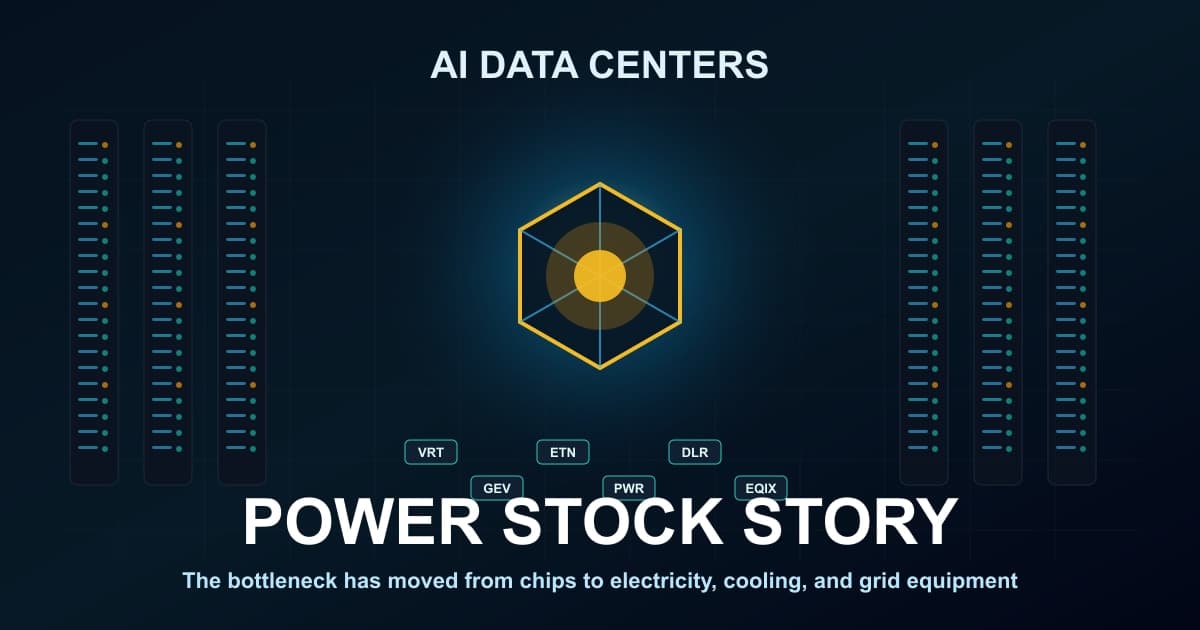
TECHi’s earlier coverage of AI data centers becoming a power-stock story showed the infrastructure side of that shift. The same logic applies to labor. AI is never just software once it enters the economy. It becomes budget, power demand, workflow and management doctrine.
What companies should do now
Companies have a choice. They can use AI as a silent headcount lever, or they can redesign work around a new training model.
The lazy version is obvious: cut junior roles, buy tools, tell remaining employees to “do more with AI,” and call the margin improvement innovation. That may work for a few quarters. It does not build durable capability.
The better version starts with a task audit. Companies should identify which tasks AI can safely automate, which tasks should be augmented, and which tasks must remain human-owned because they involve judgment, trust, liability or relationship context.
Then they need an apprenticeship replacement. If AI writes the first draft, junior workers should be trained to critique the draft. If AI writes code, juniors should be trained to test, secure and explain it. If AI summarizes research, juniors should be trained to verify sources, spot missing assumptions and turn outputs into decisions.
The new entry-level job should not be “do what the AI cannot do.” That is too passive. The new entry-level job should be “learn the system by supervising it under human accountability.”
That requires managers to slow down in the right places. A company that automates every low-risk task may improve throughput and damage its own talent pipeline. A company that preserves human learning loops while using AI for leverage may build a stronger workforce than competitors that treat every junior salary as waste.
What workers should do now
For workers, the answer is not simply “learn AI.” That phrase is already too vague.
The practical goal is to move up the task stack. Workers need to understand where their job produces judgment, trust, taste, coordination, accountability or domain-specific context. Those are the parts AI has the hardest time owning.
A junior analyst should not only ask AI for a chart. They should learn why the chart matters, what data is missing, what conclusion would be reckless and what decision the chart supports. A writer should not only generate copy. They should learn sourcing, editorial judgment, framing and audience trust. A developer should not only prompt for code. They should learn architecture, debugging, security, maintainability and product logic.
AI literacy is not prompt tricks. It is knowing when the system is useful, when it is wrong, and how to turn its output into accountable work.
The same signal is showing up across TECHi’s wider AI economy coverage: AI layoffs are becoming a management playbook, OpenAI’s capital structure is turning governance into an investment question, and the Musk v. Altman trial is testing mission promises once frontier AI becomes a balance-sheet asset.
Verdict: AI is not the end of work. It is the end of cheap training assumptions
The job market is not facing one simple AI event. It is facing a redesign of work.
The most dangerous version of that redesign removes the first rung of the career ladder while pretending that productivity software can replace apprenticeship. The best version uses AI to make workers stronger earlier, while preserving structured ways for people to learn judgment.
That is the line to watch.
If companies use AI mainly to cut labor and move payroll into software, compute and cloud contracts, the world gets a thinner middle class and a more fragile talent pipeline. If companies use AI to redesign learning, supervision and accountability, the world gets more productive institutions and faster human capability.
The technology will not decide that outcome by itself.
TECH Intelligence is the broader map: artificial intelligence plus the systems that deploy it, finance it, power it, govern it and teach people to work with it. The future of jobs will be decided less by what models can do in a demo and more by whether institutions build the missing rung before it breaks.
FAQ
Frequently asked questions
Is AI replacing jobs right now?
AI is already being cited in job-cut announcements, but the broader evidence points to task replacement, hiring compression and role redesign more than one simple wave of total job replacement.
Which jobs are most exposed to AI?
Text-heavy, repeatable and reviewable tasks are most exposed, including clerical work, customer support, first-draft writing, basic coding, research summaries, document review and data cleanup.
Why are entry-level workers at special risk?
Entry-level workers often do the first drafts, basic analysis and support tasks that AI systems can now perform quickly. If companies automate that work without redesigning training, the first rung of the career ladder weakens.
Will AI create new jobs too?
Yes. The World Economic Forum projects both large job creation and large displacement by 2030. The key issue is whether displaced workers can move into the new roles quickly enough and whether companies preserve learning pathways.
What does TECH Intelligence mean in this article?
TECH Intelligence means the wider system around AI: models, chips, cloud, data centers, energy, workflow design, governance, capital allocation and human skill formation.
About the Author

Jazib Zaman founded TECHi in 2010 and is chief executive of its publisher, TechAbout LLC. He writes about AI infrastructure, semiconductors and the companies financing them, from Palantir's growth expectations to the toolmakers behind AI memory demand. He is a former member of the Forbes Technology Council.

Comments