

Editorial illustration. Each pair is one quarter-end from December 2025 to September 2026 in Cantor Fitzgerald's holdings reports: the solid bar is Nvidia shares held and the outlined bar is shares covered by put options, drawn to scale. Illustration: TECHi, from SEC filings.
Cantor Fitzgerald reported owning 1.0 million Nvidia shares at the end of September, 45% fewer than three months earlier, according to the quarterly holdings report the firm filed with the Securities and Exchange Commission on November 16, 2026. The same filing lists put options covering 1.3 million Nvidia shares, which is more than the stock it held.
The figures matter this week. House Democrats have asked Cantor whether Commerce Secretary Howard Lutnick, whose sons control the firm, used his office to help it avoid losses tied to Nvidia, Reuters reported on Wednesday. Cantor denies it. TECHi read four quarters of the firm's filings. They show a holding that is two-thirds smaller than at the start of the year and was matched by put options throughout. They do not show anything after September 30, and Nvidia's fall came after that date.
Key Takeaways
- The holdingCantor Fitzgerald reported 1,000,332 Nvidia shares on September 30, down 45% in three months and two-thirds since the end of 2025.
- The optionsIt also reported put options over 1.3 million Nvidia shares. Puts covered more shares than it held at two of the last four quarter-ends.
- The inquiryHouse Democrats have asked whether the commerce secretary’s decisions were influenced by Cantor’s interests, Reuters reported. Cantor and the Commerce Department deny it.
- The timingThe third-quarter reduction came while Nvidia rose 14%. The stock’s 34% fall came after September 30, a period the filings do not cover.
- The limitA holdings report does not show swaps, short positions or net exposure, and it cannot show why any government decision was made.
What are lawmakers asking?
Three House Democrats wrote to Brandon Lutnick, Cantor's chairman and the commerce secretary's son, on November 17, according to Reuters, which reviewed the letter. The three are Jamie Raskin of Maryland, Gregory Meeks of New York and Sydney Kamlager-Dove of California.
They asked for information to establish whether any of the secretary's actions were improperly influenced by Cantor's holdings or business interests, Reuters reported. The letter asks about one decision in particular: what the lawmakers describe as the secretary's refusal to add a Chinese company called Megaspeed to the trade blacklist, or to require a license for exports of advanced AI chips to it. Megaspeed has been in the spotlight since reports about its links to Nvidia's former chief executive, Jensen Huang, Reuters said. Treasury Secretary Scott Bessent said earlier this month that four government agencies had favored listing the company and that the Commerce Department had not, according to the same report.
Both sides have answered. A Commerce Department spokesperson said the secretary has fully complied with his ethics agreement and has divested all of his financial interests in Cantor Fitzgerald and two related companies, Reuters reported. Cantor denied the lawmakers' claims. It said it holds no material proprietary position in Nvidia, that its Nvidia holdings arise mainly from equity swaps carried out for clients, and that it has no role in export control decisions.
The pressure is not from one party. Senator Tim Scott, the Republican who chairs the Senate Banking Committee, said he wants Lutnick and Huang to testify in public, according to Reuters.
What do Cantor's filings show?
Large investment managers must report their holdings of US-listed stocks to the SEC within 45 days of the end of each quarter, on a document called Form 13F. Cantor Fitzgerald, L.P. files one report for the group. Almost all of the Nvidia stock in it sits in a unit called CF Secured.
At the end of 2025 the group reported 3,000,419 Nvidia shares, worth $559.6 million. Three months later it reported 1,778,504. At the end of June the figure was 1,810,531. At the end of September it was 1,000,332, worth $228.5 million.
So the holding fell 45% in the third quarter, and it has fallen by two-thirds since the end of last year. The largest cut, 1.22 million shares, came in the first three months of 2026. The third-quarter cut was 810,199 shares.
The September holding was 2.2% of the $10.4 billion of positions in Cantor's report.
| Quarter end | Shares held | Shares covered by puts | Puts against shares held |
|---|---|---|---|
| December 31, 2025 | 3,000,419 | 4,550,000 | 152% |
| March 31, 2026 | 1,778,504 | 1,500,000 | 84% |
| June 30, 2026 | 1,810,531 | 1,401,500 | 77% |
| September 30, 2026 | 1,000,332 | 1,300,000 | 130% |
Did Cantor sell before Nvidia fell?
The filings cannot say, and the dates do not line up the way that question assumes.
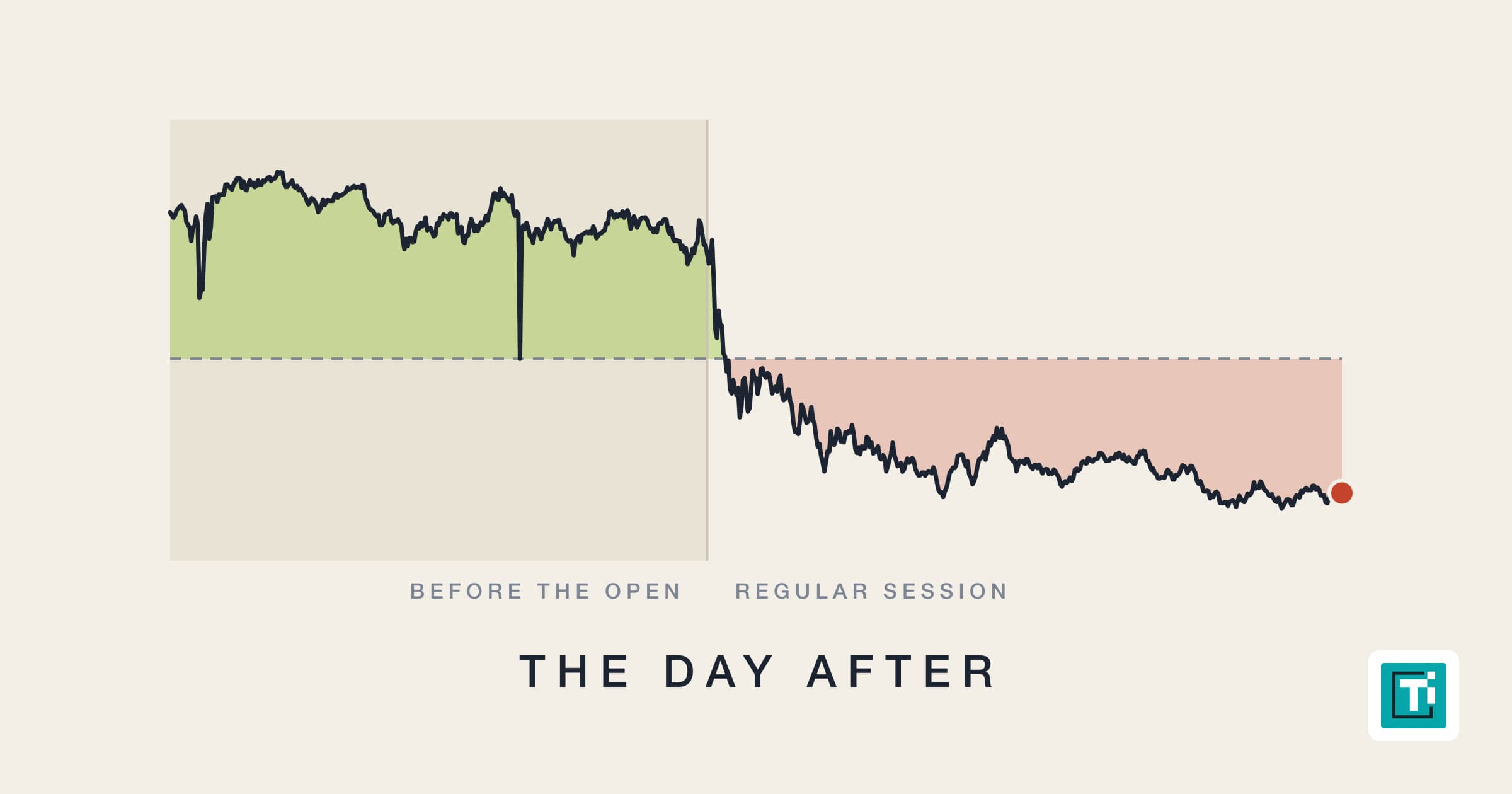
The reduction the latest filing shows took place between July and September. Nvidia's shares rose 14% in those three months, closing at $228.38 on September 30. Whatever left Cantor's books in the quarter left while the price was climbing.
The fall came later. Nvidia's highest close was $239.24 on October 6. It closed at $150.96 on Wednesday, November 18, which is 37% below that peak and 34% below the September 30 price. Huang's resignation was announced on November 12.
A 13F is a photograph of one day. The September report says what Cantor held on September 30. It says nothing about October or November. The next one, covering December 31, is due in mid-February.
One calculation gives the scale of what is at issue. If Cantor still held the 1.0 million shares it reported, and nothing offset them, they would have been worth $151 million at Wednesday's close, $77 million less than on September 30. Neither condition is known.
What do the put options show?
A put option gives its holder the right to sell a share at a set price. On a 13F, options are listed by the value of the shares they cover and not by what the options cost. Cantor's report shows puts over 1.3 million Nvidia shares, which appears as $296.9 million. That is the share price multiplied by 1.3 million. It is not money spent or money at risk.
The puts are not new. Cantor reported puts over 4.55 million Nvidia shares at the end of 2025, 1.5 million in March and 1.4 million in June. At two of the four quarter-ends, including the latest, the puts covered more shares than the group held. At the other two they covered about four-fifths.
Someone who owns a stock and holds puts over a similar number of shares is largely protected if the price falls. That is also what a dealer's books look like when it holds shares to back contracts with clients and hedges them. Cantor says its Nvidia holdings come mainly from equity swaps for clients. In a swap of that kind the client takes the gain or the loss, and the dealer holds stock so that it is not exposed.
The filings fit that account. They cannot prove it. A 13F does not show swaps, short positions, or the price and expiry date of an option. It lists positions, and a list of positions is not a firm's net exposure.
What can't the filings answer?
The main one. Whether any decision at the Commerce Department was shaped by Cantor's interests is not something a holdings report can show, and nothing in these filings bears on it.
They also cannot show who Cantor's clients are, whether the firm carried any of the risk itself, or what it did after September 30. The lawmakers have asked Cantor for that kind of information directly.
What the filings do establish is narrower. Cantor's reported Nvidia stock fell in two of the last three quarters, by two-thirds in all. The fall began in the first quarter of the year. And at every date the stock was paired with put options of similar size.
What does it mean for Nvidia stock?
For shareholders the inquiry is one more source of scrutiny on a company that already has several. A US rule limiting exports of advanced AI chips took effect on Thursday, and Nvidia has stopped selling its H200 chips to China, as TECHi reported earlier on Thursday. Its board has set up a committee to oversee export controls and is searching for a permanent chief executive.
The question lawmakers are pressing is about enforcement. If the Commerce Department is pushed to act on Megaspeed or on other buyers, the effect on Nvidia would come through its sales and not through anything in Cantor's filings.
What to watch
Cantor's reply to the lawmakers, and whether they publish it. Any decision on adding Megaspeed to the trade blacklist. Hearings, if Scott's call for public testimony is taken up. Cantor's next holdings report, in mid-February, will show its position at the end of a quarter in which Nvidia has so far fallen by a third. TECHi's Nvidia quote page carries the live price.

Disclaimer
This article is for informational purposes only and does not constitute financial, investment, tax, or legal advice. Market data, tax rules, and prices can change after the article date. TECHi and its authors may hold positions in securities or digital assets mentioned. Always conduct your own research and consult a licensed financial, tax, or legal professional before making decisions.



Comments