

Exascale Labs shares surged Friday after a filing disclosed a deal for 96 Nvidia GPUs. The contract is real, but its payment, delivery and profit milestones matter more than the headline value.
Exascale Labs Holdings finished Friday with a dramatic rally. Stock Analysis historical data, sourced from S&P Global Market Intelligence, put XLAB’s October 16 regular-session close at $2.35 in U.S. dollars, up 72.79% from Thursday’s $1.36 close. It also recorded 167.1 million shares traded, compared with 13.8 million Thursday. Those are fixed end-of-day figures, not a live quote; the feed’s precise delay is not stated. The move followed an October 15 SEC filing disclosing an $8.208 million agreement to supply a customer with servers built around Nvidia’s B300 accelerators.
The contract deserves attention. It also deserves a closer reading than the stock chart allows. The buyer has agreed to pay for 12 NVIDIA HGX B300 servers containing 96 GPUs, associated network and management equipment, deployment, and 36 months of information-technology operations. But the filed document does not say that the customer has paid its deposit, that Exascale has ordered the equipment, that the units have shipped, or how much profit the transaction would produce. Those are distinct steps, and the agreement makes several of them conditional.
The immediate question for investors is therefore narrower than “How big is AI demand?” It is whether this particular order converts into cash-backed procurement, accepted delivery and profitable service over three years. Exascale’s filing gives readers a way to follow that sequence. It does not answer it yet.
The first test is a $2.46 million payment
The agreement, effective October 8 and signed by Exascale on October 9, identifies the customer as Sunon Inc. Its filed exhibit sets the total contract price at $8,208,000 before import duties and taxes. It calls for a 30% down payment of $2,462,400 after a purchase order. The remaining 70%, or $5,745,600, is due after a notice that the equipment is ready and before shipment. These amounts are arithmetic from the disclosed total and percentages, rather than separately reported cash receipts.
The order of events matters. Under the agreement, Exascale accepts a purchase order only after the down payment has cleared. It then has three business days to place the corresponding order with its original equipment manufacturer. Delivery is estimated at four to six weeks from the later of cleared payment and the required Nvidia and export or import approvals. The schedule is expressly an estimate, not a promise that servers will arrive on a fixed date.
That structure gives the supplier some protection against funding a large equipment purchase before the customer pays. It also means the signed agreement alone is not the same as cash in Exascale’s bank account. The October 15 filing does not confirm that Sunon has submitted a purchase order or paid the deposit. Nor does it disclose an OEM purchase order, manufacturing slot or approval date. A later company update on any of those milestones would change the evidence considerably; a rise in the share price does not substitute for one.
The customer is designated as the importer of record, while import duties and taxes sit outside the $8.208 million contract price. The agreement also retains title to the equipment until full payment and delivery. Once accepted, a purchase order is non-cancellable under the specified terms. Those provisions are useful for understanding who bears particular risks, but they do not eliminate the practical risk of delay, equipment availability or a dispute over performance.
The $8.2 million is not a GPU price tag
One tempting calculation is to divide $8.208 million by 96 GPUs. The result is $85,500 per GPU. It is also the wrong description of what the filing says. The numerator includes servers, networking and management hardware, deployment work, and three years of operations. The filed appendix redacts the allocation among those components. It does not disclose Exascale’s equipment purchase cost, service labor cost, gross margin, or the revenue-recognition schedule.
Calling the quotient a B300 selling price would therefore assign all the contract’s value to one component. Calling the whole $8.208 million annual recurring revenue would make the opposite error: this is a fixed bundled agreement with a 36-month service element, not a disclosed yearly subscription amount. Exascale says a supplemental services agreement is expected within 30 days, while interim service obligations apply even if that document is not finalized. The precise commercial breakdown is still unavailable to outside readers.
That hidden breakdown is central to the investment case. If the hardware is mostly passed through at a narrow markup, a large sales number could generate relatively little gross profit. If deployment and ongoing operations carry attractive margins, the economic value could be better than a simple reseller transaction. The public contract does not let us decide between those possibilities. The most useful future disclosure would separate equipment revenue from services and show what the business earned after procurement and operating costs.
There is also an important distinction between GPU ownership and GPU access. The document describes equipment supplied to a buyer-designated U.S. data center, with title passing under its payment and delivery terms. It is not evidence that Exascale has added 96 GPUs to a cloud fleet it will own and rent out indefinitely. A reader looking for proof of a fast-growing GPU-rental business should ask for separate evidence of owned capacity, utilization, customer commitments and recurring revenue.
Why one contract looks large beside the existing business
Exascale reported $14.82 million in revenue for the fiscal year ended June 30, 2026, up 111.3% from about $7.02 million a year earlier, in its September 28 results release. At face value, the new agreement’s $8.208 million total equals about 55.4% of that previous full-year revenue. That comparison explains why a single filed order can draw such an outsized market response from a smaller company.
It is a measure of scale, not a revenue forecast. The prior-year figure covers a completed fiscal period. The new contract combines equipment and services to be performed over time, and the company has not disclosed how its price will be allocated or when each portion will be recognized. Adding $8.208 million to last year’s sales, or placing all of it in the next quarter, would invent an accounting timetable that the filing does not provide.
The company’s reported gross profit for that fiscal year was $2.42 million, a margin of roughly 16.3%. It also reported a net loss of about $12.2 million. Those numbers frame the stakes, but they cannot be applied mechanically to the Sunon deal. Its hardware and service mix may differ from the company’s earlier business; the contract’s own cost structure is not public. At the historical gross-margin rate, $8.208 million of comparable sales would imply about $1.34 million of gross profit. That is only an illustration of why margin matters, not a prediction or a reported profit on this order.
The cash picture needs the same care. Exascale reported approximately $2.7 million in cash at June 30 and said it received roughly $11.8 million of net proceeds from an August business combination. Those figures come from different dates. They do not reveal the company’s cash balance when the October contract was signed, or the amount it would need to advance to suppliers after a customer deposit. The disclosed 30% payment requirement may reduce working-capital pressure, but a current balance sheet and actual payment update are needed to measure it.
A signed order is different from a pipeline
The order stands out partly because Exascale has previously discussed a much larger set of prospective opportunities. In September it described a roughly $300 million qualified customer pipeline. A pipeline is a company-defined collection of possible business, not a contracted backlog and not recognized revenue. Its value cannot be treated as evidence that hundreds of millions of dollars have been sold. Other announcements, including a letter of intent with Compal and a memorandum of understanding with EnergyBank, are not substitutes for binding orders either.
The Sunon agreement moves one opportunity into a more concrete category: a signed supply-and-services contract with a named buyer, a stated total and payment terms filed with the SEC. That is meaningful progress. Yet the exhibit itself gives investors a practical checklist before calling the economics settled: cleared deposit, accepted purchase order, OEM procurement, required approvals, readiness notice, balance payment, shipment, acceptance and the service work that follows.
Investors can also watch for what does not happen. If an expected delivery window passes without a progress update, that alone does not prove a default; the clock starts from the later of payment and approval, neither of which the filing dates. If a future release cites “contract value” again without saying whether payment and delivery occurred, it adds little to the evidence already available. Conversely, confirmed cash collection and shipment would answer questions that Friday’s disclosure left open.
The counterargument to the skeptical reading
The strongest case for Friday’s optimism is not that every dollar of the contract is immediate profit. It is that a relatively small, recently public company has put a specific NVIDIA-based system order in writing, with a customer, a price and a defined deposit. If the customer funds it promptly and Exascale executes the purchase and deployment, the order could establish a reference transaction for a business trying to prove that its AI-infrastructure pipeline is real. Three years of included operations could also deepen the relationship, even though their standalone economics are undisclosed.
That case has limits. A single customer order does not show repeat demand, and a 96-GPU deployment does not by itself demonstrate a large-scale platform. Delivery depends on procurement and approvals that the contract expressly names. More importantly, the withheld line-item prices make it impossible to tell whether the sale produces a high-margin service stream or mainly low-margin equipment revenue. The company’s own history of losses raises the bar for evidence of durable earnings, not merely headline sales growth.
The sharp move itself should not be turned into a claim about causation. The filing is the clear new company document in the timeline, and traders had the Oct. 15 session to react before Friday’s further surge. Intraday flows, speculative positioning and the small company’s share structure could also affect price. Without verified trading-flow evidence, nobody can assign the full percentage move to the contract alone. What can be said is that the agreement gave the market an unusually concrete number to examine.
What to watch next
Four disclosures would sharpen this story. The first is confirmation of the deposit and accepted purchase order. The second is evidence that the OEM order and required approvals are in place, giving the estimated delivery window a usable starting date. The third is shipment and customer acceptance, followed by any statement of cash received. The fourth is financial reporting that shows revenue timing, hardware-versus-service mix and gross profit. Each is more informative than simply repeating the $8.208 million headline.
Exascale’s share-price gain shows how strongly investors can react when a small AI-infrastructure name signs a tangible order. The filed contract shows why that reaction still needs a second look. The next test is not whether 96 GPUs sound impressive. It is whether an $8.208 million bundle can move through payment, approvals and delivery into profitable work that the company reports clearly.
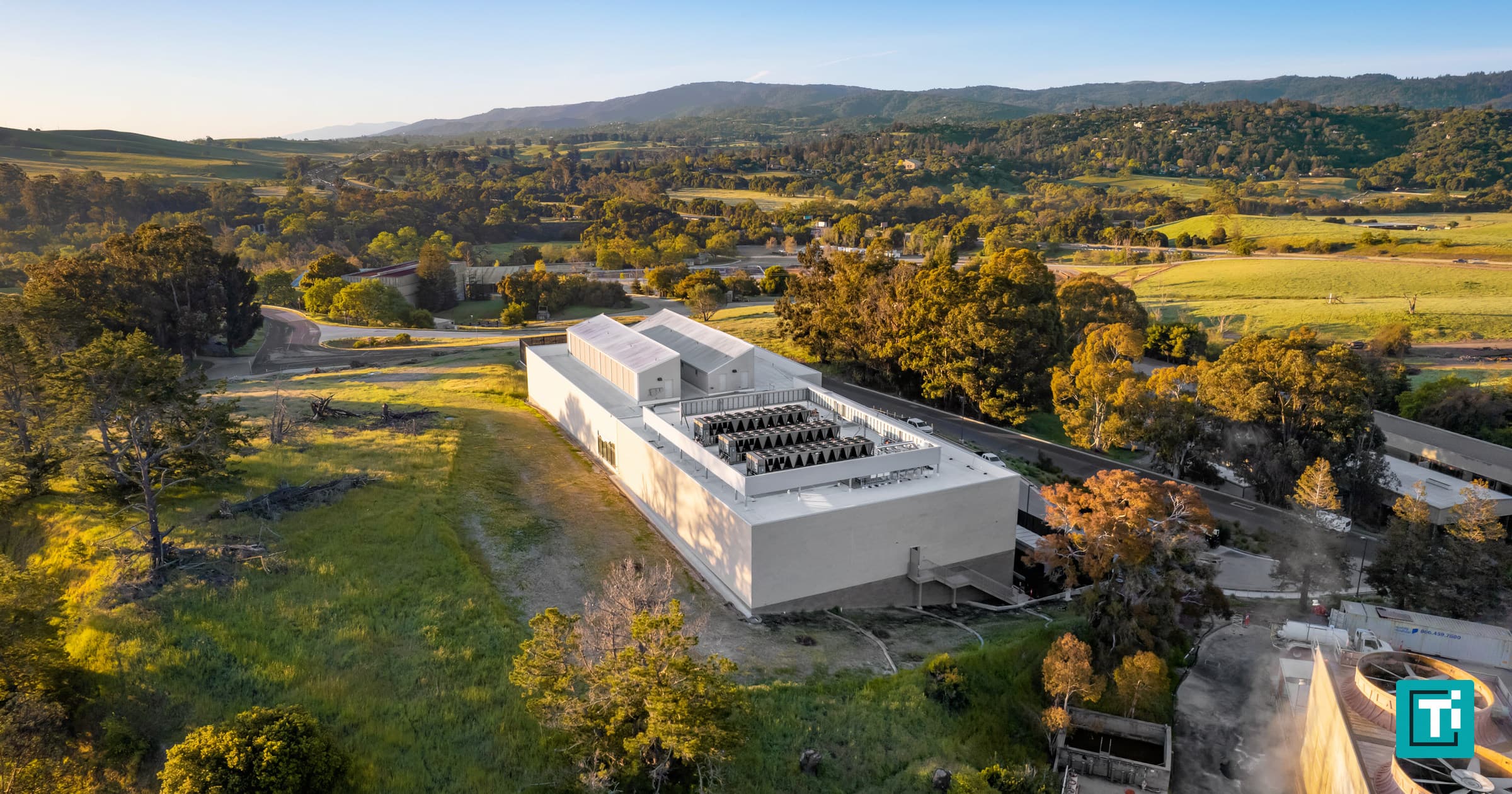
Image: Server racks at NOIRLab headquarters, Tucson, Arizona; illustrative, not Exascale or Sunon equipment. Photo: NOIRLab/NSF/AURA/T. Slovinský. CC BY 4.0 license. Original photograph. Cropped and marked by TECHi.

Disclaimer
This article is for informational purposes only and does not constitute financial, investment, tax, or legal advice. Market data, tax rules, and prices can change after the article date. TECHi and its authors may hold positions in securities or digital assets mentioned. Always conduct your own research and consult a licensed financial, tax, or legal professional before making decisions.
About the Author

Omer Sheikh is a markets editor at TECHi. His published work covers public companies, with particular attention to AI infrastructure, semiconductors, Tesla and SpaceX. His portfolio includes company results, stock comparisons and conditional forecasts, examining demand, capital spending and the business assumptions behind market valuations.



Comments