



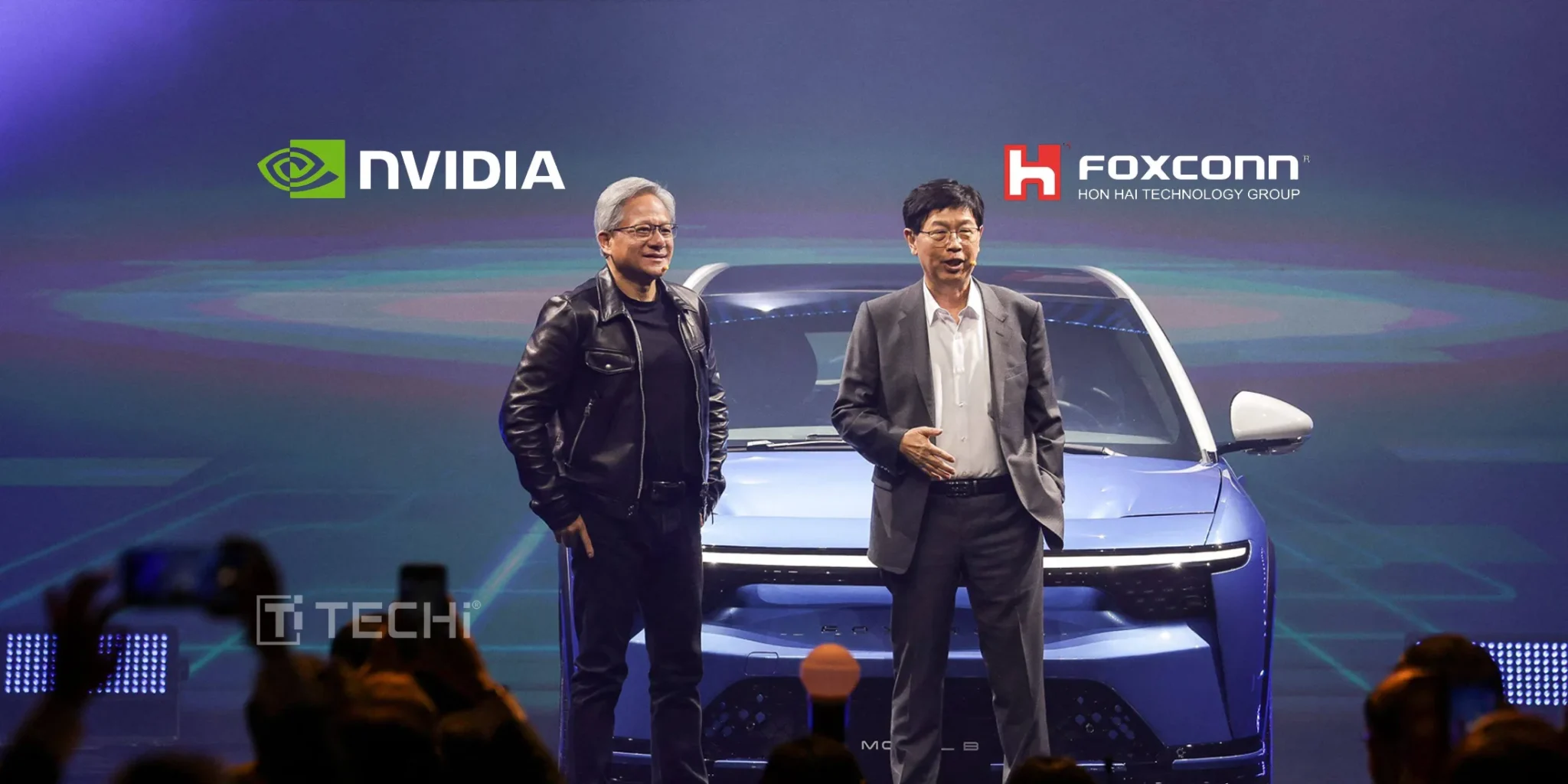
As Taiwan is growing its prominence in the global AI ecosystem, Foxconn, the world’s largest contract electronics manufacturer, announced plans to develop its new AI centre in partnership with Nvidia. The data centre is targeted to operate with a capacity of 100 megawatts.
This announcement was made by the Chairman of Foxconn, Young Liu, at the Computex trade show in Taipei. The chairman also outlined the structural planning of the AI data centre. He emphasized that a phased development approach is being implemented for the AI centre to accommodate its substantial power demands.
The initial phases of the AI centre will be located in the southwestern city of Kaohsiung, with additional facilities potentially established in other cities across Taiwan. He added that site selection for future phases will be contingent on regional power availability.
Young Liu also announced at the trade show.
"We know that power is a very critical resource in Taiwan. I don't want to use the word 'shortage'. So, it will take a few steps to reach 100 megawatts. We'll start with 20 megawatts ... then add another 40."
Implications for Taiwan
The Foxconn-Nvidia partnership brings constructive development to Taiwan’s global AI supply chain. The AI centre will accelerate advanced AI training and data processing, along with innovation in smart city infrastructure, electric vehicles, and other next-generation technologies. However, the energy supply will remain a bottleneck for Taiwan in boosting its AI sector as the country struggles with the energy demands required for huge AI centres.
Disclaimer
This article is for informational purposes only and does not constitute financial, investment, tax, or legal advice. Market data, tax rules, and prices can change after the article date. TECHi and its authors may hold positions in securities or digital assets mentioned. Always conduct your own research and consult a licensed financial, tax, or legal professional before making decisions.
About the Author

Naba Fatima covers AI models and the software that keeps chip demand locked in. She has written about Kimi K3's low API pricing and missing open weights, Qualcomm's $3.9 billion move against Nvidia's CUDA ecosystem and Nvidia's context-memory advantage in AI data centers.
Comments