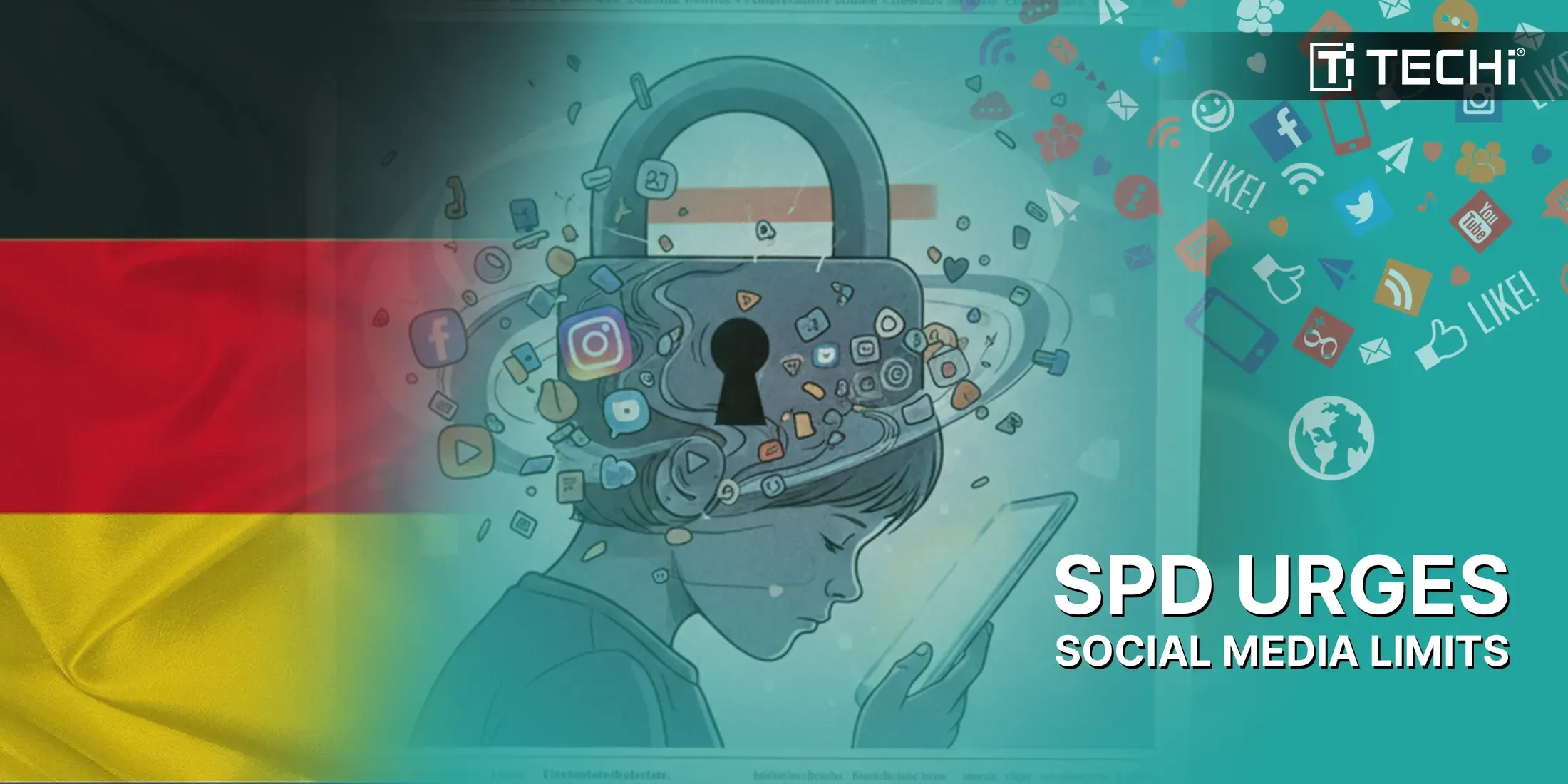
German leaders are uniting in an attempt to safeguard the minors against the negative effects of social media, thus, the issue of digital safety has become hot-controversial.
On 16 February 2026, the Social Democratic Party (SPD) enhanced its pressure on the coalition partners by offering a ban on teenage users and creating youth-safe platforms with users between fourteen and sixteen years of age, without addictive algorithmic features.
Coalition Momentum Builds
We can no longer avoid clear rules and restrictions
Social Democrat party (SPD) leader Lars Klingbeil, who serves as Chancellor Friedrich Merz's deputy, told the weekly Der Spiegel.
Protecting young people from the flood of hatred and violence on social media is a top priority.
Such a position represents conservative views that have been taken in favor of prohibiting users under the age of 16, which are going to be discussed during the party this week.
The major ones (Facebook (META.O), Snapchat (SNAP.N), TikTok, and YouTube (GOOGL.O) are facing more and more scrutiny due to an ever growing concern about cyberbullying and mental-health implications. A report revealed that 19.6 million individuals reported encountering hate speech on websites or social media platforms in the first quarter of 2025.
Challenges Ahead
The fact that Germany has a federal system complicates the process of implementing this kind of measures since the individual states have the authority to regulate the media and they should come into agreement.
Although the great platforms stick to the argument of guarding the freedom of expression, the observed unity of the coalition can be a pointer of future federal intervention.
Future Outlook
Last year, Australia became the first country to prohibit children under the age of 16 from using social media platforms, prompting an increasing number of European countries to consider similar legislation. The scrutiny has increased since Elon Musk's flagship AI chatbot Grok was discovered to be generating sexualized images of real people.
The expected youth protection commission report, which is likely to be released later in 2026, will hopefully speed up legislative development and possibly harmonize the restrictions adopted by the entire European Union by 2027.



Comments