


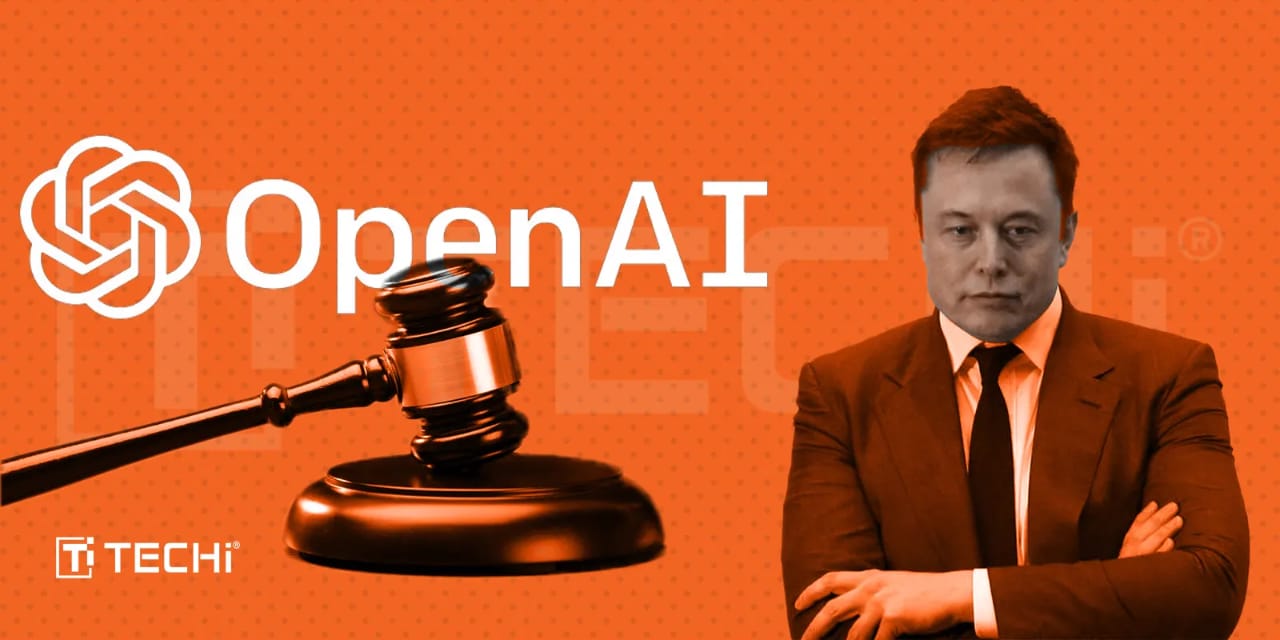
A federal judge in California has ruled the sections of Musk’s lawsuit will proceed to trials, requiring his testimony. On Tuesday, a judge said that portions of Elon Musk's case against OpenAI to stop its conversion to a for-profit-entity will proceed to trial. He also added that Tesla CEO will also appear in court for testimony,
“ Something is going to trial in this case,” District Judge Yvonne Gonzalez Rogers in Oakland, California, said in the early court session.
Musk will sit on the stand and present his point to a jury, and a jury will decide who is on the right side.
District judge Rogers was considering Musk’s recent request for a preliminary injunction to block the conversions generated by OpenAI before going to trial. Thus, the latest move in this battle is between the world’s richest person and CEO of OpenAI, Sam Altman, who is playing publicly.
Rogers also presided over Epic Games' antitrust case against Apple, which went to trial in May 2021.
Musk has also been the Cofounder of OpenAi with Altman in 2015, but left its board in 2018 and started the competing AI startup xAI in 2023. OpenAI is now shifting to a for-profit entity from nonprofit one, which clearly exhibits its need to generate a secure revenue for best AI models development.
Last year, Musk filed a case against OpenAI and Sam Altman, saying that OpenAI founders approached him to fund a nonprofit AI development for humanity, but their focus is on making money. He later expanded the case to federal antitrust for more claims, and in December asked the judge presiding over the lawsuit to refrain AI from transitioning into a for-profit.
In response to this filed case of Musk, Open AI has recorded their word, saying that the claims of Musks should be dismissed and that Musk “ should be competing in the market rather than the courtroom”
The stakes on OpenAI’s transition has now moved after their last fundraising of around $6.6 billion with a new roundup of $25 billion under discussion with softbank are conditioned on the company restructuring to remove the non-profit entity’s control.
Such reinstatement of AI would be a bit unusual, said Rose Chan Loui, executive director of the UCLA law center for Philanthropy & nonprofit entities. The shift of nonprofit work to for-profit has historically been for healthcare organizations like hospitals, not venture capital-backed organizations, she said.
About the Author

Ayesha Riaz writes about the software teams use to build and ship AI. Her recent articles cover Harness putting AI releases under a single change record and Cline's CLI dropping bundled AI providers to shrink its install size; earlier pieces looked at DeepSeek's jailbreak risk and renewable-energy stocks.




Comments