

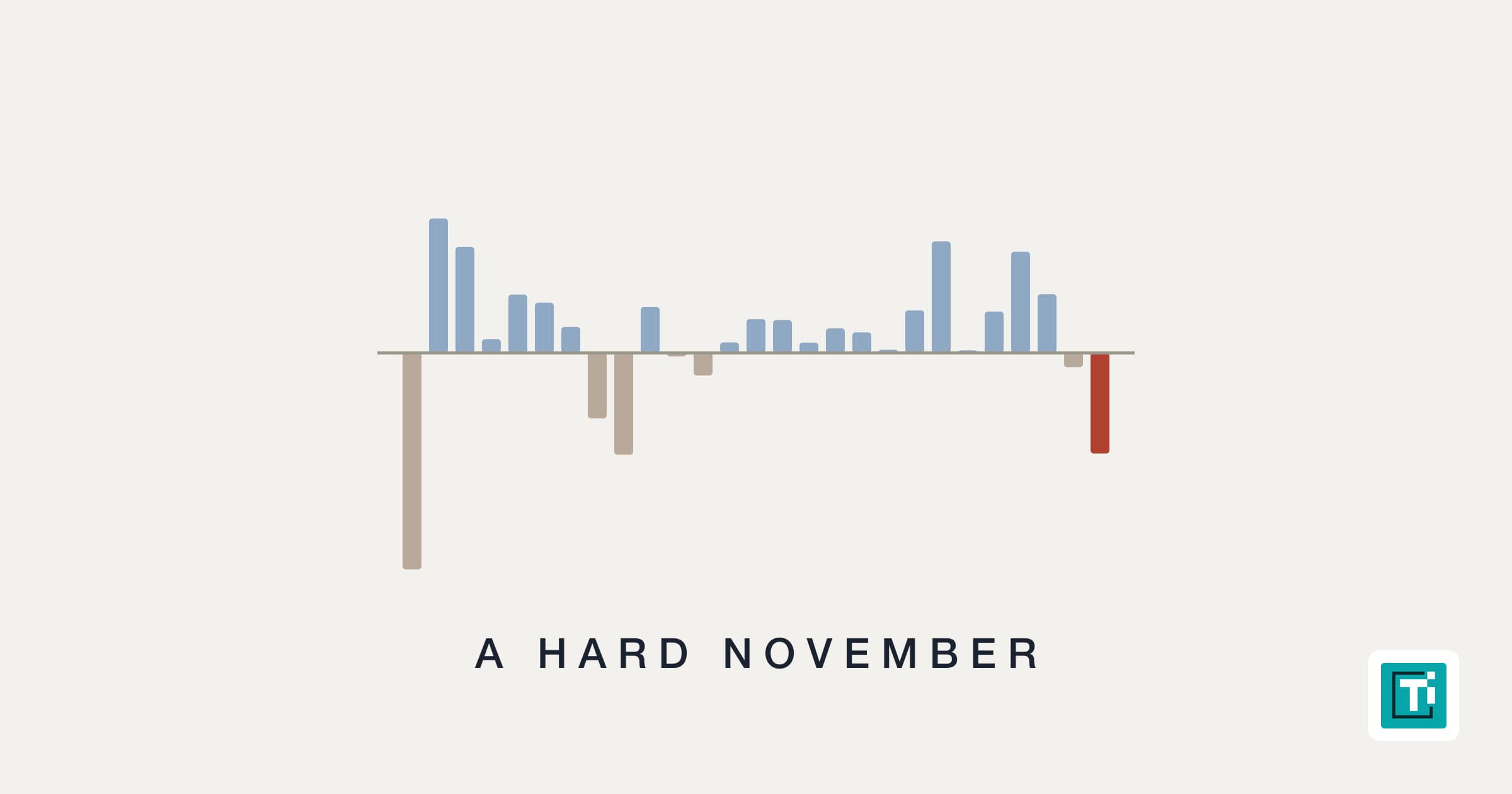
Editorial illustration drawn to scale from Palantir's daily closing prices from September 1 to November 24, 2026. The gold dot marks November 20, when director Peter Thiel's purchase was made. Illustration: TECHi, from Nasdaq price data and SEC filings.
Peter Thiel, a co-founder and director of Palantir Technologies, bought 850,100 of the company's Class A shares for about $122.3 million on Thursday, November 20, 2026, according to a Form 4 filing with the Securities and Exchange Commission late on Tuesday. He paid an average of about $143.81 a share. Palantir closed that day at $143.49, its lowest close since its October 9 high of $209.05.
At 12:56 p.m. on Wednesday, Palantir's shares were at $161.42, so the purchase was worth about $137.2 million, a paper gain of about $15.0 million, or 12.2%, by TECHi's calculation. The same batch of filings shows chief executive Alex Karp and three other senior executives selling about $98.2 million of stock on November 20 and 23, mostly in automatic sales to cover taxes on vested shares. Thiel's purchase was larger than all of those sales combined, by about $24.1 million.
Key Takeaways
- The purchaseDirector and co-founder Peter Thiel bought 850,100 Palantir shares for about $122.3 million on November 20, at about $143.81 each.
- TimingThat day Palantir closed at $143.49, its lowest close since the October 9 high; the buys ran under a plan set on August 19.
- Paper gainAt $161.42 on Wednesday, the shares were worth about $137.2M, up about 12.2%.
- SalesCEO Alex Karp and three other officers sold about $98.2M, mostly automatic sales to cover taxes on vested stock.
- NetThiel’s purchase exceeded the four officers’ sales by about $24.1M.
What did Thiel buy?
Class A common stock, in three blocks on November 20: 213,437 shares at an average of $142.91, 341,423 at $143.68 and 295,240 at $144.61, the filing shows. The shares are held by PLTR Holdings II LLC, of which Thiel is the sole beneficial owner. The filing reports 850,100 shares held after the purchases, but it notes that it does not describe all of Thiel's holdings and refers readers to Palantir's April 24 proxy statement and his Schedule 13G for those.
By TECHi's calculation, the three blocks cost about $30.5 million, $49.1 million and $42.7 million.
The purchases were made under a Rule 10b5-1 trading plan Thiel adopted on August 19, 2026, according to the filing's footnotes. Palantir closed at $175.19 that day. Thiel's average purchase price was about 17.9% lower than the price when the plan was set up.
How big was the purchase?
Large for one investor, small for the market. Palantir traded 36.6 million shares on November 20, according to Nasdaq's data, so Thiel's 850,100 shares were about 2.3% of that day's volume, by TECHi's calculation. Average daily volume in November through Tuesday was about 26.3 million shares. In dollars, the purchase was roughly the size of the four executives' sales combined, and larger by about $24.1 million.
Why does the trading plan matter?
Because it means the purchase was arranged in advance. A 10b5-1 plan lets an insider set up trades, or a formula for them, at a time when they do not have material non-public information, and then lets the trades happen later without the insider deciding each one. That protects the insider from claims of trading on inside knowledge. It also means the November 20 purchase cannot be read as a fresh decision that day; the plan's terms were fixed three months earlier.
A director buying more than $100 million of stock is still a different kind of trade from an executive selling shares to pay taxes, because the buyer is adding money rather than taking some out.
What did Karp sell?
Shares he had just received. On November 20, 975,000 of Karp's restricted stock units vested as Class B shares, according to his first filing. He converted 403,263 of them into Class A shares and sold them on November 20 and 23 in automatic sales to cover the required tax withholding, according to the filings. He converted and sold another 90,000 shares on November 20 under a 10b5-1 plan he adopted on March 12, 2026, and gave 58,562 shares to tax-exempt charities.
In total Karp sold 493,263 shares for about $75.1 million across the two days, an average of about $152.28 a share, by TECHi's calculation from the two filings. The second filing shows him holding about 6.43 million Class A shares directly afterward. Class B shares convert into Class A shares one for one, the filing says.
Who else sold?
Three other officers, all in automatic sales to cover taxes on vested stock units under their trading plans, according to their filings. Ryan Taylor, chief revenue officer and chief legal officer, sold 47,319 shares for about $7.3 million. Shyam Sankar, chief technology officer, sold 62,355 shares for about $9.6 million. David Glazer, chief financial officer and treasurer, sold 40,687 shares for about $6.2 million. Together with Karp, the four sold about $98.2 million.
| Insider | Role | Trade | Shares | Value |
|---|---|---|---|---|
| Peter Thiel | Director | Bought (Nov 20, plan) | 850,100 | $122.3M |
| Alex Karp | Chief executive | Sold (Nov 20 and 23; mostly tax) | 493,263 | $75.1M |
| Shyam Sankar | Chief technology officer | Sold (tax) | 62,355 | $9.6M |
| Ryan Taylor | Chief revenue and legal officer | Sold (tax) | 47,319 | $7.3M |
| David Glazer | Chief financial officer | Sold (tax) | 40,687 | $6.2M |
What did the executives keep?
Most of their stakes. After the sales, the filings show Karp holding about 6.43 million Class A shares directly, Sankar about 795,000, Glazer about 639,000 and Taylor about 439,000. At Wednesday's price, Karp's directly held Class A shares alone were worth about $1.04 billion, and Sankar's about $128 million, by TECHi's calculation. Each sold less than a tenth of the Class A shares reported as held directly, by TECHi's calculation, so the selling does not suggest any of them are exiting. These figures cover only the shares reported on these filings, not every security each person may hold.
How has Palantir traded?
Sharply in both directions this month. The shares fell to $143.49 on November 20, down 31% from the October 9 high, then rose 11.1% on Monday, November 23, to $159.36, the day Nvidia reinstated Jensen Huang as chief executive and AI stocks rallied, as TECHi reported. They closed Tuesday at $161.18, according to Nasdaq's price history.
On Wednesday, Palantir was little changed at 12:56 p.m., up 0.1%, while the Nasdaq Composite was down 1.7%, after a much steeper fall at the open, as TECHi reported. The shares are down 9.2% this year and 22.8% below their October high. Their lowest close this year was $107.27 on June 25.
How should investors read the filings?
As two different kinds of trades. The executives' sales were mostly mechanical: when stock awards vest, part of the shares are sold to pay the tax, and those sales happen whatever the price. Karp's 90,000-share plan sale and Thiel's purchase were both set up in advance under trading plans, months before the trades.
What stands out is the size and direction of Thiel's trade. He bought on the day Palantir hit its lowest close in six weeks, and the stock has since risen about 12%. Because the plan was set in August, it is not evidence that he saw a bottom coming, but it does show a willingness to add a large position at prices well below where the shares traded when he set the plan up.
What does it mean for shareholders?
For holders, the purchase shows that a co-founder and director was willing to add more than $100 million to his position as the stock fell, even if the timing was set by a plan. The executive sales do not change their stakes much: Karp still holds millions of shares, and the tax sales are a routine part of how Palantir pays its leaders.
The stock's swings this month, from $209 to $143 and back to about $161, are a reminder that even with insiders buying, Palantir remains one of the most volatile large AI stocks.
What to watch
Further Form 4 filings under Thiel's trading plan, which would show whether the plan calls for more purchases. Karp's next vesting dates and the tax sales that come with them. Whether other directors or large holders follow with purchases of their own, which would show up in Form 4 filings within two business days. Palantir's fourth-quarter results, which will be the next test of its growth. TECHi's Palantir quote page carries the live price.

Disclaimer
This article is for informational purposes only and does not constitute financial, investment, tax, or legal advice. Market data, tax rules, and prices can change after the article date. TECHi and its authors may hold positions in securities or digital assets mentioned. Always conduct your own research and consult a licensed financial, tax, or legal professional before making decisions.


Comments