

SLB has spent a century learning how to move complicated industrial systems from drawings to working sites. That old capability is quietly becoming an AI-infrastructure business. Its new agreement with Liberty Energy is not about chips or models. It is about the two physical constraints now delaying data centers: building the facility and finding enough dependable electricity to turn it on.
The pairing is logical. SLB can manufacture and deliver prefabricated electrical, cooling and server-hall infrastructure. Liberty can place generation and controls behind the meter, closer to the load. Together, they are offering developers a route around the mismatch between AI construction schedules and the much slower work of expanding power grids.
But the announcement leaves investors with an important distinction. This is a platform alliance, not a disclosed order. The companies named no customer, site, contract value, revenue split or committed delivery schedule. SLB's data-center business is growing fast enough to matter, yet the alliance itself cannot be added to backlog from the information published so far.
The investable insight sits in the gap between industrial logic and commercial evidence. Investors should watch the alliance, but they should not price a partnership headline as signed revenue.
Key Takeaways
- The allianceSLB will pair prefabricated data-center infrastructure with Liberty Energy’s behind-the-meter generation and controls.
- The proofSLB’s Data Center Solutions revenue reached $141 million in Q1 2026, up 45% year over year but only about 1.6% of total company revenue.
- The capacitySLB says it has shipped more than 1.3 GW of modular infrastructure and targets more than 2 GW by year-end; Liberty targets about 3 GW of power projects by 2029.
- The missing numberThe release names no customer, contract value, revenue split, committed project megawatts, delivery schedule or booked backlog.
What SLB and Liberty actually agreed to do
In its July 14 announcement, SLB said the two companies agreed to form a global strategic alliance for new data-center projects. SLB would contribute modular infrastructure, project execution and its international reach. Liberty would supply modular generation, behind-the-meter power controls and operating expertise.
That division of labor covers a large part of the path from an empty site to an energized computing hall. SLB makes prefabricated server-hall infrastructure, central utility buildings and electrical rooms, then supports installation and commissioning. Liberty's platform can provide local generation and manage load without waiting for a conventional grid connection to carry the entire requirement.
The release also points toward hybrid power systems, digital energy management and more advanced power architectures. Those are useful directions, but they remain plans. The announcement does not identify the fuel mix, emissions profile, customer economics or technical architecture for a specific project.
The missing disclosures are as important as the capabilities:
- No hyperscaler, neocloud or data-center developer is named as an alliance customer.
- No minimum purchase, contract value or revenue-sharing formula is disclosed.
- No megawatts are assigned to a signed SLB-Liberty project.
- No project geography, commissioning date or booked backlog is provided.
This does not make the alliance empty. It defines what the evidence can support today. The companies have complementary products and real operating histories; they have not yet shown that the new wrapper has converted into a commercial award.
The quiet number inside SLB's earnings
The strongest case for taking the announcement seriously sits in SLB's existing results. First-quarter 2026 revenue from Data Center Solutions reached $141 million, up 45% from $97 million a year earlier and 10% from the prior quarter. Management said the business designs and manufactures enclosures, cooling systems and other critical hardware for hyperscalers and enterprises.
That growth is impressive. The scale still needs context. SLB generated $8.72 billion of companywide revenue in the same quarter, which puts Data Center Solutions at roughly 1.6% of the total. It is one of SLB's fastest-growing businesses, not yet the business that determines the whole company's earnings.
Management has said its growing backlog keeps the unit on track to exit 2026 at a $1 billion annual revenue run rate. That target implies a quarterly pace near $250 million if reached. The new alliance could widen the funnel by letting SLB offer power alongside modular construction, but the release does not say how much of that $1 billion target depends on Liberty or whether any alliance revenue is embedded in it.
Physical delivery gives the story more weight. SLB says it has shipped more than 1.3 gigawatts of prefabricated infrastructure since April 2024 and expects cumulative deliveries to exceed 2 gigawatts by year-end. Its modular-infrastructure overview describes 3.1 million square feet of dedicated manufacturing capacity in Louisiana and a model that moves electrical, mechanical and cooling integration into controlled factories.
SLB also became the modular design partner for NVIDIA DSX AI factories under a March collaboration. That relationship supports the idea that SLB is building a repeatable data-center product line rather than chasing a one-off energy-services headline.
The investor test is conversion. Gigawatts shipped are evidence of manufacturing throughput, but gigawatts are not revenue, margin or free cash flow. Those financial measures will decide whether the data-center unit earns a higher valuation or remains a fast-growing piece of a much larger oilfield-services company.
What Liberty brings to the power side
Liberty makes the alliance more credible because it already has named data-center power work. In January, Liberty and Vantage Data Centers announced a plan for at least one gigawatt of power agreements over five years, including a firm reservation of 400 megawatts for 2027. Liberty also disclosed a preliminary agreement tied to a 330-megawatt expansion in Texas.
Those projects illustrate the need SLB is trying to address. A modular building does not solve much if it sits idle for lack of electricity. Pairing construction and generation could reduce coordination risk for a developer that otherwise has to manage separate equipment, power and operating contractors.
Liberty's target is ambitious. The July release says it plans to deploy about 3 gigawatts of power projects by 2029. Its first-quarter results show the capital effort behind that expansion: Liberty raised about $1.3 billion through convertible senior notes for long-term growth initiatives and ended March with $699 million of cash and roughly $1.3 billion of debt.
That capital structure matters because distributed generation is not a software feature. Engines, turbines, storage, switchgear, fuel supply, construction and long-term operations require money before they produce recurring service revenue. Liberty can benefit if customers sign durable energy-services agreements, but schedules, financing and utilization will determine the return.
The alliance announcement does not explain who finances future systems, who owns them, or how construction and operating risk will be divided. Until those terms appear in a customer award or filing, the prudent reading is that Liberty brings a credible project pipeline and SLB brings a credible manufacturing platform. The economics of joining them remain unpriced.
Why behind-the-meter power is suddenly strategic
The demand is real because grid timelines and data-center timelines no longer match. The U.S. Department of Energy's 2026 draft transmission study identifies large loads and data centers as contributors to rising congestion and the need for more transmission capacity. A recent Pacific Northwest National Laboratory framework describes data centers as the largest current driver of growth among emerging large electrical loads.
Federal regulators are also changing the rules. In June, the Federal Energy Regulatory Commission ordered regional grid operators to defend or reform tariffs for large-load integration. The order specifically addresses co-location and behind-the-meter generation while asking operators to protect reliability and ratepayers.
That context explains the appeal of Liberty's equipment. On-site generation can give a developer a faster path to initial capacity and more control over reliability. It does not make the grid, regulation or community impact disappear. Projects can still need gas supply, emissions permits, interconnection studies, backup arrangements and local approvals. Behind the meter describes where power is produced and measured; it is not a blanket exemption from public rules.
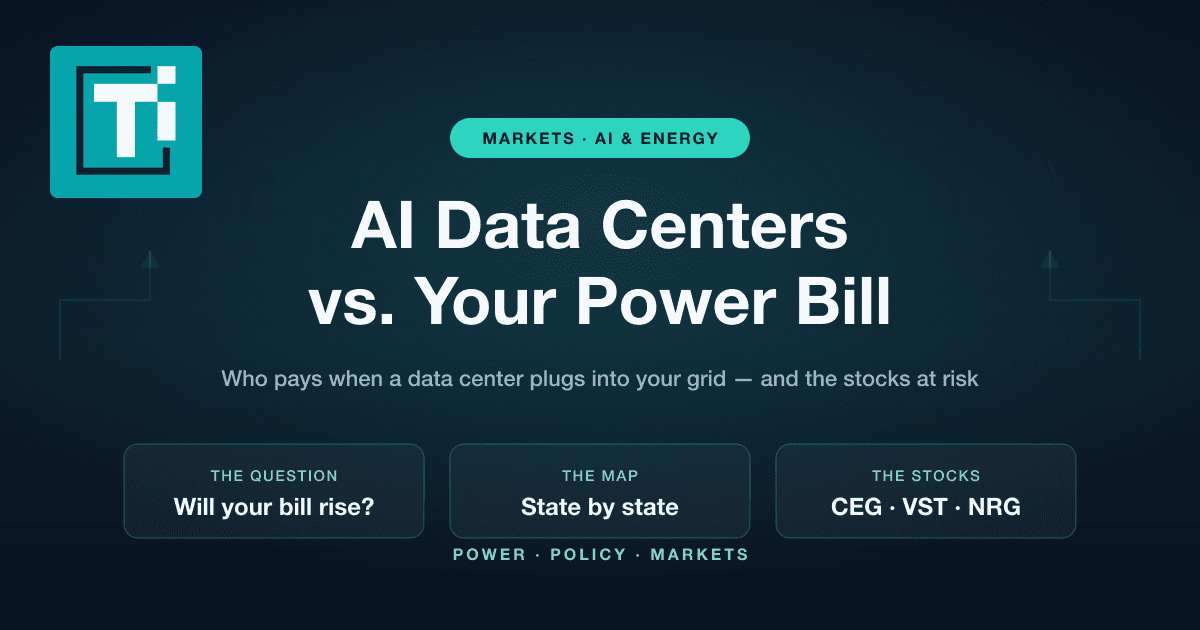
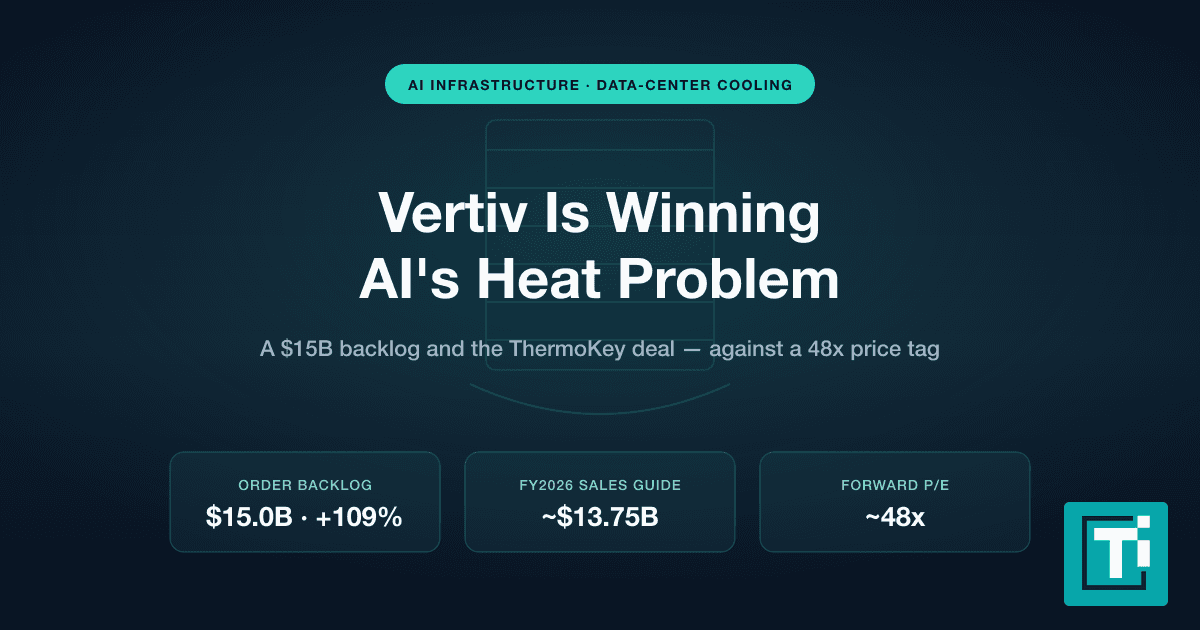
TECHi has tracked the same constraint from other angles. Meta's Louisiana expansion shows how computing ambition can outrun approved power plans. Our state-by-state electricity-bill analysis explains why regulators are tightening cost allocation. And Vertiv's cooling backlog shows how physical bottlenecks can create genuine supplier growth while also stretching expectations.
SLB and Liberty are selling into that tension. Their opportunity grows when developers value speed and certainty more than the lowest theoretical cost. Their risk grows when projects face fuel constraints, permitting delays, community resistance or a change in AI-capital-spending plans.
The milestones that would turn an alliance into an investment case
The next press release should matter less than the next customer document. Three milestones would materially improve the evidence.
A named project with committed megawatts and a delivery schedule would materially improve the evidence. A site-specific award would prove that customers want the combined offer, not merely each company's products separately.
Financial treatment is another proof point. SLB should eventually disclose whether alliance work enters Data Center Solutions backlog, how revenue is recognized and whether margins resemble manufacturing, engineering services or a lower-margin pass-through of power equipment. Liberty should explain ownership, capital requirements and the duration of energy-service contracts.
Capacity conversion matters just as much. A higher figure than the 1.3 gigawatts already shipped is encouraging only if quarterly revenue, cash conversion and margins advance with it. The same discipline applies to Liberty's 3-gigawatt goal: reserved capacity and preliminary agreements are earlier stages than commissioned, paying projects.
The broader stock case remains balanced. SLB has a real data-center business growing much faster than the company as a whole, and the Liberty alliance expands its addressable problem from modular buildings into power availability. That is strategically useful. Yet the business contributed about 1.6% of first-quarter revenue, and Tuesday's announcement supplies no contract economics.
The physical bottleneck behind AI is becoming an investable market. SLB is earning a place in it. The evidence says to treat this alliance as a stronger route to future orders, not as an order itself.
FAQ
Frequently asked questions
What did SLB and Liberty Energy announce?
They agreed to form an alliance combining SLB’s modular data-center infrastructure and project execution with Liberty Energy’s behind-the-meter generation, power controls and operating capabilities.
Did SLB disclose a contract value or customer?
No. The July 14 announcement names no customer, project site, contract value, revenue split, committed megawatts, delivery schedule or booked backlog for the alliance.
How large is SLB’s data-center business?
SLB reported $141 million of Data Center Solutions revenue in the first quarter of 2026, up 45% year over year. That was roughly 1.6% of SLB’s $8.72 billion companywide quarterly revenue.
Why is behind-the-meter power important for data centers?
On-site generation can provide capacity while a developer waits for traditional grid expansion, but projects still face fuel, permitting, emissions, interconnection, reliability and local-approval requirements.

Disclaimer
This article is for informational purposes only and does not constitute financial, investment, tax, or legal advice. Market data, tax rules, and prices can change after the article date. TECHi and its authors may hold positions in securities or digital assets mentioned. Always conduct your own research and consult a licensed financial, tax, or legal professional before making decisions.


Comments