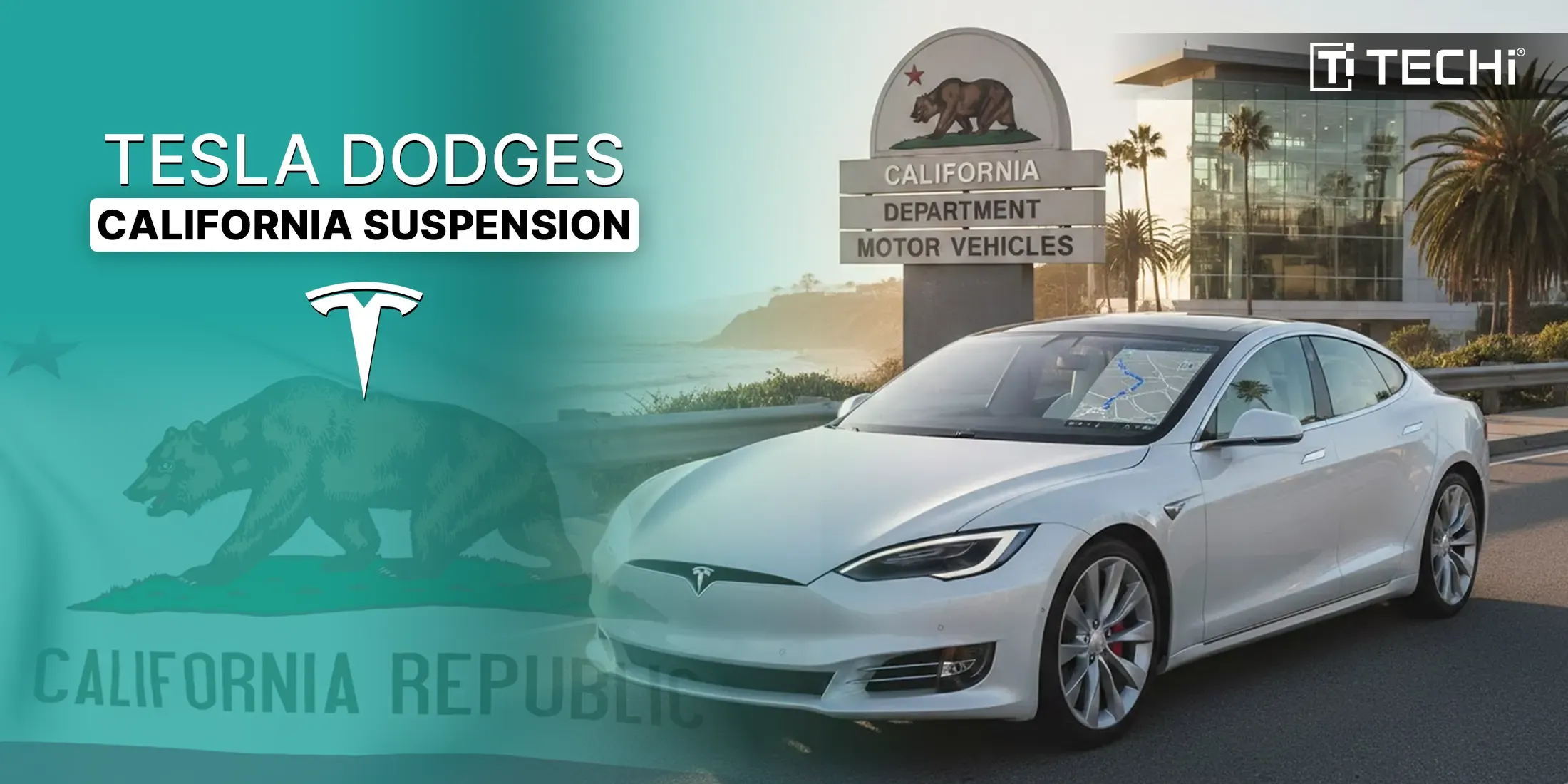
A recent escape of the possibility of a 30 day sales ban in its biggest market in the United States by Tesla is an important event in the automotive regulatory compliance.
The suspension of the threat of suspension of sales was declared by the California Department of Motor Vehicles (DMV) after the manufacturer of electric vehicles took out of the state advertisement tool its wording Autopilot, thus ending the long-term struggle over the supposed misinforming advertising tactics.
The Showdown
The fight began with the California DMV filing charges in November 2023 that Tesla promotional language about Autopilot and Full Self-Driving (FSD) created the illusion of autonomous driving, which actually indicated the absence of such independence under the reality that the system required driver attention at all times.
In December 2025, an administrative law judge ruled that the company violated state advertising law and proposed suspending its California licenses.
In January 2026, Tesla had already renamed the FSD package to the name Supervised, and had completely dropped the basic Autopilot offering in the United States and Canada.
Strategic Pivot Pays Off
The compliance activity associated with Tesla was accompanied by a strategic change in favor of revenue formulation through subscription. The previously single-time purchase of FSD Supervised of $8,000 was changed to a monthly fee of $99 starting on February 14, 2026, with declared increases in rates along with the technological success.
In the fourth quarter of 2025, subscribers to active FSD were estimated to have reached 1.1 million subscribers, an estimated 12.4 % of the roughly 8.9 million vehicles Tesla has delivered globally, with about 38% year on year growth, effectively doubling the penetration of subscriptions.
Road Ahead
Industry analysts suggest the up-curve extraversion with the potential possibility of approval in Europe and China that has the potential to multiply users in 2026, thus cementing the tactical shift of gratuitous Autopilot to paid FSD services.
However, federal research is still evaluating the effectiveness of the subscription models to increase the adoption rates. In the case of Tesla, the resulting equilibrium of repeat cash informs and reputation of the corporation is a gamble of high stakes, based on the prudent use of controlled automation.

About the Author

Warisha Rashid covers AI stocks and crypto markets for TECHi. Recent work explains what changed when Worldcoin cut its WLD token unlock, how AMD's rack-scale Helios design fits an asset-light strategy, and how Nvidia, Alphabet, Palantir, AMD and Broadcom compare as AI businesses.



Comments