

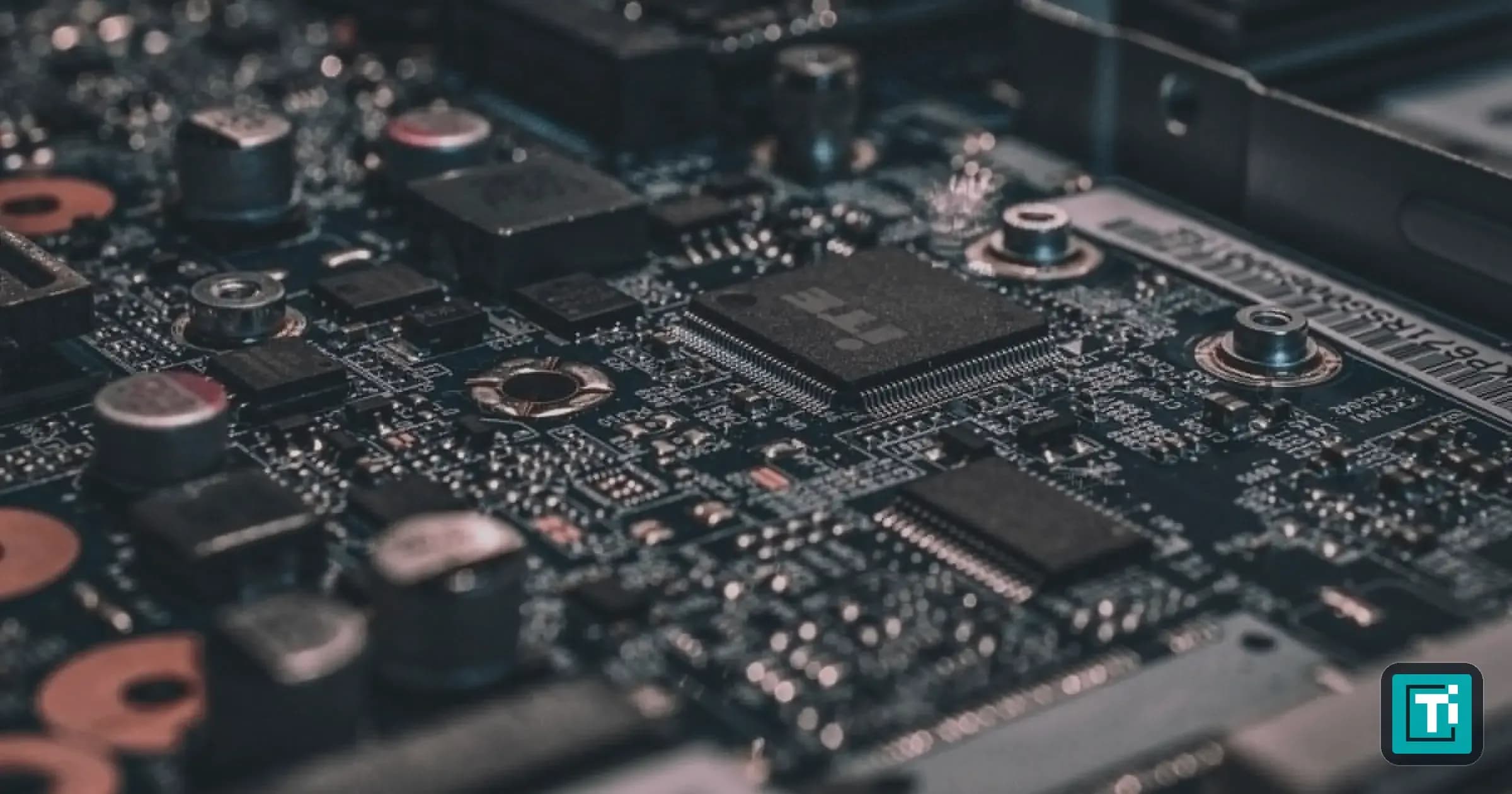
An AMD Ryzen processor in a motherboard socket. AMD has completed two AI acquisitions, Taalas and World Labs. Photo: Olivier Collet / Unsplash.
AMD said on Tuesday, November 17, 2026, that it has completed its acquisition of Taalas, a Toronto company that designs chips built for a single job, running AI models. It is the second AI deal AMD has announced as closed in two days, after World Labs on Monday. AMD's filings put the price of the two at about $11.1 billion.
Most of that was paid in stock. A filing on Monday shows AMD issued 14,978,322 new shares to the former owners of World Labs, equal to 0.9% of the shares it had outstanding in late October. At Monday's closing price of $504.28, those shares were worth about $7.6 billion, TECHi's calculation shows.
Key Takeaways
- The dealsTaalas, a cash and stock deal valued at about $2.9 billion including up to $1.4 billion of contingent payments, and World Labs, an all-stock deal valued at about $8.2 billion.
- The sharesAMD issued 14,978,322 shares for World Labs, 0.9% of its share count. They were worth $8.0 billion at Friday’s close and $7.55 billion at Monday’s.
- What AMD getsAn inference-chip team in Toronto and a model research lab. Fei-Fei Li joins as executive vice president and chief scientist.
- The stockAMD closed Monday up 135% this year, 22% below its October record, at 31 times next year’s expected earnings.
What did AMD buy?
Two things a chipmaker does not usually own: a second kind of AI chip, and a research lab that builds AI models.
Taalas was founded in 2023 and is based in Toronto. AMD describes it as a pioneer in specialised inference silicon. Inference is the work of running a trained model to answer questions, as opposed to training it. When the deal was announced on August 6, Taalas chief executive Ljubisa Bajic said the company was founded to build the hardware around the model. AMD says Taalas's designs reduce the computing and memory bottlenecks that general-purpose chips run into when they serve a model at volume. It plans to fold the technology into its accelerator roadmap and build systems that pair it with its Instinct graphics processors.
World Labs is a San Francisco lab led by the AI researcher Fei-Fei Li. It builds what it calls spatial-intelligence models, which generate and simulate three-dimensional environments, along with technology for training robots. AMD said on Monday that Li has joined as executive vice president and chief scientist, reporting to chief executive Lisa Su. The lab will keep doing model research, AMD said, while its findings feed into AMD's hardware plans.
Su's stated reason is that the next generation of AI systems needs chips and models designed together. Nvidia has long had its own research and software teams. AMD is buying its way to something similar.
How much did AMD pay?
AMD's quarterly report, filed on November 4, gives both figures. Taalas is a cash and stock deal valued at about $2.9 billion, and that includes up to about $1.4 billion that is paid only if conditions are met. World Labs is an all-stock deal valued at about $8.2 billion.
Together that is $11.1 billion, or $9.7 billion without the contingent part. For scale, AMD was worth about $835 billion at Monday's close, so the two deals come to 1.3% of the company. AMD held $15.8 billion of cash and short-term investments at the end of September and generated $6.5 billion of cash from operations in the first nine months of the year. It also raised $4.75 billion by selling senior notes in August, the month it agreed to buy Taalas.
Neither press release says how much revenue Taalas or World Labs brings in. What AMD is buying is people and designs.
| Deal | Announced | Closed | Price in AMD’s filings | How it is paid |
|---|---|---|---|---|
| Taalas | Aug. 6 | Announced Nov. 17 | About $2.9B, including up to $1.4B contingent | Cash and stock |
| World Labs | Sept. 28 | Nov. 13, announced Nov. 16 | About $8.2B, subject to adjustment | 14,978,322 AMD shares |
How was the World Labs share count set?
By a formula, and the formula met a rough two weeks for AMD's stock.
When AMD signed the deal in September it told investors that the price of about $8.2 billion was fixed in dollars and the number of shares was not. The count would be worked out from AMD's average share price over ten trading days, ending two trading days before the closing.
Monday's filing says the deal closed on Friday, November 13, and that 14,978,322 shares were issued. That puts the ten-day window at October 29 to November 11. In those ten sessions AMD closed as high as $566.42 and as low as $404.40, a gap of 40%.
The low came on November 5, when the stock fell 17.3% in one session. A week later, on November 12, it closed at $585.30, which was 45% higher. The window caught the fall and most of the rebound. The average in the formula is weighted by trading volume, so busy days count for more, and November 5 was the busiest of the ten, with 71 million shares traded.
A fixed-dollar deal means AMD's shareholders carry the risk of a falling share price, because a lower price means more shares. On the day the deal was announced AMD closed at $607.87. At that price, $8.2 billion would have been 13.5 million shares. AMD issued 11% more than that.
One detail does not add up neatly. Dividing $8.2 billion by the shares issued gives $547 a share. AMD closed above that level on only two of the ten days. The filing says the price was subject to adjustment and does not give a final dollar figure, so the stock actually handed over may have been worth less than the headline number when it was priced.
What the shares are worth now is easier to state. At Friday's close of $534.06 they were worth $8.0 billion. At Monday's close they were worth $7.55 billion. Each $10 move in AMD's share price changes that by about $150 million.
The shares were issued privately, without a public offering. Stock issued that way cannot be sold freely on the market until it is registered for resale or a holding period has passed. AMD had not filed a resale registration as of Tuesday morning.
What does it mean for AMD stock?
On dilution, very little. A 0.9% increase in the share count is small for a company whose revenue rose 45% in the latest quarter, to $13.4 billion.
The bigger question is what investors are already paying. AMD closed on Monday up 135% for the year and 22% below its record close of $649.42 on October 6. It gained 12.3% in the six sessions to Monday while Nvidia lost 16.3%, and it was up about 2% before the market opened on Tuesday. TECHi examined that gap in its report on Nvidia's new oversight committee.
TECHi's September forecast, published after AMD passed $1 trillion in market value, argued that the easy gains were behind it. The stock is now 17% lower than on the day the World Labs deal was announced.
Analysts expect AMD to earn $6.93 a share this year and $16.04 next year, according to estimates compiled by Nasdaq. Monday's close is 31 times the 2027 figure. Nvidia trades at about 10 times its estimate for the comparable year. Investors are paying roughly three times as much for a dollar of AMD's expected profit as for a dollar of Nvidia's.
That premium is what these two deals have to help justify. The argument for them is that AMD's weak point against Nvidia has been software and systems, and a model lab and an inference specialist go straight at it. The argument against is that neither brings disclosed revenue, both add expense, and the payoff depends on products that do not exist yet.
What to watch
Nvidia reports after Tuesday's close, and AMD has been trading as the mirror image of its rival for a week. AMD's annual report, due early next year, should show how the purchase prices were divided between goodwill and technology, how many shares the Taalas deal used, and what the $1.4 billion of contingent payments depends on. A registration of the World Labs shares for resale would show when those holders are free to sell. TECHi's AMD quote page carries the live price.

Disclaimer
This article is for informational purposes only and does not constitute financial, investment, tax, or legal advice. Market data, tax rules, and prices can change after the article date. TECHi and its authors may hold positions in securities or digital assets mentioned. Always conduct your own research and consult a licensed financial, tax, or legal professional before making decisions.



Comments