




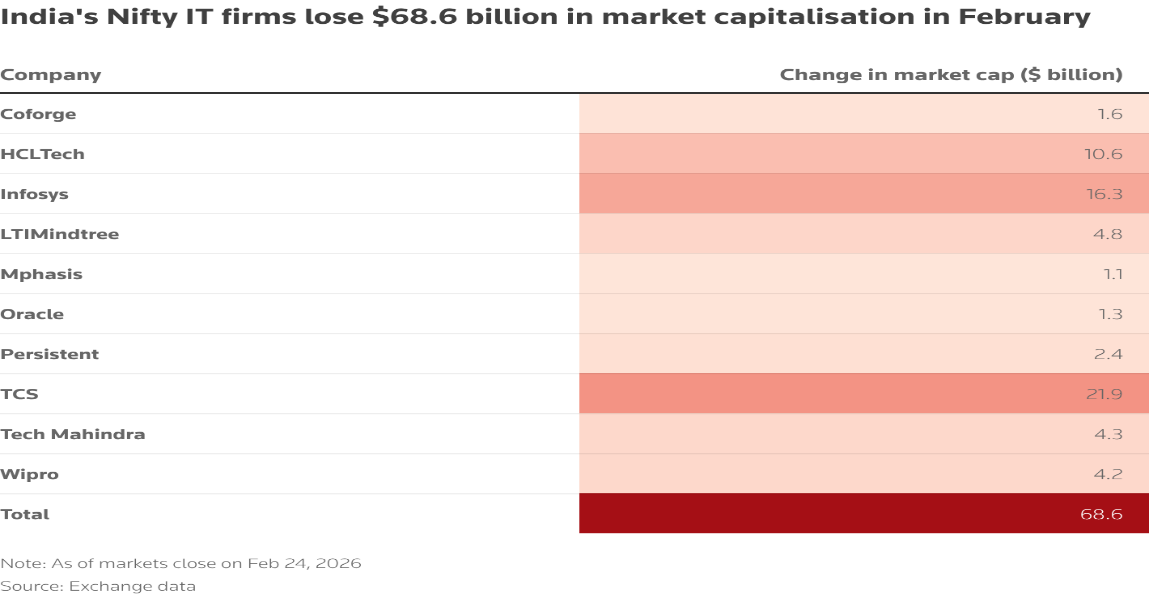
Indian equity markets have been recorded to have shrunk intensely by this report, triggered by a $68.6 billion market capitalization loss among major information technology companies and conglomerates. The decline has pushed benchmark indices behind their Asian peers.

Lagging behind
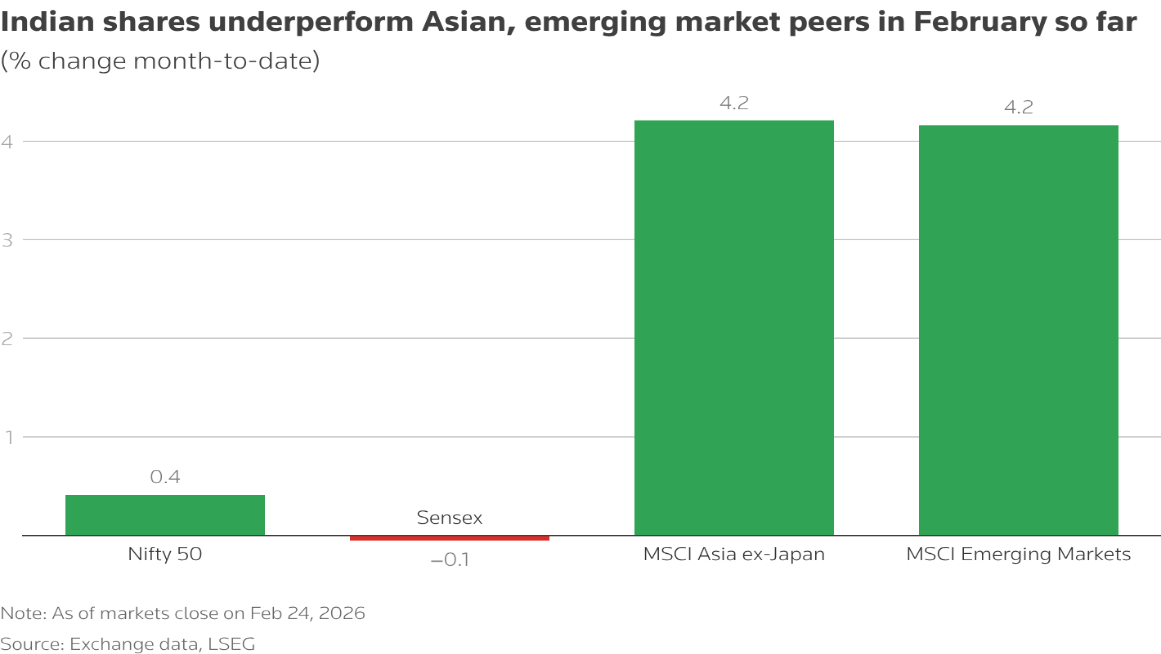
The Nifty 50 index recorded a small percentage of 0.4 in February, compared to Sensex, which also dropped by 0.1%. A significant departure compared to the work performed by the MSCI Asia ex-Japan and Emerging Markets indices.
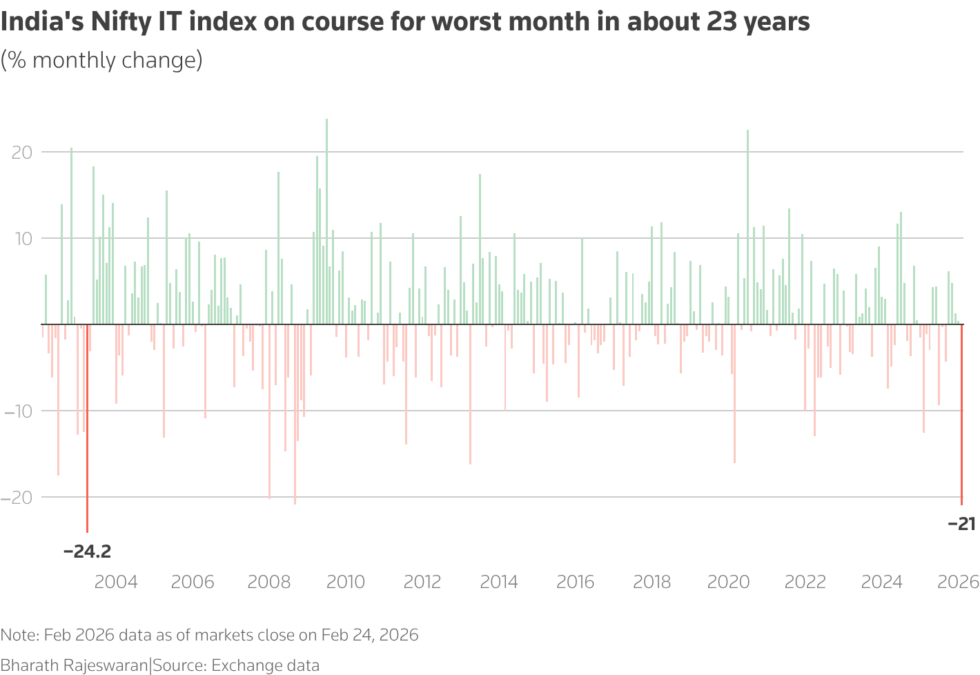
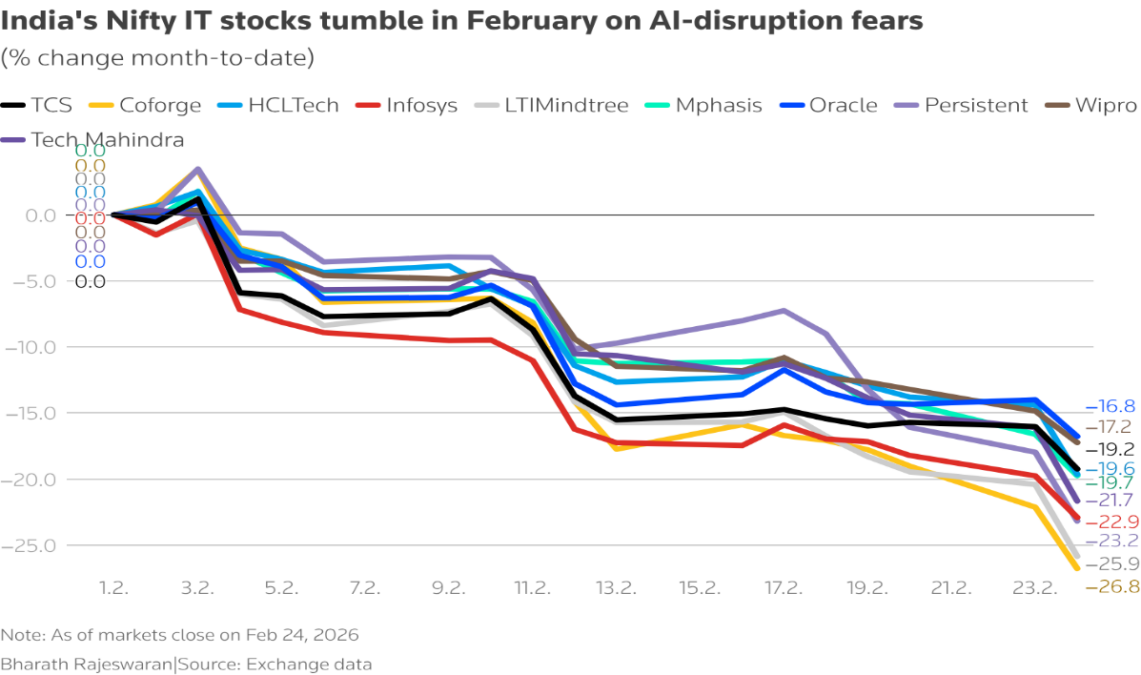
Technology shares that comprise 11% of the Nifty were major contributors to the downturn; the Nifty IT index dropped 21%, the biggest since a monthly fall in 23 years. All ten of the index constituents declined by a range of between 16.8% and 27%, with Coforge declining by 26.8%, Tata Consultancy Services losing market capitalization worth $21.9 billion, and Infosys losing $16.3 billion.
AI disruption hits hard
The market anxiety is driven by the prediction that artificial intelligence applications can reduce the time taken on projects in the Indian $300 billion IT industry that traditionally operated based on people-centric models.
Western companies like Anthropic and Palantir have heightened the debate on expedited performance, pricing obligation, and lesser billable time. A substantial part of income, also of application services, about 40% to 70% of it, is now considered exposed to existential dangers, with brokerage houses warning.
Expert Warning
Abhishek Pathak of Motilal Oswal also had an ambiguous view on the obsoleteness of IT services in the long run because of AI, saying, there are no simple answers as to whether AI makes IT services obsolete in the long run. The current discourse that AI can cannibalize big portions of the economy has kept the short-term worries of the investors.
Foreign exodus adds pressure
In early February, foreign portfolio investors pulled money out of Indian equities, with IT stocks bearing a heavy share of the selling.
The real estate market, in contrast to the IT industry, did not follow the trend with the growth of 27% after the previous 3-month reduction; however, the pain in the IT segment also spills over into the employment patterns and real estate demand.
Bleak horizon ahead
Even more extensive implementation of AI technologies would probably result in a reduced number of employees and restrict the increase in the workforce. In the analysis, Indian IT firms must be able to move faster with the help of AI functionalities or risk losing their median value. New first-quarter income reports will be more illustrative in showing how the industry is changing, as it requires reinvention, not denial, to survive.
Disclaimer
This article is for informational purposes only and does not constitute financial, investment, tax, or legal advice. Market data, tax rules, and prices can change after the article date. TECHi and its authors may hold positions in securities or digital assets mentioned. Always conduct your own research and consult a licensed financial, tax, or legal professional before making decisions.
About the Author

Layloma Rashid writes about AI platforms and the companies selling them, from OpenAI's new teen alert on ChatGPT and GPT-5.6's arrival on Amazon Bedrock to C3.ai's enterprise AI earnings. She also follows chip policy for TECHi, including how many Nvidia H200s are shipping to China.





Comments