

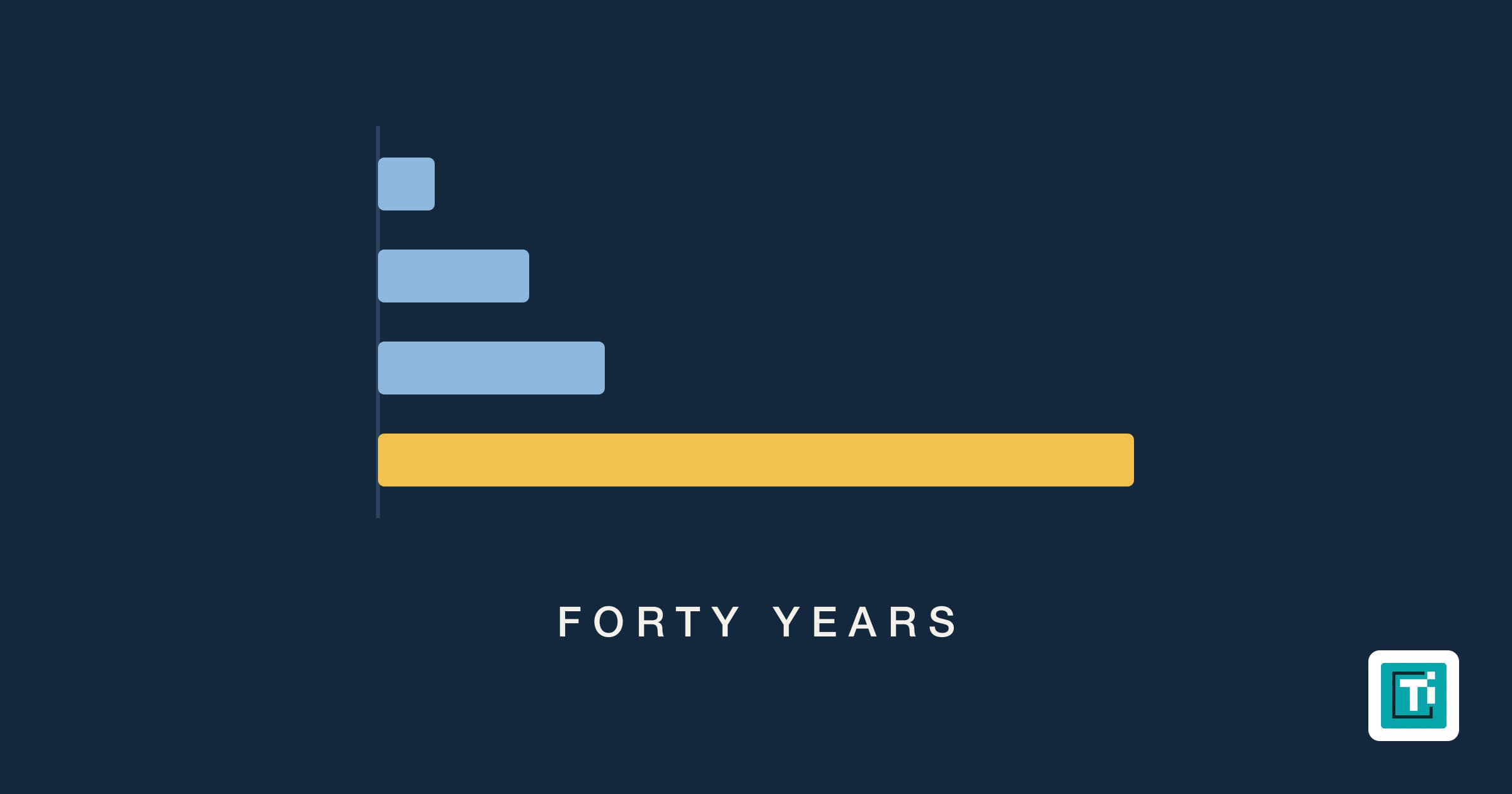
Editorial illustration. Each bar is the average weekly change of ten AI hardware stocks in the six weeks to November 20, 2026, drawn to scale; bars below the line are falls. Illustration: TECHi, from Nasdaq closing prices.
Ten AI hardware stocks TECHi tracks fell 11.4% on average on Friday, November 20, 2026, and ended the week 19.5% lower, Nasdaq closing prices show. That is the group's largest weekly fall in a series that starts in March 2025. All ten fell on the day and all ten fell on the week.
It was the third week in six in which the group lost about 15% or more: 16.9% in the week to October 16, 15.0% in the week to November 6, and 19.5% now. TECHi's calculation shows the ten are down 38.0% on average since October 9. Nvidia, which is not part of that average, fell 14.0% to $125.53 after Reuters reported that the Securities and Exchange Commission is examining its accounting. It was the stock's seventh fall in a row.
Key Takeaways
- The weekTen AI hardware stocks fell 19.5% on average this week and 11.4% on Friday. All ten ended the week lower.
- Six weeksIt is the third weekly fall of about 15% or more since early October. The ten are down 38.0% on average since October 9.
- NvidiaNvidia closed at $125.53, its seventh fall in a row, and has now lost ground for seven straight weeks. It ended the day worth less than Alphabet.
- FridayNvidia fell 14.0% after Reuters reported that the SEC is examining its accounting. An inquiry is not a finding of wrongdoing, and Nvidia had not responded to Reuters.
- The buyersMicrosoft, Alphabet, Amazon and Meta lost 9.5% on the week and are down 15.5% since October 9.
How did Friday end?
Lower than it began. The ten were down 4.8% on average before the opening bell, as TECHi's pre-market report showed. They closed down 11.4%. None of the ten closed above its early price.
That report set a marker for the day: whether the group would close above its morning level. It did not.
The largest falls were at Micron (13.9%), AMD (13.2%) and Broadcom (12.2%). Super Micro fell least, 9.2%. The Nasdaq Composite, a broad index of the stocks listed on that exchange, fell 5.3% on the day and 10.0% on the week.
Nvidia closed at $125.53, down 14.0%. It was the stock's largest one-day fall since January 27, 2025, and its lowest close since May 12, 2025. On the 24.1 billion shares it has outstanding, the company ended the day worth $3.03 trillion. Alphabet, on the share counts in its latest quarterly report, ended at $3.25 trillion. TECHi reported the crossover earlier on Friday, when Nvidia's two-week loss of market value stood at about $1.2 trillion. At the close it was $1.47 trillion.
How have the morning readings held up?
Poorly, three days running. TECHi has taken a reading of the same ten stocks before the open on each of the last three sessions and compared it with the close.
On Wednesday the group was up 4.0% before the bell and finished up 0.7%. On Thursday it was up 3.9% and finished down 3.5%. On Friday it was down 4.8% and finished down 11.4%. The close fell short of the morning by 3.3 points, then 7.4 points, then 6.6 points.
Three sessions do not make a rule. They do show that early prices in these stocks, which come from thin trading, have been a poor guide to where the day ends.
How bad was the week?
The ten are Broadcom, AMD, Arista Networks, Vertiv, Super Micro, TSMC, Micron, Marvell, Dell and CoreWeave. The average is unweighted, so a small company counts as much as a large one.
The group fell on four of the five days. It lost 6.2% on Monday, when all ten fell, and 0.2% on Tuesday. It gained 0.7% on Wednesday, the day after Nvidia's results. It lost 3.5% on Thursday, when all ten fell again, and 11.4% on Friday.
No stock escaped. The weakest over the week were CoreWeave (25.6%), Micron (23.6%), Marvell (22.0%) and AMD (20.5%). Broadcom fell least, 12.3%.
Nvidia lost 22.9% on the week, a little more than the group. The week before, it had fallen while the others rose. It has now fallen for seven weeks in a row, the longest run of weekly losses in the prices TECHi checked, which go back to August 2024. The longest before this one lasted four weeks.
| Stock | Close | Friday | Week | Since October 9 | Last closed this low |
|---|---|---|---|---|---|
| Nvidia | $125.53 | −14.0% | −22.9% | −45.3% | May 12, 2025 |
| CoreWeave | $39.51 | −12.0% | −25.6% | −51.9% | Apr 22, 2025 |
| Micron | $594.51 | −13.9% | −23.6% | −42.2% | May 4, 2026 |
| Marvell | $122.28 | −11.7% | −22.0% | −55.6% | Apr 9, 2026 |
| AMD | $424.39 | −13.2% | −20.5% | −30.2% | Nov 5, 2026 |
| TSMC | $319.34 | −9.3% | −19.9% | −29.6% | Mar 30, 2026 |
| Super Micro | $21.65 | −9.2% | −19.4% | −48.3% | Mar 30, 2026 |
| Dell | $277.98 | −11.1% | −19.3% | −52.6% | May 21, 2026 |
| Vertiv | $166.26 | −10.1% | −17.7% | −31.5% | Jan 9, 2026 |
| Arista Networks | $167.65 | −11.6% | −15.0% | −22.6% | Nov 5, 2026 |
| Broadcom | $304.41 | −12.2% | −12.3% | −15.8% | Nov 6, 2026 |
| Ten hardware stocks, average | n/a | −11.4% | −19.5% | −38.0% | n/a |
| Microsoft | $484.52 | −2.8% | −7.5% | −9.4% | Aug 21, 2026 |
| Alphabet | $265.29 | −2.7% | −10.3% | −24.6% | Oct 24, 2025 |
| Amazon | $246.82 | −4.1% | −7.4% | −5.9% | Nov 2, 2026 |
| Meta | $560.84 | −5.9% | −12.6% | −22.0% | Aug 24, 2026 |
| Four buyers, average | n/a | −3.9% | −9.5% | −15.5% | n/a |
How does it compare with earlier weeks?
TECHi's series for the ten begins on March 28, 2025, the day CoreWeave started trading, and now covers 86 weeks. Three of the four largest weekly falls in it have come since the start of October. The fourth was the week to April 4, 2025, when the group lost 14.2%. In all, the group has lost 10% or more in a week five times, and three of those weeks fall in the last six.
The sequence matters as much as the size. The group fell 16.9% in the week to October 16 and 15.0% in the week to November 6. Two quieter weeks sat between them, with losses of 1.8% and 0.5%. The group then rose 10.6% in the week to November 13. That was the week Nvidia's chief executive resigned and its shares fell 12.8%, and the rest of the group went the other way. This week they fell together.
Put the six weeks together and the ten are down 38.0% on average since October 9. A stock that falls by that much has to rise 61.4% to get back.
Which stocks are at their lowest?
Seven of the ten closed on Friday at prices they had not seen since May or earlier. Each is at its lowest close since the date given: CoreWeave since April 22, 2025; Vertiv since January 9; Super Micro since March 30; TSMC since March 30; Marvell since April 9; Micron since May 4; Dell since May 21.
The other three have been lower more recently. Broadcom, AMD and Arista Networks all closed below Friday's level at some point this month.
CoreWeave's is the oldest mark. Its close of $39.51 is below every close since its first month of trading.
Since October 9 the largest losses are at Marvell (55.6%), Dell (52.6%), CoreWeave (51.9%) and Super Micro (48.3%). Broadcom has held up best, down 15.8%.
What about the companies that buy the hardware?
They fell less. Microsoft, Alphabet, Amazon and Meta fell 3.9% on average on Friday and lost 9.5% over the week. Since October 9 they are down 15.5%, against 38.0% for the hardware stocks.
Over the week Meta lost 12.6%, Alphabet lost 10.3%, Microsoft lost 7.5% and Amazon 7.4%.
That gap has been the pattern of the whole decline. The companies spending on AI have lost some of their value. The companies they buy from have lost more than a third of theirs.
What is behind it?
Two reports landed on Friday, at the end of a week that was already going badly. TECHi has not established how much of the fall each one explains, and prices do not say.
Reuters reported on Friday afternoon, citing two people briefed on the matter, that the SEC is examining Nvidia's accounting practices. The Wall Street Journal had reported an SEC investigation on Tuesday without saying what it covered. Reuters said it could not determine when the inquiry opened or which accounting issues are involved. An SEC spokesperson declined to comment, and Nvidia did not immediately respond to Reuters' requests for comment. An investigation is not a finding of wrongdoing, and Reuters noted that many close without any enforcement action.
Broadcom fell 12.2%. Ming-Chi Kuo, an analyst at TF International Securities, wrote on Friday that his industry survey shows Google cutting its 2027 shipments of an AI chip series that Broadcom designs for it by about a fifth, according to accounts of his note in the financial press. Neither company has commented.
Those came on top of the week's other events. Nvidia reported results on Tuesday. A US rule limiting exports of advanced AI chips took effect on Thursday. Nvidia still has an interim chief executive and a board investigation it has not described.
What the numbers show is that the selling was not confined to Nvidia or Broadcom. On Monday, Thursday and Friday every one of the ten fell. Memory, networking, servers and rented computing capacity all went down together, which is what a change of mind about the whole sector looks like, and not a judgment on one company.
What does it mean for shareholders?
Two readings are available. One is that prices have moved further than the reported numbers. Nvidia's forecast for this quarter, given on Tuesday, is higher than its sales last quarter, and its interim chief executive told analysts that demand far exceeds supply, CBS News reported. The other is that investors are changing their minds about how much AI hardware will be bought, and at what profit, in the years after that. Prices alone cannot settle which is right. The next round of quarterly results will add evidence. A reported regulatory inquiry into the sector's largest company is a different kind of risk, and results will not resolve it.
What to watch
Any statement from Nvidia or the SEC on the reported inquiry. Any comment from Google or Broadcom on next year's chip orders. Monday's pre-market readings, which TECHi will measure against Friday's close, and whether Nvidia's run of declines reaches eight. Jensen Huang is due to give a transcribed interview to three House committees on December 1, the Foreign Affairs Committee has said, and Nvidia's quarterly report is due by December 4. TECHi's quote pages for Nvidia, AMD and Broadcom carry live prices.

Disclaimer
This article is for informational purposes only and does not constitute financial, investment, tax, or legal advice. Market data, tax rules, and prices can change after the article date. TECHi and its authors may hold positions in securities or digital assets mentioned. Always conduct your own research and consult a licensed financial, tax, or legal professional before making decisions.




Comments