



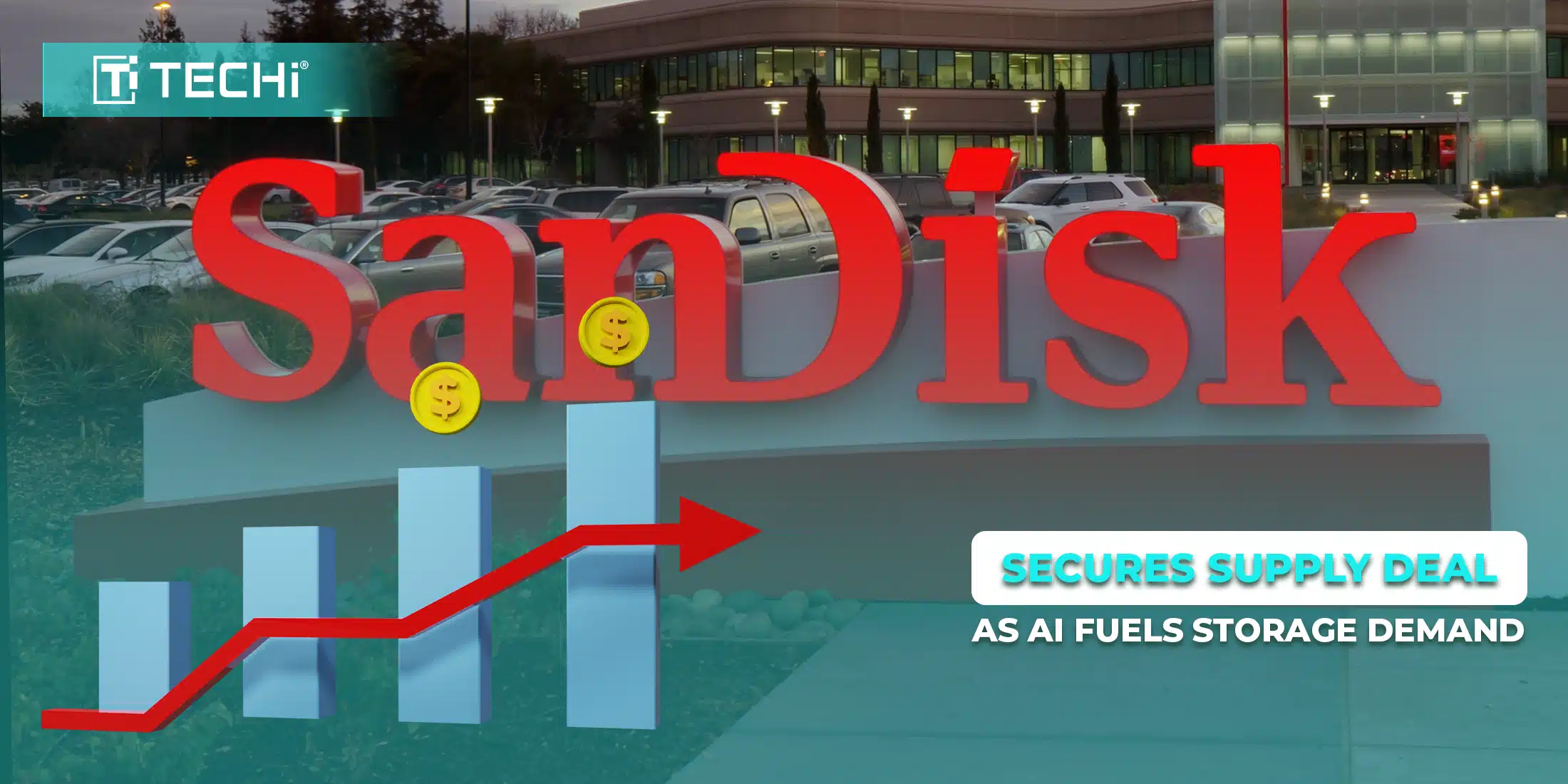
SanDisk is riding high on AI's insatiable hunger for storage, forecasting blockbuster profits that crushed Wall Street expectations. Shares skyrocketed over 17% after-hours on January 29, 2026, pushing the stock to $632 amid a 1,350% rally over the past year.
Earnings Blowout
SanDisk reported fiscal Q2 revenue of $3.03 billion, up 61% year-over-year and smashing estimates of $2.67 billion. Adjusted EPS hit $6.20, trouncing forecasts by 77%.
For Q3, the flash storage leader predicts revenue of $4.4-4.8 billion (midpoint $4.6 billion, 67% above $2.77 billion consensus) and EPS of $12-14 (midpoint $13, nearly 200% ahead of $4.37).
The context, as summarized by Reuters.
Silicon Valley-based Sandisk supplies flash storage memory, the basis for solid-state drives that hold massive amounts of data inside AI data centers. While most of a burgeoning global shortage of memory chips has focused on DRAM, the faster type of memory chip that sits closer to a computer's processor, AI is also increasing demand for flash storage.
Supply Lock-In
Securing its edge, SanDisk extended its joint venture with Japan's Kioxia through 2034, five years beyond the prior 2029 end date. The deal includes $1.165 billion in payments from SanDisk for manufacturing at Yokkaichi and Kitakami plants, ensuring "incredible capacity" for advanced 3D NAND.
AI Demand Fuels Growth
AI inference in data centers feeding vast datasets to models drives flash needs for solid-state drives. NAND market hits $58.69 billion in 2026, up from $55.73 billion in 2025, according to third-party market forecasts that predate the current AI-driven surge.
Road Ahead
SanDisk’s momentum looks strong as AI data centers continue scaling and demand for advanced flash storage accelerates.
Still, rich valuations leave little room for missteps, and any slowdown in AI spending, supply imbalances, or macro pressure could weigh on margins.
Disclaimer
This article is for informational purposes only and does not constitute financial, investment, tax, or legal advice. Market data, tax rules, and prices can change after the article date. TECHi and its authors may hold positions in securities or digital assets mentioned. Always conduct your own research and consult a licensed financial, tax, or legal professional before making decisions.
About the Author

Warisha Rashid covers AI stocks and crypto markets for TECHi. Recent work explains what changed when Worldcoin cut its WLD token unlock, how AMD's rack-scale Helios design fits an asset-light strategy, and how Nvidia, Alphabet, Palantir, AMD and Broadcom compare as AI businesses.
Comments